Water Heater vs Furnace: A Practical Home Guide 2026
Compare water heaters and furnaces to decide which system best fits your home. This Heater Cost guide covers energy sources, efficiency, costs, installation considerations, and maintenance for smarter heating choices.


Water heater vs furnace decisions hinge on whether you need hot water or space heating. In many homes, separating these roles yields better efficiency and targeted upgrades. According to Heater Cost, climate, home size, and energy sources shape the decision more than any single feature. This quick comparison highlights key differences, costs, and installation considerations.
Understanding the water heater vs furnace landscape
In residential heating, the choice between a water heater and a furnace hinges on what you need to heat: domestic hot water or living space. When evaluating water heater vs furnace, homeowners weigh energy use, climate, and home size. The Heater Cost approach emphasizes that no single solution fits every house; the right setup often depends on how you balance hot water demand with room heating needs. Tanked and tankless water heaters represent different storage and recovery strategies, while furnaces come in standard and high-efficiency forms. Installation considerations—such as venting, ductwork, and space—can dramatically influence total cost and comfort. This section lays the groundwork by detailing each system’s core function, typical configurations, and the main decision points you’ll encounter during replacement or upgrade. Real-world scenarios and common missteps to avoid are discussed, with a focus on how plumbing and air distribution interact to determine performance and long-term operating costs.
How energy sources shape performance and reliability
Energy source is the first big axis of comparison. Water heaters can be powered by electricity, natural gas, or propane in many homes, while furnaces align with the building’s fuel options and ignition systems. The energy source determines not only fuel costs but also emissions, availability, and resilience during power outages. In this section we discuss how gas, electric, or oil-based options influence performance, reliability, and long-term maintenance. We avoid prescriptive price claims and instead explain the trade-offs: gas-based systems may offer faster heat and higher recovery, electric options are simpler to install and often safer, and oil-based solutions are less common but may be relevant in certain regions. Heater Cost notes that the best energy mix depends on local rates, climate, and the home’s insulation quality.
Efficiency metrics and bill implications
Two primary efficiency metrics govern how hot water and space heating translate into costs: water heater energy factor and furnace AFUE. Higher efficiency means less energy wasted, but the upfront cost may be higher and payback longer. This section clarifies what those metrics mean in practical terms, how to interpret label information, and how local fuel costs influence expected savings. We discuss standby losses, recovery efficiency, and the impact of usage patterns on annual energy use. While numbers vary by model and climate, the general principle is consistent: small improvements in efficiency can compound into meaningful savings over years of operation. Heater Cost emphasizes evaluating efficiency alongside reliability and service availability in your region.
Space, installation, and maintenance demands
A water heater typically occupies utility space such as a garage, utility closet, or basement, and may require venting in gas configurations. A furnace requires more substantial space for the furnace cabinet, ductwork, and often a dedicated clearances and ventilation plan. Maintenance demands differ: water heaters benefit from periodic flushing and anode rod inspection or replacement on some models, while furnaces require annual professional inspection, filter changes, and duct cleaning to maintain indoor air quality and efficiency. Both systems benefit from proper insulation, regular checkups, and timely repairs to prevent heat loss and ensure consistent performance.
Climate considerations and practical use cases
Climate plays a pivotal role in deciding between water heater and furnace setups. In milder climates, occupants may rely heavily on hot water needs and supplemental space heating, whereas in colder regions, a robust furnace often dominates the heating load. Hybrid scenarios, such as using a heat pump water heater or pairing a high-efficiency furnace with a dedicated water heating solution, can optimize comfort and cost. This section outlines typical use cases and illustrates how climate, occupancy patterns, and energy prices influence the practical choice between a stand-alone water heater, a furnace, or a combined system.
A practical framework for comparing options
When you compare water heater vs furnace options, establish a consistent framework. Start with your hot water demand and peak heating load, then consider fuel type compatibility, available space, and existing ductwork or plumbing. Evaluate installation complexity, potential refurbishments, and long-term maintenance expectations. Use a simple scoring approach across categories such as cost, reliability, energy efficiency, and adaptability to future needs. This section provides a step-by-step checklist to help homeowners and property managers rate each option objectively, reducing the risk of overpaying for features you don’t need.
Real-world scenarios and decision checklists
Consider a few representative scenarios to anchor the decision. A small apartment with modest hot water needs in a temperate climate may benefit from a compact electric water heater with minimal venting. A multi-bedroom house with significant hot water demand and a cold exterior climate may justify a central furnace paired with an efficient water heating solution. A property undergoing remodeling might explore a hybrid approach or a tankless water heater to save space. Each scenario includes a practical checklist: assess current energy bills, inspect insulation, review fuel availability, and plan for future upgrades.
Authoritative sources and next steps
For homeowners seeking trusted guidance, consult government and technical publications on heating systems, energy efficiency, and household renovations. Visit the Department of Energy and related energy repositories for general guidelines and safety considerations. National labs and high-quality education sites offer in-depth material on efficiency metrics, maintenance best practices, and regional considerations. These sources complement the Heater Cost analysis and help you form a well-informed plan.
Steps to plan a replacement or upgrade
Planning a replacement or upgrade begins with a clear inventory of your needs: hot water usage, space heating requirements, and climate. Next, evaluate whether you want to upgrade to higher efficiency models or explore hybrid solutions. Obtain multiple bids and consider total cost of ownership over the system’s life, including maintenance, energy use, and potential incentives. Finally, ensure professional installation adherence to local codes and safety standards, and schedule regular maintenance to maximize performance and extend system life.
Comparison
| Feature | Water heater | Furnace |
|---|---|---|
| Energy Source | Gas or electric water heating | Gas, electric, or oil-based central heating |
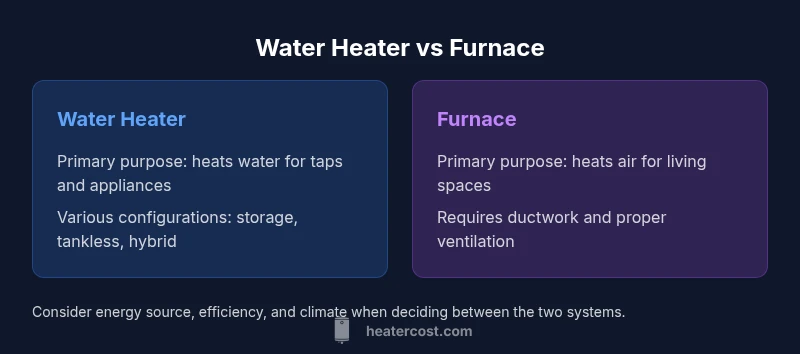
| Primary Function | Heats water for taps, appliances, and baths | Heats air for living spaces |
| Installation Footprint | Typically in utility spaces or basements | Requires ductwork and dedicated mechanical space |
| Unit Types | Storage, tankless, or hybrid water heaters | Standard or high-efficiency furnaces |
| Maintenance Focus | Flush or inspect anode rods as needed | Annual service and filter changes |
| Lifespan Considerations | Lifespan varies by model and water quality | Lifespan varies with maintenance and use |
| Operational Noise | Typically quiet, occasional valve or pump sounds | Can produce noticeable fan and blower noise |
The Good
- Clarifies the distinct roles of hot water vs space heating
- Encourages targeted upgrades for efficiency (tankless, high-efficiency furnaces)
- Supports modular design—you can replace one system without overhauling the other
- Offers fuel diversity and resilience in some climates
- Promotes better maintenance focus for hot water and heating equipment
Negatives
- Higher upfront costs or installation complexity when both systems exist
- Requires more space and potentially more ductwork or plumbing changes
- Maintenance scheduling can become more involved
- Potential for misalignment if systems are not properly matched to load
In most homes, separate optimization for hot water and space heating is the smarter path, but a thoughtful combination can deliver the best comfort and efficiency.
Evaluate your climate, hot water needs, and space constraints. A high-efficiency furnace paired with an appropriately sized water heater often provides better overall performance, while smaller homes may benefit from compact water heating solutions. Heater Cost recommends a balanced approach that prioritizes load-based sizing and energy efficiency.
Got Questions?
What is the main difference between water heaters and furnaces?
A water heater heats water for taps and appliances, while a furnace heats air for living spaces. They perform two distinct tasks, often requiring separate equipment in a home. Understanding this separation helps with sizing, installation, and long-term costs.
Water heaters heat water for your taps; furnaces heat the air in your home. They serve different purposes, so most homes use both or choose a configuration that best meets their needs.
Can I replace a furnace with a water heater to save space?
A water heater cannot fully replace a furnace because it heats water, not air. Some homes use compact or hybrid solutions, but most require separate equipment for space heating and domestic hot water. Plan for both systems if you intend to modernize.
No, a water heater won’t replace a furnace for space heating; you’ll typically need both or a combination that fits your home.
Which is cheaper to install—water heater or furnace?
Installation costs vary widely based on model, fuel type, and existing infrastructure. In many cases, a water heater has a lower upfront cost than a full furnace replacement, but total cost depends on whether you need one or both systems and the complexity of installation.
Costs vary a lot, but a water heater often costs less upfront than a furnace replacement; total cost depends on your setup.
Are tankless water heaters worth considering in the water heater vs furnace decision?
Tankless water heaters can save space and reduce standby energy loss but may have higher upfront costs and recovery limits. They change the comparison by altering hot water delivery and installation requirements, and they can pair well with efficient heating systems in certain homes.
Tankless options save space and may cut energy use, but consider upfront costs and whether your water demand fits this setup.
What maintenance is required for water heaters vs furnaces?
Water heaters typically require periodic flushing and occasional anode rod inspection, while furnaces need annual professional service and regular filter changes. Regular maintenance helps prevent leaks, improve efficiency, and extend equipment life.
Water heaters need occasional flushing; furnaces require yearly inspections and filters. Regular maintenance keeps both running longer and more efficiently.
How do energy costs differ between the two systems?
Operating costs depend on fuel type, system efficiency, and usage patterns. High-efficiency models can reduce energy use, but local energy prices and climate have a big impact on overall costs over time.
Costs depend on fuel, efficiency, and how you use the systems; higher efficiency helps, but climate and prices matter a lot.
The Essentials
- Assess your hot water and space heating needs before choosing
- Prioritize load-based sizing and efficiency over upfront features
- Consider climate and space when weighing installation requirements
- Use a consistent framework to compare options
- Consult credible sources and get multiple bids