heater vs water heater: Choosing the right heating system
Compare space heaters and water heaters to understand energy use, costs, and installation. This Heater Cost guide helps homeowners decide which system to upgrade or replace, with practical scenarios and clear criteria.


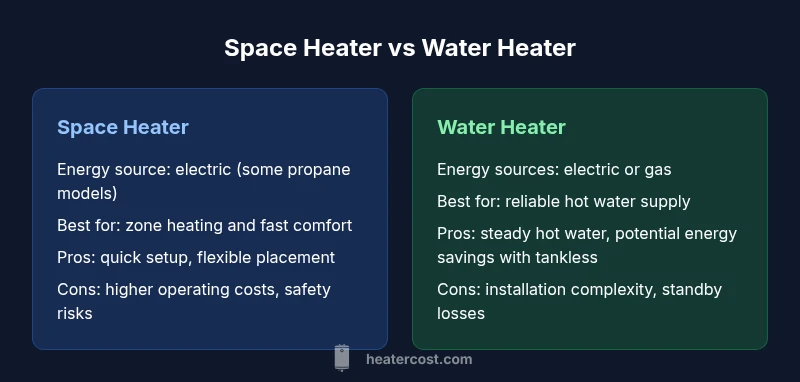
heater vs water heater: In simple terms, a space heater warms people or small areas, while a water heater supplies hot water for taps and appliances. The Heater Cost team emphasizes they serve different purposes, with distinct energy use, installation needs, space requirements, and lifecycle costs. This quick comparison helps homeowners decide which system to upgrade or replace based on climate, household size, and energy goals.
Understanding the core distinction: heater vs water heater
At a high level, the word heater covers two very different devices: a space heater (often just called a heater) that warms a room or zone, and a water heater that provides hot water for showers, sinks, and appliances. The distinction matters because it informs budgeting, energy planning, and placement. According to Heater Cost, space heaters are typically electric devices designed for localized warmth and quick comfort, whereas water heaters are built to supply continuous hot water for the whole home. By recognizing this fundamental difference, homeowners avoid misapplying a device to a need it isn’t meant to fill, which can save money and reduce risk in the long run.
In practice, you’ll choose a space heater for temporary, zone-based comfort in living rooms, bedrooms, or home offices, while a water heater remains a centralized source of hot water. The energy profiles, maintenance routines, and safety considerations diverge accordingly. This section sets the stage for a practical comparison that translates into smarter purchasing decisions and clearer maintenance planning.
Energy sources and efficiency: what to expect
Space heaters rely almost exclusively on electricity, with a few specialized models using propane or diesel in portable outdoor contexts. They convert electricity into heat for immediate, local warmth. Water heaters come in electric and gas varieties, with efficiency influenced by insulation, recovery rate, and system design. Tankless (on-demand) models heat water as it’s needed, while traditional storage tanks keep a reservoir hot for rapid draw. For homeowners, efficiency and energy costs hinge on how often hot water is used and how well the unit is sized for the home. Heaters that are undersized or oversized both waste energy and money. The Heater Cost analysis notes that selecting appropriately sized equipment and using it in line with climate and occupancy patterns yields meaningful long-term savings.
When evaluating options, compare energy source compatibility, potential standby losses, and the potential for supplemental heating in cold rooms when you are not using a water heater to its full capacity.
Cost considerations: upfront, operating costs, and lifecycle
Total cost of ownership for a heater vs water heater includes upfront purchase price, installation labor, and ongoing energy costs. Space heaters typically have lower upfront costs and simpler installation, but operating costs can be high if used extensively for long periods. Water heaters involve plumbing work and potential venting for gas, which increases installation complexity and upfront expenditure but can deliver more consistent hot water with lower per-gallon energy costs over time. The lifecycle of a space heater is shorter due to wear and safety components, while water heaters, especially high-efficiency models, tend to last longer with periodic maintenance. Heater Cost emphasizes evaluating both purchase price and long-term energy behavior when making a decision, rather than focusing on initial cost alone.
To make a sound decision, project your needs over the next 5–15 years, considering climate, household size, and how often you require heat or hot water. Budgeting for maintenance, possible replacements, and energy price fluctuations is essential for an accurate comparison.
Installation, maintenance, and life expectancy
Installation for space heaters is typically minimal—plug in and place in a safe location with adequate clearance. They require routine safety checks to prevent overload, tripping circuits, or accidental fires. Water heaters require professional installation for gas lines, venting, or electrical connections, plus drainage and regular maintenance like flushing to remove sediment buildup. Maintenance for space heaters centers on cleaning coils, replacing filters, and annual safety inspections, while water heaters benefit from an annual inspection of connections, anode rod checks (for some models), and periodic flushing. Lifespan varies widely by usage and quality, but water heaters generally outlast most portable heaters when properly maintained. The Heater Cost team notes that choosing a model with good safety features and accessible maintenance can extend service life and comfort.
Safety, codes, and environmental impact
Safety is a core differentiator. Space heaters pose higher fire risk if placed near combustibles, or if used inappropriately around children or pets. Keep them on stable surfaces and away from draperies or furniture. Gas water heaters require proper venting and gas line integrity, with CO alarms and clearances to prevent dangerous leaks. Building codes and local regulations govern installation, especially for gas-powered units, and professional installation is often required. On the environmental front, tube-and-tank designs and high-efficiency water heaters reduce standby losses, and energy-efficient space heaters with proper sizing minimize wasted energy. Homeowners can further reduce impact by selecting models with high efficiency ratings and certified safety features.
Practical decision scenarios: when to choose space heater vs water heater
In small apartments or rooms with limited central heating, a space heater offers flexible, rapid comfort without the need for major renovations. For households with a reliable water demand—showers, dishwashing, laundry—a dedicated water heater is indispensable, and prioritizing energy efficiency can reduce ongoing costs. If your climate is cold and you frequently use a significant amount of hot water, a well-designed water heater strategy is essential, possibly combining a tankless model with proper insulation to minimize energy loss. Heater Cost suggests starting with a needs assessment: how many days per week will you require space heating, and what is your daily hot-water consumption? Use this to guide model selection, sizing, and budget planning.
Additionally, consider a hybrid approach: keep a space heater for occasional zone heating while relying on a high-efficiency water heater for daily hot water needs. This approach can optimize comfort and energy use across different seasons.
Environmental footprint and strategies for smarter energy use
Both devices contribute to a home’s energy profile, but they do so in different ways. For space heaters, the strategy is to optimize usage, target zones, and upgrade to efficient, modern models with safety certifications. For water heaters, insulation, tankless options, and proper sizing can dramatically reduce standby losses and energy use. Practical energy-saving steps include sealing drafts in the home, using programmable thermostats, and scheduling hot water use to avoid peak energy times. The Heater Cost guidance emphasizes comparing models by energy efficiency metrics and annual energy consumption estimates to estimate long-term environmental impact.
Choosing models: practical guidelines for homeowners
When selecting a heater or water heater, prioritize energy efficiency, reliability, and compatibility with your home’s electrical or gas infrastructure. For heaters, look for compact footprint, adjustable heat output, and safety features such as tip-over and overheat protection. For water heaters, consider capacity needs, recovery rate, insulation quality, and whether a tankless design improves efficiency in your climate. Tankless water heaters offer on-demand hot water with reduced standby losses, but installation complexity and upfront cost can be higher. A balanced decision should weigh upfront investment against ongoing energy costs and comfort needs, aligning with climate, occupancy, and budget.
Replacement and upgrading pathways: planning for the future
Upgrading either system should start with a careful assessment of current performance, energy bills, and comfort gaps. If your space heater repeatedly overheats a room or fails to maintain comfort, a higher-quality model or alternative heating strategy may be warranted. If hot water is scarce or you notice longer-than-desired showers, upgrading the water heater—especially to a high-efficiency model—can yield meaningful gains in comfort and energy use. Plan replacements around your home’s renovation schedule and energy goals, ensuring proper sizing and professional installation for safety and reliability. This forward-looking approach helps homeowners avoid repeated upgrades and maximize value over time.
References and sources for further reading
- Home heating systems overview and energy-saving tips: Energy.gov – Water Heaters and Space Heaters sections
- Tankless water heaters and efficiency considerations: Energy.gov – Tankless Water Heaters article
- Safety and codes guidance: NFPA and local building codes references for installation and fire safety
These references provide authoritative guidelines and practical considerations that complement the practical insights offered here.
Comparison
| Feature | Space heater | Water heater |
|---|---|---|
| Energy source | Electric (often portable) or propane in some models | Electric or natural gas (or propane in some regions) |
| Capacity / output | Localized heat for rooms or zones | Hot water supply for fixtures and appliances |
| Typical use case | Supplemental heating in individual spaces | Provider of domestic hot water for household use |
| Installation complexity | Minimal; plug-in, place safely | Plumbing, electrical connections, potential venting for gas |
| Operating costs | Higher per-hour electricity costs in many scenarios | Moderate to low operating costs depending on energy source and efficiency |
| Safety considerations | Fire risk if misused or placed near combustibles | Gas leaks, venting requirements, CO risk if not vented properly |
| Best for | Supplemental heat in living areas or zones | Reliable hot water supply for home use |
The Good
- Low upfront cost for some space heater options
- Flexible placement and quick comfort
- No plumbing or venting required for many models
- Space heaters can supplement existing heating systems
- Tankless water heaters save energy with on-demand heating
Negatives
- Higher operating costs if used extensively
- Not suitable for whole-home heating
- Space heaters carry fire and burn risks if mishandled
- Gas-powered water heaters require venting and more complex installation
Use space heaters for targeted room comfort and a dedicated water heater for reliable hot water
Space heaters excel at zone heating; water heaters meet daily hot-water demands. Choose based on use-case, climate, and long-term energy costs.
Got Questions?
What is the main difference between a heater and a water heater?
The main difference is purpose: a heater provides warmth for spaces, while a water heater delivers hot water for taps and appliances. They operate on different energy patterns and have distinct installation and safety considerations.
A heater warms a room, while a water heater supplies hot water for household use. They’re designed for different tasks, with separate installation and safety needs.
Can I use a space heater to supply hot water?
No. Space heaters are designed to heat air in a space, not to store or heat household water. They do not provide hot water for taps or appliances and using them for that purpose is unsafe.
Space heaters should not be used for hot water; they’re for room heating only and could be dangerous if misused.
Are tankless models more energy-efficient than traditional storage water heaters?
Tankless models heat water on demand, which can reduce standby heat loss and improve efficiency in some homes. The actual savings depend on usage patterns, climate, and installation quality.
Tankless water heaters can be more efficient because they only heat water when you need it, but results vary by home and usage.
What factors influence the total cost of owning each?
Upfront price, installation complexity, and ongoing energy use are the main drivers. Space heaters may have low entry costs but higher daily energy costs, while water heaters involve plumbing and potential venting but can offer lower long-term energy use.
Initial price plus installation and energy use determine total cost. Space heaters cost more to run; water heaters often cost less to operate over time.
Is it safer to rely on a single unit for heating and hot water?
In most homes, separate systems reduce risk and improve reliability. A dedicated water heater and a separate heating solution for spaces minimizes cross-usage concerns and allows specialized maintenance.
Separate systems tend to be safer and more reliable than trying to do both with one unit.
The Essentials
- Define your goal: heat a space or supply hot water
- Consider long-term energy costs, not just upfront price
- Assess installation complexity and safety needs
- Match model to home size, climate, and daily demand
- Explore tankless options for improved efficiency when appropriate