Water Heater Prices in 2026: A Comprehensive Guide
Explore a detailed, data-driven look at water heater prices for 2026. Learn what drives costs, compare price ranges by type, budget effectively, and avoid common hidden charges.


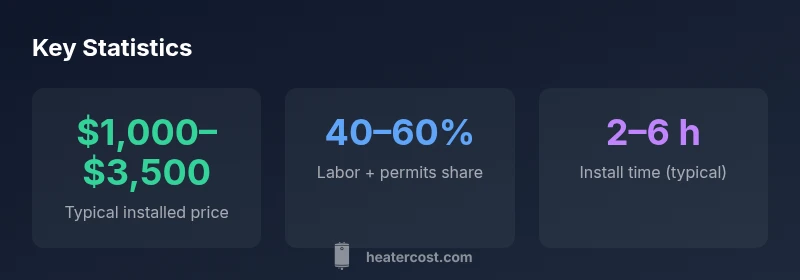
Water heater prices vary widely by type, capacity, energy source, and installation complexity. Installed prices for a standard residential unit typically range from roughly $1,000 to $3,500, with tankless systems often costing more upfront. Regional labor, permits, and efficiency ratings can push totals higher or lower. This guide breaks down pricing, what to expect, and how to budget for your purchase.
Understanding Water Heater Prices
Water heater prices are not a fixed number; they vary by type, capacity, energy source, and installation complexity. For homeowners shopping today, the key is to separate the sticker price from the installed cost and to understand how long the system will operate before needing replacement. According to Heater Cost, water heater prices reflect both equipment costs and the labor to install, vent, connect gas lines, or wire electrical circuits. In general, installed prices for a standard residential unit fall within a broad range, with electric storage tanks typically lower than gas-fired models and tankless systems commanding a premium. Regional codes and permit requirements also shape the final bill. When you evaluate quotes, compare not only the upfront price but also operating costs, warranty terms, and expected lifespan. Price volatility is common in a growing market, so building a price-aware plan helps prevent sticker shock and costly delays.
The Heater Cost team notes that the cheapest option upfront may not deliver the lowest lifetime cost if energy use or maintenance expenses are high. Consider not just the unit price but the full lifecycle cost, including energy efficiency, replacement intervals, and potential rebates.
What Drives Price Variability
Multiple factors influence what you’ll pay for a water heater beyond the unit’s label price. The most obvious are the type (electric storage, gas storage, tankless electric, or tankless gas) and the size or capacity you need. Efficiency ratings, measured by energy factors or uniform energy ratings, affect operating costs and, in turn, the value proposition. Installation difficulty, local labor rates, and whether permits or inspections are required can swing the total dramatically. The installation environment—limited attic space, tight closets, or difficult venting—can add labor hours and add-on materials. Finally, regional competition among plumbers, supply chains, and even climate can push prices up or down. For homeowners and property managers, thinking through these variables before you obtain quotes helps narrow options and avoid overbuying.
Price Ranges by Type
Prices for water heaters vary by system type and installation complexity. In general, electric storage tanks tend to be the most affordable option, while gas-fired tanks add venting and gas-line considerations. Tankless units, especially gas-fired, carry a premium for on-demand hot water and compact space-saving designs. The table below illustrates typical installed price ranges you can expect in a mid-range, 1- to 60-gallon configuration. Remember, these figures assume standard installation in a single-family home; real-world quotes differ due to location, permits, and existing plumbing or electrical work. Based on Heater Cost research, you should budget for both the unit and labor in your planning, not just the sticker price.
Price Range Snapshot
- Electric Storage Tank: typically $1,000–$2,000 installed
- Gas Storage Tank: typically $1,200–$2,800 installed
- Tankless Electric: typically $1,800–$3,500 installed
- Tankless Gas: typically $2,400–$4,500 installed
The Role of Efficiency and Energy Costs
Efficiency matters as much as the initial price because it determines annual operating costs. Higher efficiency models (with better energy factors or Energy Star ratings) tend to cost more upfront but pay off through lower energy bills and longer lifespans. Location also matters: energy prices, climate, and utility incentives influence the long-term value of a given unit. Based on Heater Cost research, higher-efficiency water heaters can reduce annual operating costs by a meaningful margin over the life of the unit, offsetting some of the upfront premium. When evaluating options, compare models with similar capacity and check for rebates or utility programs that can shorten payback periods. The goal is to maximize comfort and reliability while keeping your total cost of ownership in mind.
How to Budget for Water Heater Prices
A practical budgeting approach starts with the use-case. Determine required capacity and whether a tank or tankless model suits your hot-water needs. Then separate the purchase price from installation costs, permits, and any necessary electrical or gas-work. Create a two-column plan: up-front investment and annual operating costs. Add a contingency (5–15%) for unexpected installation challenges, and factor in potential financing options or rebates. Don’t forget maintenance costs over time, such as flushing the tank or replacing anodes. By forecasting both sides—upfront and ongoing—you’ll avoid budget gaps and reduce the risk of delays in replacement or upgrades.
Hidden Costs and Permits
Hidden costs often come from permits, venting modifications, electrical upgrades, and old-unit disposal. Permit fees vary widely by jurisdiction and can add several hundred dollars to total costs in some markets. Venting upgrades or seismic strapping may be required in regions with strict code compliance. Electric-panel upgrades, dedicated circuits, or gas-line work can also add to the bill. Planning for these potential charges in advance helps you avoid surprise invoices and ensures you choose a model compatible with local codes.
Getting Accurate Price Quotes
To obtain reliable price quotes, request itemized proposals that separate equipment cost, labor, permit fees, and disposal. Verify the energy rating and efficiency of each unit, and confirm what’s included in the installation—for example, new venting, piping, or seismic straps. Ask about warranties, service plans, and the expected replacement timeline. On-site assessments can uncover hidden work (like drywall repair or insulation) that affects cost. Compare multiple quotes and check references from other customers to confirm workmanship quality. A well-structured quote helps you understand total cost and avoid costly change orders later.
When to Upgrade vs Repair
Water heaters typically reach a point where repair costs outweigh replacement value. Most traditional storage tanks have a practical life expectancy of about 8–12 years; tankless models can last longer with proper maintenance. If repair needs are frequent or the unit shows signs of inefficiency, upgrading to a newer, more efficient model often makes financial sense. An older unit can also be unsafe or prone to leaks, which increases potential damage costs. Use a cost-benefit approach: compare projected repair bills against the price of a replacement unit and the anticipated energy savings over time.
Maintenance and Longevity Costs
Regular maintenance helps extend the life of your water heater and stabilize long-term costs. Annual inspections, flushing to remove mineral buildup, and anode rod replacement (for steel tanks) are common maintenance tasks. Keeping the unit in good condition can reduce energy waste and prevent unexpected breakdowns. Although maintenance costs add to yearly expenses, they are typically far lower than emergency replacements or major repairs. A proactive maintenance plan is a wise investment that protects your comfort, helps preserve your equipment, and keeps water heater prices from becoming a financial shock in a few years.
Price range by heater type
| Category | Typical Installed Price Range | Notes |
|---|---|---|
| Electric Storage Tank | "$1,000–$2,000" | Depends on tank size and labor |
| Gas Storage Tank | "$1,200–$2,800" | Includes venting and gas-line work |
| Tankless Electric | "$1,800–$3,500" | Higher power requirements may apply |
| Tankless Gas | "$2,400–$4,500" | Venting and gas-line complexity |
Got Questions?
What is the typical installed price range for a standard electric storage water heater?
For a standard electric storage unit, installed prices typically fall in the mid-range of the market. You should expect a price that covers the unit, labor, and any necessary connections, with regional variation. Always compare multiple quotes to ensure you’re getting a fair price.
Electric storage units usually fall in the mid-price range once installation is included; compare quotes to confirm.
Are tankless water heaters more expensive upfront than traditional tanks?
Yes, tankless water heaters generally have a higher upfront cost due to advanced technology and installation requirements. However, they can offer energy savings and space benefits that improve long-term value when properly sized for your home.
Tankless units cost more upfront but may pay off with energy savings and space efficiency.
How do permits affect water heater prices?
Permits and inspections can add hundreds of dollars to total costs, depending on your municipality. They ensure the installation meets safety codes and can affect scheduling and labor requirements.
Permits can add a significant, sometimes unexpected, amount to the total price.
How long do water heaters typically last?
Most traditional storage water heaters last about 8–12 years, while some high-efficiency models can exceed that with proper maintenance. If you notice frequent leaks or rising energy costs, it may be time to replace.
Most water heaters last around 8–12 years; consider replacement if efficiency drops or repairs become frequent.
What should I ask when getting price quotes?
Ask for a complete itemized breakdown (unit price, labor, permits, disposal), confirmation of warranties, energy efficiency ratings, and whether upgrades to electrical or gas systems are needed. Also inquire about potential rebates or financing options.
Get an itemized quote and check warranties and energy ratings.
“Water heater pricing reflects both equipment and installation complexity. A thoughtful evaluation of type, efficiency, and local codes leads to the best long-term value.”
The Essentials
- Budget for total cost, not just sticker price
- Tankless models cost more upfront but may save energy
- Permits and labor can double or triple install costs in some markets
- Ask for itemized quotes to avoid hidden charges
- Maintenance extends lifespan and stabilizes long-term costs