Hot Water Heater Price in 2026: A Practical Guide for Homeowners
Discover hot water heater price ranges for 2026, including installed costs by type (electric, gas, tankless), energy implications, and practical tips to compare total cost of ownership for homeowners.


Hot water heater price varies widely by type, capacity, and installation. Electric storage tanks usually cost less upfront than gas or propane units, while tankless models often carry higher purchase and installation costs. Total installed prices depend on regional labor rates, venting requirements, and whether the unit is a replacement or a new install. For homeowners, understanding the trade-offs between purchase price and long‑term operating costs is essential before buying.
Why hot water heater price varies
According to Heater Cost, the price you pay for a hot water heater is influenced by multiple factors, not just the sticker price. The most impactful variables are the type (electric, gas, or tankless), the unit’s capacity, and the complexity of installation. In addition, regional labor costs, venting requirements, and whether you’re replacing an existing unit or installing a new system all push prices up or down. The more extensive the installation (for example, retrofitting venting for a gas model in a home that previously used electric), the more labor and materials contribute to the final bill. For homeowners, recognizing these levers helps you forecast total costs more accurately and avoid sticker-price surprises.
From a pricing perspective, the distinction between upfront purchase price and long-term operating costs matters. A cheaper unit may cost more to run if it isn’t sized properly for your household’s hot water needs, while a higher-priced model with better efficiency can pay off over time. Heater Cost's broader analysis emphasizes total cost of ownership as the best guide for long-term value.
Price ranges by type: electric, gas, tankless
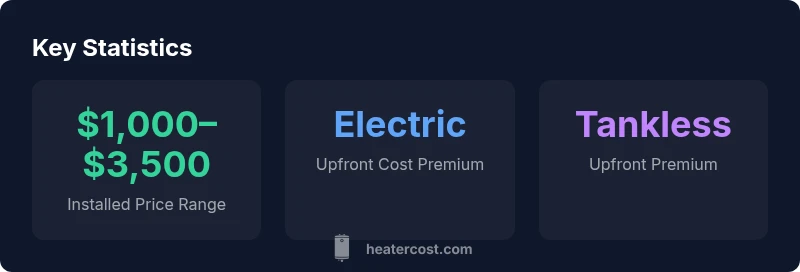
Pricing differences among electric storage tanks, gas storage tanks, and tankless systems drive most of the variability in hot water heater price. Electric storage tanks tend to have the lowest upfront price among the three, driven by simpler installation and widespread availability of electrical connections. Gas storage tanks generally command higher installation costs due to venting, gas line work, and combustion safety measures. Tankless models, whether electric or gas, typically feature the highest upfront price because of compact installation requirements and more complex heat-exchange technology. Across all types, the final price is shaped by capacity (how many gallons or how much simultaneous hot water demand you need), energy efficiency, and any required upgrades to electrical panels or venting. In 2026, many homeowners report that the installed price can fall within a broad range, with the exact figure heavily depending on local codes and contractor labor.
Installed costs: labor, permits, and venting
Installation costs are a major portion of the total price. Labor rates vary by region, and permits may be required for new venting or gas connections. If your home needs electrical upgrades, panel capacity may add to both the time and cost of the project. Venting, gas lines, and condensate drainage considerations can also impact the price; in some homes, routing a new vent or upgrading ductwork is non-trivial. Finally, if you need to replace an old unit that is hard to access or deficient in insulation, you should expect additional costs for removal and disposal. Planning ahead, securing multiple written quotes, and clarifying permit requirements can help you manage these cost drivers more effectively.
Long-term costs: energy efficiency and maintenance
Beyond the initial purchase and installation, energy costs and maintenance frequency shape long‑term price. Higher efficiency models typically save energy and can reduce bills over time, but their higher upfront price may offset savings in the short term. Regular maintenance—such as flushing the tank to remove sediment, inspecting anode rods, and checking for leaks—extends the unit’s life and reduces the risk of expensive repairs. Energy costs are also region-dependent, so a unit that performs well in one climate may not deliver the same savings elsewhere. When evaluating options, weigh the expected operating costs in your climate alongside the purchase price.
Buying strategies: quotes, warranties, and incentives
To avoid overpaying, gather multiple bids from licensed installers and verify what is included in each quote (equipment, labor, venting, permits, and disposal). Look for solid warranties that cover the tank or heat exchanger, as well as reasonable terms for labor. Incentives, rebates, and tax credits can affect the overall price, especially for high-efficiency models. In many areas, utility programs offer rebates for qualifying units, which can substantially reduce the net cost. Finally, read product specifications carefully to compare efficiency ratings (such as Uniform Energy Factor) and to ensure the unit matches household hot-water demand.
Planning for replacement: timing and space considerations
If your current heater is approaching the end of its life or is failing frequently, beginning the replacement planning process early can prevent emergency costs. Consider space constraints in your utility area, noise considerations, and the potential need for a larger or smaller unit based on changes in household occupancy. Replacing a unit during a planned remodel may allow you to bundle upgrades (venting, electrical, and insulation) and secure better labor rates. A proactive plan helps you time the purchase to align with rebates and favorable energy prices.
Cost comparison by model type
| Model Type | Avg Installed Cost Range | Typical Lifespan | Pros | Cons |
|---|---|---|---|---|
| Electric Storage Tank | $1,000–$2,800 | 10–15 years | Lower upfront cost; easy installation | Less energy efficient than newer models in some cases; slower recovery |
| Gas Storage Tank | $1,200–$3,000 | 10–15 years | Strong recovery rate; efficient when new | Vent, fuel costs, and installation complexity |
| Tankless (Gas) | $2,000–$5,000 | 20–25 years | Compact; energy efficient; long lifespan | Higher upfront cost; complex installation |
| Tankless (Electric) | $1,500–$4,000 | 20–25 years | Space-saving; excellent efficiency for small homes | Requires robust electrical service; limited flow for high simultaneous demand |
Got Questions?
What factors influence hot water heater price the most?
The biggest price drivers are the unit type (electric, gas, or tankless), capacity, and installation difficulty. Regional labor rates, venting requirements, and whether the installation involves replacing an existing system also play large roles. Understanding these factors helps you forecast both upfront and ongoing costs more accurately.
Price varies mainly by type, size, and how hard the installation is. Local labor and venting requirements also push costs up or down.
Are tankless water heaters worth the higher upfront cost?
Tankless models can offer substantial energy savings and a smaller footprint, but the higher upfront price and potential installation challenges may not pay off in every home. Size correctly for peak demand and compare long-term savings with the added initial cost.
Tankless can save energy and space, but you’ll want to weigh the upfront cost against your usage and plans.
Should I replace an old water heater or repair it?
If repairs are frequent or approaching the cost of a new unit, replacement is often the smarter long-term choice. Older models may be less efficient and more prone to leaks, making a timely replacement a prudent investment.
If repairs mount up or efficiency is poor, it’s usually better to replace.
How do regional differences affect installed costs?
Labor rates, permitting rules, and fuel prices vary widely by region, which can dramatically shift installed prices. Getting multiple quotes from local installers helps you capture the true regional range.
Costs depend a lot on where you live and the local rules.
Do tax credits or rebates affect price?
Yes. Many areas offer rebates or tax credits for high-efficiency models. Programs change annually, so check current incentives in your region and factor them into your total cost calculation when comparing options.
Yes—rebates can reduce the effective price, so verify current programs where you live.
“When choosing a hot water heater, the cheapest option isn’t always the best value; balance upfront price with energy efficiency and installation complexity to minimize total ownership costs.”
The Essentials
- Compare total installed costs, not just unit price
- Consider fuel type, venting, and electrical needs
- Tankless offers space and efficiency benefits but higher upfront costs
- Account for energy prices in your area when estimating operating costs
- Obtain multiple quotes and verify warranties to avoid surprises