Low Cost Water Heater: A Practical Guide for Homeowners
Explore budget-friendly options for a low cost water heater, including upfront ranges, energy costs, sizing tips, and installation considerations for homeowners in 2026.


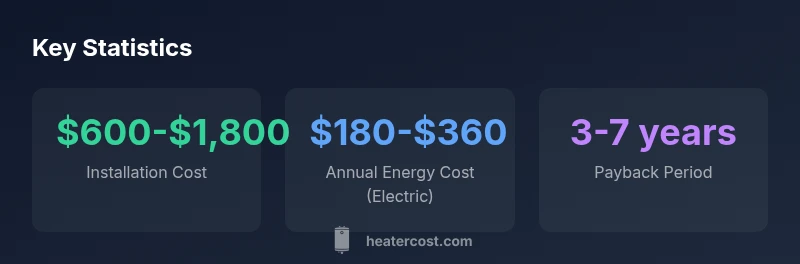
Typically, a low-cost water heater installation falls in the $600-$1,800 range, depending on type and local labor. Electric tanks generally start lower than gas models, while tankless options raise upfront costs but save space. This guide (Heater Cost) compares tanked vs. tankless, outlines installation considerations, and highlights how sizing, efficiency, and incentives affect total value.
What 'low cost' means in practice
When homeowners talk about a low cost water heater, they typically mean an option with a lower upfront price that still meets daily hot-water needs. The term is not a promise of poor performance; affordable models can deliver reliable service for years if sized correctly and installed properly. According to Heater Cost, the cheapest unit is not always the best value; total cost of ownership matters more than sticker price. The right choice balances initial expense with ongoing energy costs and maintenance needs.
To make a sound decision, focus on size, efficiency, and installation requirements. Size matters: a unit that’s too small will cycle excessively and waste water, while an oversized heater wastes standby energy. Efficiency matters: within affordable categories, look for models with good Energy Factor (EF) or uniform energy ratings. Installation costs vary by locale and whether venting is required. Labor charges can swing the total price significantly, so get multiple quotes. The Heater Cost Team recommends grouping delivery, installation, and any required permits in your budget. Finally, search for incentives or rebates that can reduce upfront costs.
Budget options: tanked vs. tankless in the low-cost tier
For many households, the most budget-friendly path is a basic electric or gas storage tank (tanked) heater. These models are simple, reliable, and easy to install, especially in smaller homes. Tankless units can be affordable too, but they often carry higher upfront costs and installation complexity. Electric tankless options, while compact, may still require electrical upgrades and dedicated circuits. Gas tankless units demand venting and gas-line work, which increases labor and permit needs. In 2026, the Heater Cost Analysis shows that the price gap between affordable tanked models and entry-level tankless units can be substantial, but long-term energy savings can justify the investment if you use hot water heavily. When evaluating options, compare not only the upfront price but also expected lifespan, maintenance, and warranty terms. This section helps homeowners decide which path offers the best mix of reliability and value.
Upfront costs and installation considerations
Initial price is only part of the story. For low-cost water heaters, installation costs include any prep work, venting (for gas models), gas line or electrical work, permits, and potential retrofits to meet local code. In many markets, electric storage tanks are cheaper to install because they require less ventilation and simpler electrical connections. Gas models may trigger venting requirements and gas line work, increasing both labor and permit expenses. To avoid surprises, ask for a written quote that itemizes parts, labor, and any permit fees. Consider whether you’ll need a upgrade to your electrical panel or venting system; these are common hidden costs that can push total project price higher.
Operating costs and efficiency
Beyond the sticker price, operating costs determine long-term value. Electric storage tanks generally cost more to run in regions with high electricity rates, while gas models may be cheaper to operate if gas prices are low. Efficiency improvements in newer models can reduce standby losses and improve hot-water delivery. When comparing options, look for the Energy Factor (EF) or uniform energy rating and estimate annual energy use based on your household’s patterns. Even within the low-cost segment, choosing a slightly more efficient model can shorten the payback period significantly, especially in homes with modest hot-water demand.
Sizing and matching hot-water demand
Sizing is critical for value. A unit that’s too small will disappoint by running out of hot water during peak usage, while an oversized heater wastes energy. A common method is to estimate daily hot-water usage and select a model that can deliver the required gallons per minute (GPM) or gallons per day. For households with 2–4 people and average showers, a 40-50 gallon electric tank often suffices; larger families may need 50-80 gallons. Tankless units should be selected to meet peak flow rates with a buffer for simultaneous uses. Always plan for domestic hot water needs at peak times, not just average daily use.
Maintenance, warranties, and lifespan
Low-cost water heaters still require regular care to extend life. Flushing the tank annually, inspecting anode rods (for many tanks), checking connections, and ensuring proper venting for gas models can prevent leaks and rust. Warranties vary by brand and model but typically cover parts for several years; labor coverage is less common. Keep a maintenance log and schedule annual checkups. A well-maintained unit in good condition is more likely to meet its expected lifespan and deliver consistent hot water.
Planning your purchase: incentives, rebates, and budgeting
Finally, turn your attention to total cost of ownership, not just the upfront price. Look for manufacturer rebates, utility incentives, and state or local energy programs that lower the upfront cost or improve payback. Some regions offer tax credits or rebates for efficient electric models or for replacing older units with more energy-dense options. When budgeting, include potential permit fees, electrical upgrades, venting work, and disposal costs. A structured plan that accounts for these factors will help maximize value from a low-cost water heater while minimizing unexpected expenses.
Cost comparison of common low-cost water heater options
| Category | Low-cost option | Typical price range | Notes |
|---|---|---|---|
| Electric Tank | Low upfront cost | $600-$1,600 | Widely available; efficient for small households |
| Gas Tank | Medium upfront cost | $800-$2,000 | Requires venting; efficient for hot water supply |
| Electric Tankless | Higher upfront cost | $1,000-$3,000 | On-demand heating; reduces standby losses |
| Gas Tankless | Higher upfront cost | $1,400-$3,500 | Requires venting; energy efficiency varies |
Got Questions?
What qualifies as a 'low-cost' water heater?
A low-cost water heater minimizes upfront expenses while meeting your daily hot-water needs. It typically refers to electric tank models or basic tankless options with smaller outputs.
A low-cost option means the upfront price is lower, but you still need to ensure it meets your demand.
Are electric or gas heaters cheaper to install?
Electric tanks generally cost less to install than gas models because they require simpler venting and fewer permits. Gas models may have higher installation costs due to venting and gas line work.
Electric tanks usually cost less to install than gas heaters.
How long does a payback period typically take?
Payback depends on energy prices and usage, but many households see break-even within 3-7 years.
For many homes, you break even in about 3 to 7 years.
What maintenance extends a low-cost water heater's life?
Flushing the tank annually and inspecting connections helps prevent sediment buildup and leaks.
Flush the tank yearly and check connections.
Are incentives available to lower upfront costs?
Local rebates, tax credits, and utility incentives can lower upfront costs; check your state energy office and local utilities.
Look for rebates and incentives in your area.
When should I replace vs repair a failing unit?
If repairs exceed half the cost of a new unit or the unit is old, replacement is often wiser.
If repair costs are high or it's old, replace.
“A low-cost water heater represents value when upfront price aligns with energy efficiency and proper sizing.”
The Essentials
- Define budget and compare total cost of ownership.
- Electric tanks are typically cheaper to install than gas.
- Right-size the unit to avoid waste.
- Consider incentives and rebates to lower upfront costs.
- Balance upfront price with long-term energy costs.