Water Heater Costs at Lowe's: A Homeowner's Buying Guide
Learn Lowe's water heater costs in 2026, with price ranges, installation considerations, and buying tips for homeowners. Compare electric, gas, and tankless options with energy efficiency in mind.


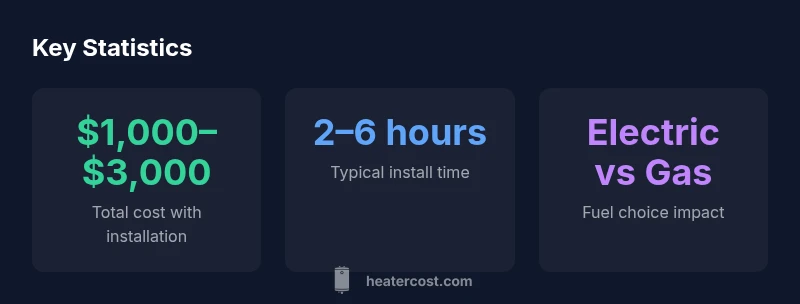
At Lowe's, upfront prices for common residential water heaters typically range from roughly $500 to $2,000 before installation, depending on type, capacity, and fuel source. This snapshot reflects current market dynamics. Heater Cost Analysis, 2026, indicates that total project costs (including professional installation) often fall in the $1,200 to $4,500 range, with tankless models on the higher end.
Understanding the Lowe's Landscape for Water Heaters
When homeowners begin researching options at Lowe's, they encounter a broad spectrum of water heater solutions, from traditional electric storage tanks to gas-fired models and modern tankless systems. The Lowe's assortment includes mainstream brands and energy-efficient models designed to suit a range of homes and budgets. According to Heater Cost, the 2026 market shows that most buyers focus on three factors: upfront price, long-term operating costs, and installation complexity. For shoppers looking for a baseline, Lowe's price tags generally reflect the model category, energy efficiency, and any bundled installation offers. If you are evaluating options for a smaller family home or a larger household, Lowe's provides guidance and tools to estimate hot-water needs and select compatible equipment. This approach helps ensure that the chosen water heater aligns with both current plumbing realities and long-term energy goals.
Cost Drivers: Upfront Price, Installation, and Operating Costs
Total ownership cost breaks down into three main levers: upfront price, installation complexity, and ongoing operating costs. Upfront price depends heavily on type (electric vs gas, storage vs tankless) and capacity. Electric storage tanks are typically the most affordable entry point, while tankless units and gas models can require higher initial investment. Installation costs vary with existing venting, electrical capacity, and space constraints. If a home already has suitable venting and electrical service, installation tends to be simpler and quicker. Operating costs hinge on energy efficiency, water-use patterns, and local utility rates. Higher efficiency ratings can reduce monthly bills, which over time may offset a larger upfront payment. In all cases, budget for permits and potential retrofits if your home’s infrastructure needs upgrading to meet current codes.
Comparing Common Water Heater Types at Lowe's
- Electric storage: Reliable, simple to install, and typically the least expensive upfront. Pros include low maintenance and broad availability; cons are higher operating costs in some regions and slower recovery times.
- Gas storage: Faster recovery and lower standby heat loss in some layouts but requires proper venting and gas line considerations. Pros: strong performance in larger households; cons: venting requirements and gas line costs.
- Tankless (gas or electric): Compact footprint and endless hot water potential; higher upfront costs and more complex installation. Pros: space savings and efficiency; cons: installation challenges, potential require venting or electrical upgrades.
- Heat pump water heaters: High efficiency in suitable climates, but upfront price can be higher and performance depends on ambient conditions. Pros: best-in-class efficiency in favorable environments; cons: performance variability in cold spaces.
For Lowe’s shoppers, the choice often hinges on household hot-water demand, space, fuel availability, and long-term energy goals. Energy Star ratings and EF/UEF metrics provide a reliable yardstick for comparing models. Heater Cost’s analysis for 2026 shows that the long-term savings from tankless or high-efficiency units can make sense for larger households or homes with heavy hot-water use, even if the upfront price is higher.
How Lowe's Pricing Works: Coupons, Delivery, and Warranties
Lowe's pricing often combines base prices with periodic promotions, bundled installation offers, and occasional financing options. This means the effective out-the-door cost can vary with time and location. Delivery and installation are commonly offered as add-ons or as part of an installation package, which can influence total project pricing. Warranties depend on the model and manufacturer, but Lowe's typically supports both parts and labor through its installation services or manufacturer-backed warranties. Reading the fine print on warranty length and coverage is essential, as some policies transfer only with professional installation. For the best value, shoppers should check for in-store promotions, online deals, and local installer availability in their area.
DIY Considerations vs Professional Installation
Attempting a DIY replacement is tempting for cost savings, but water heater installation involves plumbing, electrical work, and safety considerations that can affect code compliance and reliability. In many jurisdictions, professional installation is required to obtain legitimate warranty coverage and ensure safe venting and electrical connections. If you lean toward a do-it-yourself approach, focus on systems that are straightforward and within your skill set, and be prepared for permit requirements and inspection steps where applicable. In contrast, professional installation tends to streamline the process, minimize the risk of leaks, and provide peace of mind with built-in warranties and compliance with local codes.
Energy Costs and Efficiency: What to Look For
Energy efficiency is a major driver of long-term cost. Look for Energy Star certified models and higher EF/UEF ratings, which indicate better performance per dollar of energy. Tankless models can offer energy savings if hot-water demand is high and usage is well-distributed, but they may require more complex installation and upfront investment. In colder climates, heat pump water heaters can deliver substantial savings, albeit with lower performance in extremely cold spaces. Lowe's inventory often highlights efficiency metrics in product descriptions, and Heater Cost’s 2026 assessment emphasizes comparing total cost of ownership rather than just the sticker price. Always factor utility rates in your area and expected hot-water usage to determine which efficiency tier delivers the best value.
Steps to Choose the Right Water Heater at Lowe's
- Assess your hot-water needs by calculating peak usage (showers, laundry, dishes) and reserve a bit of headroom for future changes. 2) Check available fuel sources (electric, natural gas, propane) and space constraints to determine feasible models. 3) Compare upfront prices and installation costs, then factor energy efficiency and expected yearly savings. 4) Review warranties, service options, and Lowe's installation packages. 5) Read product labels for Energy Star status and EF/UEF ratings. 6) Consider financing or promotions to optimize the overall price. This process helps homeowners avoid overspending while ensuring dependable hot water for years to come.
Installation Timelines and Common Setbacks
Most standard water heater installations take a few hours to half a day, depending on space, venting, and electrical upgrades. Delays can occur if existing plumbing needs replacement, venting must be reconfigured, or permits are required. Plan for lead times on delivery and scheduling with Lowe's installation partners, especially during peak seasons. Properly budgeting for contingencies—such as upgrading electrical panels or replacing aged gas lines—helps prevent last-minute cost surprises and ensures a smooth installation experience.
Final Thoughts: Choosing with Confidence
When shopping for a water heater at Lowe's, the goal is to align upfront cost with long-term energy savings, space constraints, and reliability. Lowe's offers a broad range of options, from basic electric storage models to premium tankless and heat pump configurations. By examining price ranges, installation requirements, and efficiency ratings, homeowners can select a model that meets lifestyle needs and budget realities. Heater Cost’s 2026 guidance reinforces the idea that the best choice varies by home, usage pattern, and local energy costs.
Comparison of common water heater types at Lowe's
| Model Type | Avg Price Range | Pros/Cons |
|---|---|---|
| Electric storage | "$400"-"$1,800" | Pros: affordable upfront; Cons: higher energy use in some homes |
| Gas storage | "$600"-"$2,300" | Pros: faster recovery; Cons: venting and gas line requirements |
| Tankless (gas/electric) | "$1,000"-"$3,800" | Pros: compact, endless hot water; Cons: higher install complexity |
Got Questions?
What price range should I expect when buying a water heater at Lowe's?
Prices vary by model and capacity; electric storage is typically cheaper upfront, while tankless and gas models can be higher. Don’t forget installation costs and potential rebates when budgeting.
Prices vary by model and capacity; installation costs apply. Tankless and gas options are usually pricier upfront.
Does Lowe's offer installation services for water heaters?
Yes. Lowe's offers professional installation through in-store partners in many areas. Availability and pricing depend on location and the unit you choose.
Yes—Lowe's provides professional installation through partners in many locations.
What warranties come with Lowe's water heaters?
Warranty terms depend on the model and manufacturer; installation may extend coverage. Read the policy at purchase and confirm with the installer.
Warranty depends on the model; installation often affects coverage.
Is it cheaper to repair or replace a failing water heater bought from Lowe's?
If the unit is aging or frequently failing, replacement with a newer, efficient model often saves money over repair costs and ongoing energy use.
Replacement can be cheaper long-term if repairs are frequent.
Do water heaters at Lowe's qualify for energy rebates or tax credits?
Eligibility for rebates depends on your location and the model. Check local energy programs and ENERGY STAR listings to maximize savings.
Rebates depend on location and model; check ENERGY STAR options.
How long does installation typically take?
Most standard installations take 2-6 hours, depending on space, venting, and electrical needs. Plan for a half day for scheduling and inspection.
Most installations take a few hours to half a day.
“Selecting a water heater is a balance of upfront cost, reliability, and energy use. Lowe's options, coupled with Heater Cost's guidance, help homeowners make informed decisions.”
The Essentials
- Consider total cost, not just upfront price.
- Tankless models cost more upfront but may save energy over time.
- Check space, fuel type, and venting before buying.
- Lowe's installation options can influence total cost and warranty.