Heater Water Costs: A Practical Home Guide
Explore heater water costs, including upfront, operating, and maintenance expenses. Compare electric, gas, and tankless options with data-backed ranges from Heater Cost Analysis, 2026.


According to Heater Cost, the total 10-year cost of a water heater varies by fuel type and efficiency, typically ranging from about $1,500 to $6,000 when you include purchase, installation, energy use, and maintenance. Higher-efficiency, tankless, or gas-fired models can have higher upfront costs but lower ongoing energy bills.
What "heater water" means for your budget
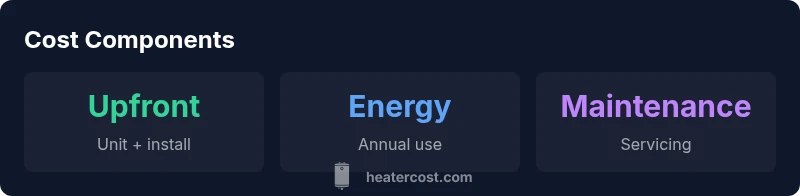
In home energy budgeting, heater water refers to the system that heats water for daily use—showers, laundry, dishwashing, and more. The term is broad, covering electric storage heaters, gas-fired tanks, tankless on-demand systems, and hybrid configurations. For homeowners, the key question is not only the sticker price of the unit but the total lifetime cost: purchase price, installation labor, energy consumption, annual maintenance, and the potential for efficiency incentives or tax credits. This article uses data from Heater Cost Analysis, 2026, to outline practical ranges and decision factors. By understanding how different technologies impact upfront costs and ongoing energy use, you can compare apples to apples when evaluating bids from contractors. The goal is to move from a one-time purchase mindset to a cost perspective that reflects day-to-day operation over many years. When you search for heater water options, consider not just the initial price but also expected energy use, replacement intervals, and maintenance requirements, which together determine long-term affordability for your home.
Fuel types and their impact on cost and performance
The economics of heater water vary notably by fuel source and technology. Electric storage heaters often have lower upfront costs but can incur higher electricity bills in regions with expensive power. Gas-fired models may offer lower operating costs when natural gas is affordable and supply is reliable, though venting requirements and gas line work add to installation complexity. Tankless systems—whether electric or gas—deliver hot water on demand and reduce standby losses but come with higher installation costs and more intricate venting or electrical work. Real-world performance hinges on efficiency ratings, recovery rates, and maintenance quality. Heater Cost analysis, 2026 shows energy price trends as a dominant driver of long-term cost, sometimes eclipsing initial price gaps. When choosing, map out your home’s hot-water draw, climate, and typical occupancy to prioritize a balance of efficiency and simplicity. This helps you select a heater water configuration that minimizes total ownership cost while maintaining comfort and reliability.
Upfront costs vs operating costs: a practical trade-off
A common pitfall is focusing only on upfront price. The cheapest unit may cost more over time if it uses energy more intensively or requires frequent maintenance. Upfront costs include the price of the unit, labor, venting or electrical work, and potential upgrades to piping. Operating costs depend on energy prices, hot-water usage, insulation, and system efficiency. For example, a high-efficiency model may cost more to install but reduce monthly energy consumption enough to justify the difference over several years. The Heater Cost analysis, 2026, indicates that homeowners often break even on modern, energy-efficient upgrades within five to twelve years, depending on fuel type and usage patterns. Consider also the cost of standby losses—electric resistance storage heaters maintain heat even when not in use, which adds to daily energy use if the tank is poorly insulated.
To compare bids effectively, request a full bill of materials from installers, including venting, backflow preventers, expansion tanks, and any required ductwork. Use the same assumed hot-water usage for each bid so you’re comparing apples to apples. If you anticipate changing occupancy or adding a bathroom, plan for future load and a potential upgrade that could alter the economics of your heater water project.
Sizing, efficiency, and the role of recirculation pumps
Sizing a water heater accurately is critical to long-term performance. An undersized unit will struggle to meet demand, leading to longer recovery times and more energy waste through repeated heating cycles. An oversized system wastes energy by keeping more water hot than you need, increasing standby losses. Efficiency ratings (uniform energy factor UEF or, in some regions, energy factor EF) help guide selections, but real-world performance depends on installation quality, insulation, and the home's hot-water draw pattern.
Recirculation pumps can improve comfort by delivering hot water near taps with shorter wait times. They can raise electricity use if left running continuously, but smart or timer-controlled pumps reduce energy waste significantly. If you incorporate a recirc loop, factor in the pump cost, installation, and potential additional piping. The Heater Cost analysis, 2026 finds that well-matched sizing plus smart controls yields the best long-term energy savings, particularly for households with peak hot-water use in mornings and evenings.
Installation, permits, and maintenance best practices
Installation quality matters as much as the heater itself. Improper venting, gas line sizing, or electrical connections can degrade efficiency and safety. Before purchasing, confirm whether your project requires permits, inspections, and potential code updates in your area. Some jurisdictions offer rebates for high-efficiency models or for replacing older units, which can influence the total cost of ownership. The cost of permits and inspection is typically a small but essential component of the overall budget.
Maintenance is the silent cost driver: regular flushing to remove mineral buildup, checking the anode rod for metal corrosion, and calibrating thermostats can preserve efficiency and prolong life. A neglected unit can deteriorate in efficiency by several percentage points over a few years, compounding operating costs. For renters and property managers, scheduling a service contract with a licensed technician can minimize unexpected breakdowns and preserve resale or rental value.
Real-world ranges and a decision framework
In practice, homeowners should approach heater water choices with a simple framework: define your hot-water needs, estimate upfront and operating costs for each option, and test your assumptions against local energy prices and incentives. Real-world ranges vary by climate, fuel availability, and the age of the home. Based on Heater Cost analysis, 2026, a typical electric storage system in a moderate climate may have lower upfront costs but higher energy costs, while a gas or tankless system can incur higher installation costs but offer energy savings over time. Use this to guide a decision matrix that weighs upfront investment, annual operating expense, and expected lifespan. For most households, the optimal decision balances comfort, reliability, and long-term affordability rather than chasing the lowest upfront price alone. The Heater Cost team recommends you gather at least three bids, verify warranties, and request energy-performance data from manufacturers to inform your choice.
Model configurations and typical performance
| Model Type | Avg Lifespan | Energy Use (approx/year) |
|---|---|---|
| Electric storage | 10-15 years | 600-1000 kWh |
| Gas storage | 12-15 years | 550-900 therms |
| Tankless electric | 20+ years | 400-800 kWh |
| Tankless gas | 20+ years | 450-700 therms |
Got Questions?
What does 'heater water' refer to in household energy planning?
Heater water refers to the system that heats water for domestic use—showers, laundry, and other daily tasks. Costs include the price of the unit, installation, energy use, and ongoing maintenance, all of which influence long-term affordability.
Heater water is the hot-water system in your home, and its costs come from both the purchase and ongoing energy use.
Do costs vary by fuel type?
Yes. Electric, gas, and propane options differ in upfront installation costs and ongoing energy use. Gas and tankless configurations can be cheaper to operate in some regions, but installation complexity and venting requirements can raise initial costs.
Costs vary by fuel type; gas and electric options have different upfront and operating costs.
What factors influence upfront costs?
Upfront costs depend on heater type, capacity, venting needs, labor, and whether a replacement or new installation is involved. Tankless and solar-assisted systems generally require more piping and electrical work.
Upfront costs depend on heater type and installation requirements.
How long does installation take?
Typical installation ranges from a few hours to a full day for standard units; more complex setups or tankless systems may take longer. Permits and inspections can add time to the project.
Most installations take a day or less, but complex jobs can require more time.
What maintenance improves efficiency?
Regular flushing, checking the anode rod, and thermostat calibration help maintain efficiency. Scheduling annual inspections can prevent energy waste and extend heater life.
Regular maintenance keeps your heater efficient and long-lasting.
“Water heating is often the second-largest energy expense in homes; choosing the right heater requires balancing upfront costs with long-term energy savings.”
The Essentials
- Define total cost, not just price
- Higher upfront cost can pay off in energy savings
- Energy prices drive long-term costs as much as efficiency
- Get multiple bids and compare full cost estimates