How Much Is a Pool Heater? Prices, Types, and Budgeting in 2026
Discover realistic pool heater price ranges, compare gas vs heat pumps, and learn how permits, installation, and operating costs affect your total budget in 2026.


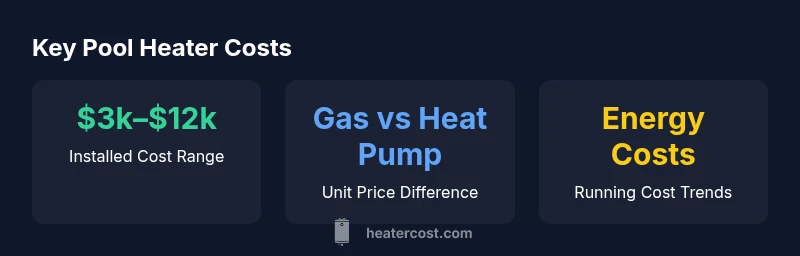
How much is a pool heater? For most residential pools, unit prices range from roughly $2,000 to $6,000 for a standard heater, with total installed costs typically between $3,000 and $12,000 depending on heater type and pool size. Costs vary by region and labor, so getting multiple quotes is essential.
What drives pool heater cost
For many homeowners, the simplest answer to how much is a pool heater is 'it depends'. The bottom line is that total project price is built from several interdependent components. According to Heater Cost, the primary cost drivers are the heater unit price, installation labor, electrical and gas line work, and local permitting or inspection fees. Regional differences in labor rates and fuel costs also play a meaningful role. In this section we unpack these elements and show how they combine to form a total budget. We’ll walk through a practical example and provide a framework you can apply to your own situation.
Key factors include:
- Heater type: gas vs heat pump vs electric resistance; each has different upfront costs and operating costs.
- Sizing and BTU: oversizing or undersizing affects both equipment cost and efficiency.
- Site conditions: accessibility, existing plumbing, electrical service, and venting requirements drive labor time.
- Permits and codes: some jurisdictions require permits, inspections, and safety checks that add to the cost.
- Warranties and service plans: longer warranties may add to upfront price but reduce risk.
As you plan, keep in mind that price tags vary by region and retailer, so your numbers may differ from the examples in this article. The Heater Cost team found that the most reliable way to estimate is to gather multiple quotes after confirming exact pool dimensions and desired features.
Gas heaters vs heat pumps: price and value
Gas pool heaters typically have a lower upfront price for the unit, which can make them attractive for quick heat in colder climates. However, operating costs can be higher due to natural gas or propane consumption, and fuel price volatility can widen the total cost of ownership over time. Heat pumps, by contrast, usually carry a higher upfront unit price but offer much lower energy costs in moderate climates because they extract heat from the ambient air. Over the life of the system, heat pumps can deliver substantial savings, especially in regions with mild winters and relatively cheap electricity. When comparing, consider not just the sticker price but expected annual energy use, maintenance needs, and the climate you live in. Based on Heater Cost research, the payback period for energy savings can vary widely but is often shorter in warmer regions and with properly sized equipment.
Size and compatibility: pool size, plumbing, and BTU
Correct sizing is critical to balancing upfront cost with operating efficiency. A heater that’s underpowered will struggle to reach the desired water temperature, running longer and wasting energy. Conversely, an oversized heater heats quickly but costs more upfront and may shorten the unit’s lifespan due to frequent cycling. Factors like pool surface area, desired temperature, typical climate, sun exposure, and pool cover usage all influence BTU requirements. Installation compatibility—such as existing gas lines or electrical service, venting needs, and space for clearances—also affects total cost. In practice, a professional should confirm BTU sizing and refrigerant or combustion requirements, then provide a precise quote that accounts for labor and any necessary upgrades.
Installation factors: permits, venting, and labor
Installation costs can swing dramatically based on site complexity. If your pool heater location requires new gas piping, upgraded electrical service, or venting adjustments, expect higher labor charges and potential permit fees. Older homes may require additional safety upgrades, gas line pressure tests, or electrical upgrades, each adding to the bottom line. Labor rates differ by region and by contractor, and delays due to weather or scheduling can push costs upward. To avoid surprises, obtain written quotes that itemize equipment, labor, permits, and any required inspections. A clear scope helps ensure you won’t pay for contingencies you didn’t anticipate.
Energy costs and efficiency to consider
Ongoing energy costs, which can be the largest component of a pool heater’s lifetime expense, hinge on efficiency ratings and climate. Gas heaters generally consume fuel and can be expensive to operate in energy-dense markets. Heat pumps are often the most efficient option in temperate climates, delivering more heat per kilowatt-hour of electricity than gas burns per therm. Efficiency is reported as COP (coefficient of performance) for heat pumps and as AFUE (annual fuel utilization efficiency) for gas heaters. In practice, a high-efficiency model paired with a pool cover, optimized thermostat settings, and smart controls can reduce operating costs noticeably. The initial savings from a cheaper unit may be offset by higher energy bills over several years if the heater isn’t appropriately sized or protected from heat loss.
Warranty, maintenance, and lifecycle cost
Most pool heaters come with warranties that cover parts for several years, and some offer optional service plans. A longer warranty often corresponds to higher upfront pricing but can reduce out-of-pocket repair costs. Maintenance matters: regular cleaning, gas line inspections (for gas units), refrigerant checks (for heat pumps), and proper winterization can extend the heater’s life. Lifespan varies by type and usage; heat pumps typically last longer under correct maintenance, while gas units may require more frequent component replacements. When budgeting, factor in anticipated replacement cycles and potential upgrades to meet evolving codes or efficiency standards.
Getting a precise quote: tips and questions to ask
To obtain a reliable estimate, start with a manual calculation of your pool’s BTU requirements and desired temperature—then request quotes that specify equipment model, installation scope, and all ancillary costs. Questions to ask include whether permits are included, if electrical upgrades are needed, and whether venting or gas line modifications are included in the quote. Ask for a written labor breakdown, anticipated start and finish dates, and warranty details. A good quote will also reveal potential savings from energy-efficient SMART controls or a pool cover. Compare at least three reputable contractors to ensure you’re maximizing value and avoiding sticker shock.
Quick budgeting checklist for pool heater projects
- Confirm your pool’s size, climate, and target temperature to estimate BTU needs.
- Decide between gas and heat pump, considering long-term operating costs.
- Get written estimates that itemize equipment, installation, permits, and contingencies.
- Check for available rebates or tax credits for energy-efficient equipment.
- Consider a pool cover and smart controls to reduce energy use.
- Review warranties and maintenance plans to protect your investment.
Next steps: planning your pool heater project
With a clear price range and a preferred heater type in mind, create a budget that separates upfront costs from ongoing energy expenses. Schedule site visits with licensed contractors to confirm sizing, permit requirements, and any electrical or gas line upgrades. Use the cost ranges discussed here as benchmarks when evaluating quotes, and keep the long-term cost of ownership in view as you decide which heater best suits your home and climate.
Comparison of common pool heater types
| Heater Type | Typical Unit Price (USD) | Typical Installed Cost (USD) | Notes |
|---|---|---|---|
| Gas pool heater | 1500–4000 | 3000–9000 | Faster heat; higher operating costs |
| Pool heat pump | 2500–7000 | 3500–11000 | More energy efficient in mild climates |
Got Questions?
What is the typical price range for a pool heater installed?
Installed pool heater prices vary by type and project specifics. Gas heaters typically cost less upfront but can incur higher ongoing energy costs, while heat pumps carry higher upfront prices but lower operating costs in milder climates. Budget for equipment, labor, permits, and potential upgrades.
Prices vary by heater type and installation. Expect upfront equipment costs plus labor and permits; energy costs depend on climate and efficiency.
Do heat pumps cost more upfront than gas heaters?
Yes, heat pumps generally have a higher initial price than gas heaters. However, they often deliver lower operating costs over time, especially in moderate climates with electricity priced competitively. Evaluate total cost of ownership rather than sticker price alone.
Heat pumps cost more up front, but can save you money over time with lower energy use.
Are permits required for installing a pool heater?
Permit requirements vary by locality. Some jurisdictions require electrical or gas line work to be inspected, while others may not. Always check with your city or county building department and your contractor to ensure compliance and avoid penalties.
Permits depend on your area; ask your contractor which permits apply.
How long does a pool heater last?
Lifespan depends on type and maintenance. Heat pumps often last longer with regular service, while gas units may need more frequent component replacements. Expect roughly a decade for many models with proper care, though warranties vary by brand.
Most heaters last around a decade with good maintenance; some last longer, others shorter.
How can I reduce pool heater operating costs?
Choose a high-efficiency model, size it correctly, use a pool cover, and maintain a steady temperature. Smart controls can optimize heating times, reducing energy use when the pool isn't in use.
Use a high-efficiency unit, cover the pool, and program heating times to save energy.
Is it cheaper to replace only the pool heater or upgrade plumbing at the same time?
If existing plumbing or gas/electrical lines limit performance, upgrading those components alongside the heater can reduce future repair costs and improve efficiency. If the system is in good shape, replacing only the heater may be sufficient.
Sometimes upgrading lines or connections saves more in the long run than replacing just the heater.
“A well-chosen pool heater should balance upfront price with long-term energy use. Don’t price heat alone—total cost of ownership matters.”
The Essentials
- Estimate total cost using unit price, labor, and permits
- Gas heaters are cheaper upfront but have higher running costs
- Heat pumps can offer long-term savings in moderate climates
- Size and installation conditions significantly influence costs
- Get multiple quotes and verify permits early