Pool Heater Cost: A Practical Guide for 2026
Explore pool heater cost ranges, compare heater types, and learn how upfront installation and long-term operating expenses influence total cost for 2026.


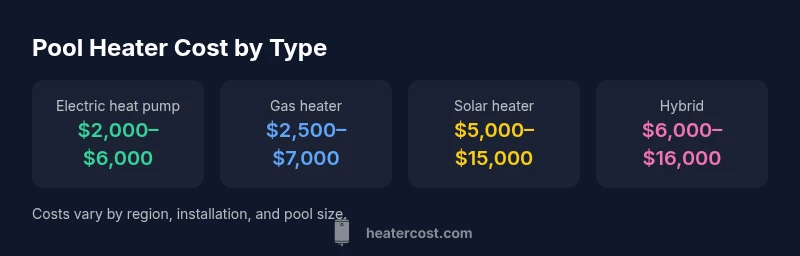
Pool heater cost varies widely by type and pool size. Installed heat pumps usually run $2,000–$6,000, gas heaters $2,500–$7,000, and solar options $5,000–$15,000. Add-on electrical work can add 10–30%. Operating costs depend on energy source, local rates, and usage. Choosing the right heater also depends on climate, swim season, and maintenance needs.
Understanding pool heater cost fundamentals
According to Heater Cost, pool heater cost varies widely by type, pool size, climate, and installation complexity. The first decision is choosing a heater technology: electric heat pumps, natural gas or propane gas heaters, solar heating, or hybrid configurations that combine heat pump and solar. Each option has a different upfront price range and long-term operating expense, so a true cost assessment must consider both initial investment and annual energy use. Pool size matters because larger pools demand higher BTU ratings; climate affects how often you run the heater; and installation complexity can add significant labor costs if your equipment must be integrated with existing electrical services, natural gas lines, or a new pool automation system. When evaluating bids, request itemized quotes that separate equipment cost, installation labor, electrical upgrades, gas line work, and permits. The price you see in the brochure rarely matches the final invoice, especially in regions with high labor rates or stringent permitting. In short, the best way to forecast pool heater cost is to map out your desired swim season, climate realities, and the specific pool configuration.
Comparing common heater types: pros and cons
Electric heat pumps
- Pros: High efficiency, lower operating costs in mild climates, relatively quick to install.
- Cons: Performance drops in cold water or very cold outdoor temperatures; higher upfront cost than some basic electric systems.
Natural gas/propane gas heaters
- Pros: Fast heating, reliable in colder climates, consistent performance regardless of ambient temperature.
- Cons: Higher ongoing fuel costs when rates rise; emissions considerations; venting and gas line work can add to upfront costs.
Solar heaters (and solar-assisted systems)
- Pros: Very low operating costs when sun exposure is good, long lifespan, eco-friendly.
- Cons: High upfront costs, performance depends on sun availability, may need a complementary system for year-round heat.
Hybrid heat pumps + solar
- Pros: Balances quick heating with energy savings, better year-round performance in some climates.
- Cons: Higher upfront investment, system complexity.
Choosing among these requires evaluating climate, swim-season goals, electricity/gas prices, and available space for equipment and weather-resilient installation.
Installation and upfront costs: what drives the price
Upfront costs include the heater unit, any required heat exchanger components, and installation labor. The scope of work often expands with existing equipment compatibility and site conditions. Permits can add to the timeline and cost, typically ranging from a modest administration fee to a few hundred dollars, depending on local codes. Labor costs fluctuate with region and installer expertise, and may include trenching for gas lines, electrical panel upgrades, and integrating the heat system with pool controls. If your pool has a large surface area or high water volume, you may need a higher BTU rating, which increases both equipment and installation costs. Additionally, some homes require weatherproofing or enclosure upgrades to shield equipment from sun and weather, adding to the upfront investment. It’s critical to obtain multiple, itemized bids that separate equipment, labor, permits, and any necessary electrical or gas-line work to avoid sticker shock at project kickoff.
Operating costs by energy source: annual budgets
Annual operating costs hinge on energy source, pool size, usage patterns, and climate. Electric heat pumps tend to offer the lowest operating costs in moderate climates, often resulting in yearly energy bills that are a few hundred dollars for a typical seasonal pool. Gas heaters can deliver faster heating but may incur higher fuel costs, particularly in regions with volatile gas prices. Solar solutions minimize ongoing energy costs but may require a supplemental heater on colder days or during cloudy months. Hybrid systems aim to balance performance and efficiency. To estimate a realistic annual budget, multiply the heater’s BTU rating by the number of hours you expect to run it per year, then apply your local electricity or gas rates. Don’t forget maintenance-related costs, such as annual service, water chemistry monitoring, and potential component replacements.
Maintenance and longevity: keeping costs under control
Regular maintenance—including chemical balancing, filter checks, and seasonal start-ups—extends heater life and preserves efficiency. Heat pumps typically last around 10–15 years with proper service; gas heaters often have similar lifespans, though components like heat exchangers may wear differently. Solar heating components can outlast other options, sometimes reaching 15–25 years if properly maintained and protected from harsh weather. Annual professional inspections are valuable, as technicians can detect wear, refrigerant leaks, and corrosion before costly failures occur. Drain-and-clean procedures for solar collectors, vent inspections for gas units, and coil cleaning in heat pumps are essential. Lifestyle factors also matter: heavy pool usage, saltwater environments, and extreme weather can shorten life and raise maintenance costs. By budgeting for routine service every 12–24 months and setting aside funds for eventual replacement, homeowners can manage total ownership costs more predictably.
Financing, incentives, and warranties: making the numbers work
Financing options can soften the upfront burden. Many installers offer installment plans, and some manufacturers provide extended warranties that cover critical components for 5–15 years. Warranty coverage varies by model and region, so verify inclusions for the compressor, heat exchanger, and controls. Energy-efficiency incentives or local rebates may be available in certain markets, reducing the effective cost of a high-efficiency heater. When evaluating warranties and incentives, consider expected maintenance needs and the cost of potential repairs after the warranty expires. A longer warranty can translate into lower lifecycle risk, but it may come at a higher upfront price. Always read the terms, including what is excluded and how service is activated.
Solar and hybrid solutions: when they make sense
Solar heating is most compelling in sunny climates with long swim seasons, especially when paired with a heat pump for cooler days. The combination maximizes comfort while minimizing energy use. In milder climates, solar can dramatically lower operating costs but still relies on supplemental heating to cover shoulder seasons or nights. Hybrid systems may offer the best of both worlds by using solar during sunny periods and switching to a heat pump during cooler days. Before committing, model your typical swimming season, sun exposure, and electricity rates to determine whether a solar or hybrid setup provides a meaningful return on investment.
Quick-start planning checklist: steps to take now
- Define your target swim season and comfortable water temperature range.
- Measure your pool size and determine likely BTU requirements.
- Compare heater types based on climate, cost, and maintenance.
- Gather at least 3 detailed, itemized quotes.
- Check local permit requirements and energy incentives.
- Factor installation complexities, electrical upgrades, and gas-line needs.
- Review warranties and expected replacement timelines.
- Build a simple lifecycle cost model including energy use and maintenance.
- Consider a commissioning plan with a professional who can optimize controls and temp schedules.
- Plan for seasonal maintenance to maintain efficiency and reliability.
- Explore financing options and potential rebates.
- Create a contingency budget for unexpected installation challenges.
dataTableSectionPlaceholder
Estimated costs by heater type
| Model Type | Typical Installed Cost Range | Estimated Annual Operating Cost (Mid Climate) |
|---|---|---|
| Electric heat pump | $2,000–$6,000 | $200–$500 |
| Natural gas heater | $2,500–$7,000 | $400–$1,000 |
| Solar heater | $5,000–$15,000 | $0–$250 |
| Hybrid (heat pump + solar) | $6,000–$16,000 | $0–$350 |
Got Questions?
What is typically the cheapest pool heater to install?
The cheapest option is often a basic electric resistance heater, but this may not be the most economical over time due to high operating costs in many climates. A cost-effective approach is to compare upfront price with expected annual energy use across options.
Generally, basic electric heaters cost less upfront but can be expensive to operate; compare lifetime costs for the best value.
How long does a pool heater typically last?
Most pool heaters last about 8–15 years depending on type, usage, and maintenance. Heat pumps and gas units have different wear patterns, so plan for eventual replacement within your long-term budget.
Most heaters last roughly a decade or more, depending on care and climate.
Do I need a permit to install a pool heater?
Permits are common for electrical or gas work and vary by jurisdiction. Have your contractor confirm permitting needs and include any permit fees in the upfront estimate.
Yes, permits are usually required for electrical or gas work; check with your contractor.
Can I install a pool heater myself?
Most jurisdictions require licensed professionals for gas-electrical work. DIY installation can void warranties and create safety risks. Use a licensed contractor for reliability and code compliance.
DIY installations are not recommended for gas or electrical work; hire a licensed pro.
How does climate affect pool heater cost?
Climate influences both upfront equipment choice and operating costs. Colder climates favor gas heaters or hybrids for rapid heating, while milder climates benefit heat pumps and solar for lower long-term costs.
Climate greatly shifts both choice and ongoing costs; tailor your system to your local weather.
What maintenance is required to keep costs down?
Annual service, proper water chemistry, and periodic component checks extend life and efficiency. Address leaks, refrigerant, or gas issues promptly to avoid expensive repairs.
Keep up with yearly service and water chemistry to protect efficiency and avoid big repairs.
“Selecting the right pool heater is a balance of upfront investment and long-term energy use. A well-chosen system aligns climate, pool use, and maintenance expectations to minimize lifecycle costs.”
The Essentials
- Budget with type-based ranges for upfront costs
- Climate drives energy source choice and operating costs
- Ask for itemized bids to avoid hidden fees
- Factor maintenance into long-term cost planning
- Explore incentives and financing options to improve payback