Hot Water Heater Replacement Costs: What to Expect in 2026
Learn the true cost to replace a hot water heater in 2026, including unit types, labor, permits, and energy considerations, plus tips to reduce expenses for homeowners and property managers.


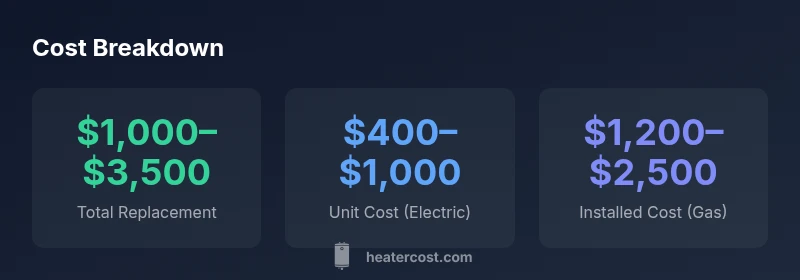
On average, the total cost to replace a hot water heater ranges from $1,000 to $3,500, depending on unit type and installation complexity. According to Heater Cost, labor and permits can add $300 to $1,500, with tankless systems usually at the higher end. Gas vs electric considerations and venting requirements also influence final pricing.
Market overview and cost drivers
Replacing a hot water heater is a common home improvement project, but prices vary widely by region, energy source, and the chosen technology. In 2026, homeowners and property managers should expect a broad range that reflects unit price, labor, permits, venting requirements, and potential upgrades to meet current code standards. The best way to think about the total is to separate the upfront unit cost from the installation costs and any necessary venting or electrical work. According to Heater Cost, the most influential drivers are unit type (electric vs gas vs tankless), the need for venting or gas line upgrades, and local permit requirements. Recognize that the cheapest option may not deliver the long-term value if it lacks efficiency or reliability. A thoughtful evaluation should weigh upfront affordability against ongoing energy costs and reliability over time.
In many markets, replacement timing is influenced by the age and efficiency of the existing unit. An older storage tank may struggle with efficiency losses and leaks, while newer models offer better insulation and performance. The Heater Cost analysis emphasizes that even though tankless models often carry a higher initial price, their efficiency and compact footprint can yield savings over a longer service life, depending on usage patterns and hot water demand. When planning, consider both immediate out-of-pocket costs and longer-term operating expenses to determine the true cost of ownership.
Unit type cost ranges
Choosing a unit type is the single biggest factor in the price you’ll pay. Electric storage tanks are typically the most affordable to purchase and install, making them a popular choice for many homes. Gas storage tanks can be more expensive due to venting and gas line considerations, but they often offer faster recovery and lower operating costs in regions where gas is cheap. Tankless water heaters, whether gas or electric, command the highest upfront investment because they require more complex installation and, in some cases, venting upgrades. The cost spectrum below reflects typical ranges seen in many markets, but local labor rates and code requirements can shift these numbers.
From a long-term perspective, efficiency matters. A more efficient model may cost more upfront but can reduce yearly energy use, potentially offsetting the higher purchase price over time. Heaters with better insulation and advanced controls may also reduce standby heat loss, helping your bill in the years ahead.
Labor, permits, and installation considerations
Installation costs are frequently driven by labor time and any required permitting. A straightforward swap—like-for-like replacement in an accessible utility area—tends to be on the lower end of the spectrum. More complex installations, such as replacing an electric tank with a gas unit or upgrading to a tankless system, can significantly increase labor hours and material costs. Permitting requirements vary by jurisdiction and may include inspections, venting adjustments, gas line work, or electrical panel changes. Disposal of the old unit is sometimes included in the price, but not always, so ask for a clear breakdown. Local code changes in 2026 may require upgrades to venting, seismic straps, or expansion tanks, all of which affect total cost.
To minimize surprises, request a written proposal that itemizes the new water heater, venting or gas work, permits, taxes, and disposal. If you’re replacing a failed unit, you may also need temporary emergency heating options or a short-term loan to cover the project. Budget buffer guidelines, like a 10–15% contingency, can help you absorb unforeseen issues.
Gas vs electric and venting complexities
Gas models typically incur higher installation costs due to venting requirements, gas line work, and the need for proper combustion air. Electric models usually have simpler venting needs, which can lower installation costs but may require upgrading electrical circuits or a dedicated breaker, depending on the home’s existing service. Venting complexity is especially relevant when upgrading to a higher-capacity unit or moving from a non-vented location to a vented configuration. When evaluating bids, ensure the installers account for correct vent sizes, material transitions, and compliance with local building codes. A misstep here can lead to degraded efficiency or safety concerns and may require costly corrections later.
Energy costs and reliability should be part of the decision as well. Gas tanks can be economical to operate in colder climates where natural gas is inexpensive, while electric systems may benefit from off-peak rates in some regions. Tankless versions, while flexible, demand careful sizing to meet peak hot water demand without overworking the unit or sacrificing temperature control.
Tankless specifics and energy efficiency rebates
Tankless water heaters are popular for their space savings and potential energy efficiency advantages, but their upfront costs are higher, and installation is more intricate. They respond to demand rather than storing hot water, which can lead to energy savings if your usage pattern is variable or favors short bursts of hot water. When evaluating benefits, size the unit to your peak load rather than your average demand to prevent short-cycling or reduced hot-water delivery.
Rebates and tax incentives for energy-efficient equipment vary by region and program year. In 2026, many utilities and state programs offer rebates for energy-efficient replacements, especially for heat pump water heaters or gas units with high efficiency ratings. Always verify current eligibility, required performance criteria, and application deadlines before committing to a specific model. Consider pairing a new water heater with improvements in insulation, smart thermostats, or recirculation pumps to maximize comfort and efficiency.
Financing, incentives, and timing for replacement
Financing options can soften the upfront impact of a replacement, especially when upgrading to a tankless or high-efficiency model. Look for utilities or manufacturers offering 0% financing or rebates that cover a portion of the unit cost or installation. Timing can matter for price, as installers may have seasonal demand fluctuations, and some programs offer limited windows for rebates. Plan replacements during mild weather to minimize interruptions and labor complexity. When budgeting, consider lunch-ready quotes from multiple licensed installers, and compare not just the bottom line but also warranty coverage, service availability, and the contractor’s track record with venting and electrical work.
When to replace vs repair and how to plan
As water heaters age, repairing components may be tempting, but repeated repairs can become a poor investment. A general rule is to replace a unit that is more than 10-12 years old, shows frequent leaks, or requires frequent, expensive maintenance. If you notice rust-colored water, reduced hot water output, or rising energy bills corresponding with the age of the unit, replacement often makes financial sense over continued repair. Planning involves evaluating your home’s energy use, the cost of a new unit, and the potential energy savings from a more efficient model. Create a timeline and budget, gather multiple bids, and verify that the chosen contractor will handle permitting, venting, and disposal in one bundled package.
How to estimate costs with a step-by-step approach
Start with the unit cost based on your preferred model. Add installation costs, which include labor, venting, electrical or gas work, and necessary permits. If you are upgrading venting or installing a new expansion tank, add those line items. Don’t overlook disposal fees or old-unit removal, which some contractors charge separately. For a precise estimate, request an on-site evaluation from at least two licensed professionals who can assess venting needs, gas line availability, electrical upgrades, and accessibility. Use a side-by-side comparison sheet to track unit price, labor, permits, and any mandatory code upgrades. Finally, factor in potential rebates and energy savings to calculate the projected payback period and long-term savings.
Common mistakes that inflate replacement costs
Common missteps include selecting a unit based on upfront price alone, skimping on venting or electrical upgrades, or failing to factor in permit and inspection fees. Some homeowners forget to consider the disposal of the old unit and any required piping or venting adaptations. Rushing to replace a heater without a formal assessment can lead to inefficiencies, insufficient hot water, or safety concerns. Always obtain written bids, confirm warranty terms, and ensure the installer documents all code-required upgrades and permits. Avoid three common traps: choosing the wrong size unit, installing an undersized venting system, and neglecting energy-efficient options that could lower ongoing costs. A well-planned replacement can deliver better comfort, reliability, and lower utility bills over the life of the system.
Replacement cost ranges by model type
| Model Type | Typical Unit Cost | Installed Cost Range | Notes |
|---|---|---|---|
| Electric storage tank | $400-$1,000 | $800-$1,500 | Most common; electric models widely available |
| Gas storage tank | $600-$1,400 | $1,200-$2,500 | Vent needs and gas work can raise costs |
| Tankless (gas or electric) | $1,000-$3,000 | $2,500-$4,500 | Space-saving; higher labor and install complexity |
Got Questions?
What costs are included in replacement?
Replacement typically includes the new unit, installation labor, permits, and disposal. Optional add-ons can include venting upgrades, expansion tanks, and recirculation pumps. Get a written bid that itemizes each component to avoid hidden charges.
The main costs are the unit, labor, and permits; extras depend on your home's setup.
Do I need a permit to replace a water heater?
Most jurisdictions require a permit for water heater replacement. The process usually involves an inspection and verification that venting, gas lines, and electrical work meet code. Check with your local building department before starting.
Yes, permits are often required; check your local rules.
What is the difference in cost between electric and gas water heaters?
Electric models generally cost less to buy and install due to simpler venting, but might require electrical upgrades. Gas models can incur higher upfront costs because of venting and gas line work, though operating costs can be lower in some areas. Compare total cost of ownership.
Electric is usually cheaper upfront; gas can be pricier to install but may save on operating costs in some markets.
Is a tankless water heater worth the extra cost?
Tankless units have higher upfront costs but offer space savings and potential energy efficiency. For households with high hot-water demand or limited space, they can be a good long-term investment. Calculate the payback period based on usage and energy costs.
Tankless costs more upfront, but can save energy and space if you use hot water efficiently.
How long does replacement take?
Most replacements can be completed in half a day to one full day, depending on access, venting, and electrical or gas work. For complex upgrades, plan for longer timelines and potential scheduling limits with contractors.
Typically a day or less, depending on your setup.
“The cost to replace a hot water heater is highly dependent on the technology chosen and the installation specifics, but with careful planning and upfront permitting, homeowners can avoid surprises.”
The Essentials
- Know the total cost range before choosing a unit.
- Electric tanks are usually cheaper to install than gas or tankless.
- Venting, permits, and electrical upgrades can double the install price in some cases.
- Tankless units offer space and efficiency benefits but cost more upfront.
- Get multiple bids and factor in rebates to improve value.