Hot Water Tank Replacement: Costs, Choices, and Planning
Understand hot water tank replacement costs, timing, and planning for homeowners, renters, and managers, with sizing, permits, and energy considerations.


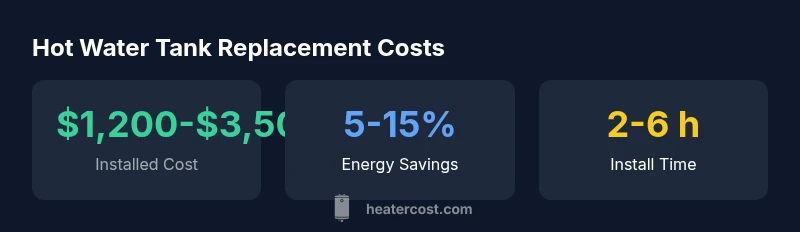
The typical installed cost for hot water tank replacement ranges from $1,200 to $3,500, depending on tank type, size, fuel, and local labor. Energy-efficient models may reduce long-term spending. According to Heater Cost Analysis, 2026, planning for the replacement helps budgeting, permits, and tax considerations.
Understanding the cost drivers behind hot water tank replacement
Replacing a hot water tank is not a single price point. Costs hinge on several interrelated factors, from the basic tank type (electric vs gas, standard storage vs tankless) to the capacity you need for your household. Labor costs vary by region and by the complexity of the job—some homes require venting work, corroded pipes, or pan-hoods that add to the price. Permits, disposal of the old tank, and potential upgrades to the existing electrical panel or gas line can further shift the total. In practice, homeowners should expect to budget for the full installation, including removal of the old unit, new piping, and any necessary safety checks. Keep in mind that location matters: a basement install may cost more than an attic or garage install due to access and venting requirements. According to Heater Cost, these are the practical cost levers you should assess before choosing a model.
Repair versus replacement: Making the call
A failing water heater may be repairable, but once reliability declines or frequent minor failures occur, replacement often becomes the wiser economic choice. Repair costs add up over time—parts, labor, and the potential for subsequent failures—whereas replacement yields modern efficiency and longer-term savings. A key approach is to calculate the long-term cost of continued repairs against the upfront replacement, including energy costs. For most homes, when the unit is more than 10-12 years old or when repair bills approach a significant fraction of the replacement price, replacement is usually the better financial decision. Heater Cost analysis suggests that many households who replace see energy bill reductions due to higher efficiency ratings, which can offset the upfront price over several years.
How to choose the right tank: size, efficiency, and fuel
Choosing the right tank involves balancing occupant needs, peak usage, and energy efficiency. Typical residential setups use 40- to 80-gallon tanks; larger homes with high simultaneous hot-water use may need bigger capacity. Electric models are common in many homes, while gas tanks can offer faster recovery and lower standby losses in some climates. Look for energy-factor ratings and warranty terms, and consider future changes to household size or usage. Tankless options, while more expensive upfront, provide continuous hot water and space-saving benefits but may require larger gas lines or electrical upgrades. The decision should align with long-term energy costs and the home’s existing energy infrastructure. Heater Cost’s guidance emphasizes sizing accuracy to avoid overpaying for capacity you won’t use, or under-sizing that leads to repeated runs of the heater.
Installation steps and time frame
A typical hot water tank replacement involves removing the old tank, disconnecting utilities, and installing the new unit with proper venting, if applicable. Licensed plumbers verify piping connections, pressure relief valves, and expansion tanks, then test the system for leaks and correct operation. The time frame usually falls within 2 to 6 hours, depending on access, venting, and any required upgrades to gas lines or electrical circuits. In many regions, a permit is required; a licensed professional can handle this process and ensure compliance with local codes. Plan for scheduling around utility shutoffs and ensure access for the crew to bring in the new tank with minimal disruption to daily routines.
Financing, incentives, and long-term costs
Financing options and incentives can soften the upfront hit of replacement. Some utility programs offer rebates for high-efficiency models, and certain regions provide tax incentives or loan programs for energy upgrades. When evaluating options, compare total cost of ownership, including installation costs, energy use, maintenance, and the expected lifespan of the unit. The most economical choice often features a combination of reasonable upfront price and excellent energy efficiency, resulting in meaningful savings over 7–15 years. Heater Cost highlights the importance of understanding available incentives and how they interact with your local electricity or gas rates to minimize long-term expenses.
Maintenance after replacement to extend life
Proper maintenance is essential to extending the life of a hot water tank. Regularly flushing the tank to remove sediment, inspecting the sacrificial anode rod, testing the pressure relief valve, and confirming proper thermostat settings can prevent premature failure. If you have a storage tank, consider an expansion tank to accommodate pressure changes in the plumbing system. Annual professional checkups help detect issues early, ensuring safer operation and preserving efficiency. Routine maintenance is a small ongoing cost that pays off through fewer repairs and longer equipment life. Heater Cost stresses that proactive maintenance is part of responsible ownership and can reduce the risk of costly emergencies.
Quick homeowner checklist
- Confirm tank size matches household hot-water needs
- Verify fuel type aligns with home energy sources
- Check for permits and disposal requirements in your area
- Plan for access and scheduling with a licensed professional
- Schedule maintenance after installation for longevity
- Explore energy-efficiency options to maximize savings
Planning for resale value and insurance considerations
A modern, energy-efficient hot water system can positively affect resale value, particularly in markets that value efficiency and upfront reliability. Document installed equipment, warranties, and any upgrades made during replacement, as this information can support insurance coverage accuracy and claims should a problem arise. Homebuyers and insurers may view new or upgraded water heating equipment as lowering risk, which can have implications for premiums and appraisal. Heater Cost recommends keeping documentation organized and sharing details about efficiency ratings and installation dates with relevant parties when plans extend beyond personal use.
Cost drivers and typical ranges for hot water tank replacement
| Item | Description | Typical Cost Range |
|---|---|---|
| Storage Tank (40-80 gal) | Standard residential tanks, 40-80 gallon capacity | $700-$2,000 |
| Tankless option | On-demand systems, higher upfront cost | $2,000-$4,500 |
| Permits and Labor | Licensing and installation labor | $300-$900 |
| Total Installed Cost | All-inclusive price | $1,200-$3,500 |
Got Questions?
What is the average cost to replace a hot water tank?
The installed cost typically ranges from $1,200 to $3,500, depending on factors like fuel type, tank size, and local labor. Consider permits and disposal as part of the total. Budgeting for a full replacement helps avoid surprises.
Expect to budget roughly $1,200 to $3,500 for a full replacement, including installation and disposal.
Is it cheaper to repair or replace a failing water heater?
Repair can be cheaper in the short term, but frequent failures or an older unit often make replacement more economical in the long run due to improved efficiency and reliability.
Repair may save money now, but replacement often pays off with better efficiency and reliability.
Do I need permits for hot water tank replacement?
Permits vary by location. In many areas, a permit is required to ensure safe installations and proper venting or electrical work. Your installer can handle this process.
Most replacements require a permit in many areas; check with your local building department.
How long does installation take?
A typical install takes about 2 to 6 hours, depending on access, venting, and any required upgrades to gas lines or electrical circuits.
Most installs take a few hours, usually between 2 and 6.
What maintenance helps prolong a tank's life?
Annual flushing, checking the sacrificial anode rod, inspecting the expansion tank, and setting the thermostat correctly are key maintenance steps.
Flush yearly and inspect essential components to extend life.
“A well-timed hot water tank replacement can improve reliability and reduce energy waste, especially when upgrading to a higher-efficiency model.”
The Essentials
- Identify your home’s hot-water needs before selecting a tank.
- Budget for installation, permits, and disposal fees.
- Choose energy-efficient models to reduce ongoing costs.
- Factor fuel type and maintenance in total cost.