Heater Replacement Cost Guide 2026
Understand heater replacement cost in 2026 with realistic ranges, key factors, and practical budgeting guidance. Learn how equipment choice, labor, permits, and upgrades influence total price and how to plan for the best value from Heater Cost.


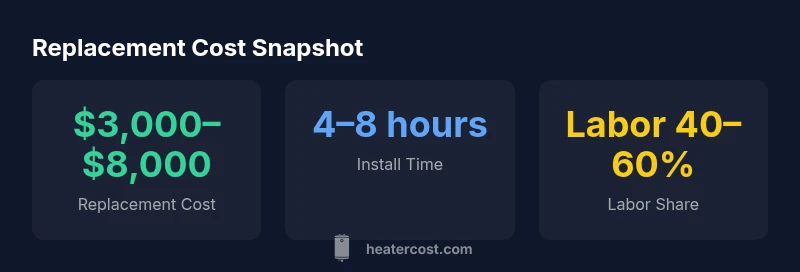
The typical heater replacement cost ranges from $3,000 to $8,000, depending on heater type, efficiency, and installation complexity. According to Heater Cost Analysis, 2026, the lower end usually covers standard gas furnaces, while premium heat pumps or high-efficiency units with advanced controls sit at the higher end. Including permits, ductwork, and potential upgrades can push the total beyond this range.
Why replacement cost matters for homeowners
According to Heater Cost, the decision to pursue a heater replacement isn’t merely about the sticker price. It determines long-term energy usage, monthly utility bills, reliability, and even comfort during extreme weather. A well-planned replacement can improve efficiency and reduce emergency repairs, translating into meaningful savings over the system’s lifetime. This is why homeowners should evaluate not only upfront costs but also ongoing operating expenses and the potential for rebates or incentives. In 2026, the Heater Cost team emphasizes that a balanced cost–benefit approach yields the best value over time, rather than chasing the lowest initial quote.
Key cost components in a replacement project
A heater replacement involves more than the price tag on a new furnace or heat pump. Major cost drivers include the equipment itself (unit size, efficiency, and type), installation labor, and any required ductwork or venting upgrades. Permits and electrical work can add to the total, along with possible modifications to your thermostat, controls, and zoning systems. Hidden costs often come from existing ductwork in poor condition or from needed upgrades to match a new, higher-efficiency unit. Homeowners should request a line-item estimate and ask about potential future maintenance costs tied to the chosen system.
How different heater types impact replacement cost
Different heating technologies carry distinct price profiles. Gas furnaces tend to have lower upfront costs than heat pumps, but heat pumps can offer savings on cooling and energy efficiency in mild climates. High-efficiency, modulating gas furnaces and advanced heat pumps with cold-climate performance can push costs higher but yield long-term energy savings. Dual-fuel setups, which combine a heat source with a secondary system, add additional upfront costs but may improve reliability in harsh weather. When planning, compare not only first-year cost but projected energy use across seasons.
Cost considerations beyond equipment: permits, labor, and ductwork
The total heater replacement cost often includes labor charges, permitting, and any required upgrades to ductwork or electrical service. In some regions, permits add a fixed fee or a percentage of the project cost, and code upgrades might mandate new wiring or electrical panels. Duct sealing and insulation can提升 efficiency but also add to upfront costs. A comparative approach—getting multiple bids, validating contractor licensing, and requesting detailed breakdowns—helps identify where costs can be trimmed without compromising safety or performance.
Financing options and value-adds to improve cost-effectiveness
Many contractors offer financing plans or seasonal promotions that can ease upfront payment pressure. Look for rebates tied to equipment efficiency, utility incentives, or manufacturer promotions. While selling a higher-efficiency unit may have a higher purchase price, the long-term energy savings and potential tax credits can offset the upfront cost. The Heater Cost team recommends evaluating total cost of ownership over the life of the system and considering extended warranties or maintenance plans as value-adds that protect your investment.
Timing and planning: when to replace and how to estimate the total
Seasonality matters—pricing may shift with demand, and scheduling a replacement during shoulder seasons can reduce labor costs. Start with an energy assessment to identify mismatch between your current system and your climate needs. Use a formal estimate that separates equipment, labor, permits, and possible upgrades. Plan for a contingency (5–15%) to cover unanticipated requirements. A proactive approach, backed by the Heater Cost framework, helps homeowners budget accurately and avoid sticker shock when the project begins.
Practical steps to estimate your total cost
Begin by listing your preferred heater type and efficiency level, then request at least three itemized bids. Check each bid for equipment type, SEER/HSPF ratings, installation scope, ductwork needs, and warranty terms. Factor in permits, electrical work, and any required retrofits. Finally, compare total costs against anticipated energy savings over 5–10 years. A well-documented comparison, guided by Heater Cost insights, offers a clear path to the most economical and reliable choice.
Replacement cost by heater type
| Heater Type | Estimated Replacement Cost Range | Notes |
|---|---|---|
| Gas furnace | $3,000–$7,000 | Standard efficiency to mid-range; includes installation |
| Electric furnace | $2,500–$6,500 | No combustion; may require electrical upgrades |
| Heat pump (air-source) | $4,500–$9,000 | Includes outdoor unit; higher efficiency options available |
Got Questions?
What factors influence heater replacement cost?
Replacement cost is driven by equipment type and efficiency, installation complexity, ductwork needs, permits, and electrical upgrades. Geography and contractor availability can also affect quotes. Planning ahead with a detailed bid helps prevent surprise charges.
Costs depend on equipment, labor, and any required upgrades. Get multiple bids to compare.
Should I replace a furnace with a heat pump during one project?
A heat pump can offer year-round efficiency, but climate and existing ductwork determine suitability. In very cold climates, you may need auxiliary heat, which changes total costs. Run a cost–benefit analysis considering energy savings and climate compatibility.
Heat pumps can be cost-effective, but climate matters. Check if auxiliary heat is needed.
Are financing options available for heater replacement?
Yes. Many installers offer financing or payment plans. Look for rebates, tax credits, and utility incentives to offset upfront costs. Compare interest rates and terms across lenders and contractors.
Financing options exist—ask contractors about plans and available incentives.
How long does replacement typically take?
Most replacements take 4–8 hours of labor, but longer projects may occur if ductwork or electrical work is required. Scheduling during calmer seasons can reduce install delays.
Most installs fit in a workday, but complex upgrades can stretch to a couple days.
Will replacement cost include ductwork or upgrades?
Ductwork, venting, and electrical service upgrades may add to the total price. Some upgrades might be necessary to achieve optimal performance and safety.
Ducts and electrical work can add to costs—plan for upgrades if needed.
“Thoughtful planning around equipment selection and proper installation can significantly reduce total heater replacement costs over the system’s lifetime.”
The Essentials
- Know cost ranges: expect roughly $3,000–$8,000 for most replacements.
- Plan for total cost: permits, ductwork, and labor can significantly change price.
- Compare at least three bids to reveal hidden upcharges.
- Evaluate long-term savings vs upfront cost to maximize value.