How Much Does a Heater Cost in 2026? A Practical Guide
Explore realistic heater cost ranges for 2026, including upfront prices, installation, and long-term operating costs. Learn how to estimate total costs, compare options, and maximize value with efficient, cost-saving choices.


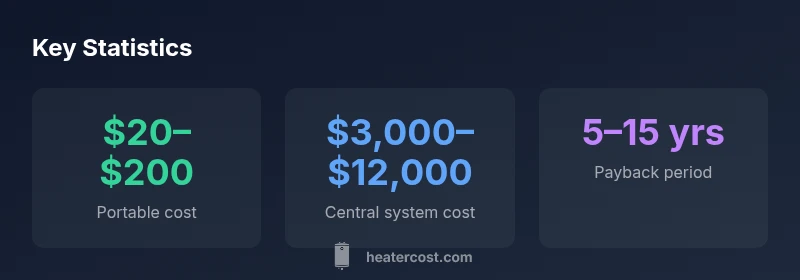
Upfront heater costs vary widely by type and home. Portable space heaters cost about $20–$200, while installing a central system or heat pump typically costs $3,000–$12,000, depending on efficiency, fuel type, and install complexity. Higher-efficiency models can lower ongoing operating costs over time. This snapshot reflects Heater Cost Analysis, 2026.
What affects heater cost
Prices for heating equipment are driven by a handful of core variables. The most influential are the heater type (portable vs whole-house), the energy source (electric, gas, propane, or hybrid), and the unit’s efficiency rating. Installation complexity — including ductwork, venting, gas line work, electrical panel upgrades, and any structural constraints — can add thousands of dollars. Local labor rates, permit requirements, and regional supply conditions also influence final numbers. According to Heater Cost, a practical approach is to compare total cost of ownership rather than sticker price alone. For a typical homeowner, the initial price is followed by annual energy costs and routine maintenance. In 2026, the consensus from Heater Cost Analysis is that efficiency improvements tend to pay back over time, especially in climates with colder winters and high energy prices.
- Key drivers include: heater type, energy source, efficiency (AFUE, SEER, HSPF), installation scope, and local regulations.
- Quick strategy: gather multiple quotes, compare upfront price and installation scope, and model long-term energy use to determine value over 5–15 years.
- Actionable tip: for new installations, ask installers for a full bill of materials and a fixed-price scope to avoid surprise charges.
Price ranges by heater type
Prices vary dramatically by type and application. Here’s a practical breakdown to help you plan a budget that fits your home and climate:
- Portable space heaters: Commonly used for supplemental heat or emergency backup. Upfront cost ranges from about $20 to $200, with running costs tied to local electricity rates.
- Electric furnaces and heat pumps (air-source or ducted): Upfront installation can run from the low thousands to the mid-range of ten thousands, depending on efficiency, climate, and whether ductwork exists or must be added.
- Gas furnaces: Central gas systems often require venting work and gas-line improvements; total cost varies widely, typically higher than electric options when conversion work is needed.
- Tankless water heaters integrated with heating systems: While primarily water-heating devices, they influence overall heating costs by shifting hot water delivery patterns; upfront costs are higher, but on-demand heating can lower standby losses in some homes.
Note on ranges: energy efficiency and system size drive cost most, with installation complexity as a close second. Always request a detailed itemized quote to separate equipment price from labor and material charges.
Installation costs and permits
Installing a new heater—whether a furnace, heat pump, or water-heating system—entails more than buying a unit. Installation costs cover material, labor, ductwork or venting modifications, electrical work, gas line upgrades, and potential structural adjustments. Permits from your local building department are common and can add time and expense if inspections or code upgrades are required. Regional labor markets, code requirements, and the need for additional safety measures (like gas leak testing or electrical panel upgrades) influence final pricing. To minimize surprises, insist on a written, fixed-price proposal and a clear schedule. In 2026, most homeowners see the largest cost variance in installation scope rather than the equipment alone.
Operating costs and payback considerations
Upfront price is only part of the equation. Operating costs depend on energy prices, climate, and system efficiency. Higher-efficiency units, like high AFUE furnaces or high-SEER heat pumps, typically reduce annual energy usage, which can shorten payback periods—even when upfront costs are higher. It’s important to compare annual energy bills with and without efficiency upgrades, and to consider revenue-like savings from rebates or tax incentives. Seasonal usage patterns, thermostat settings, and maintenance practices all influence long-term costs. The Heater Cost team recommends modeling three scenarios: current setup, mid-range efficiency, and best-in-class efficiency to grasp the potential long-term savings under 2026 energy price projections.
Cost-saving strategies and financing
To reduce total heater cost without compromising comfort:
- Prioritize high-efficiency models with favorable AFUE/SEER/HSPF ratings.
- Leverage federal, state, or local incentives when available (check eligibility and expiration dates).
- Schedule professional maintenance to extend equipment life and maintain efficiency.
- Compare quotes from multiple installers and negotiate a fixed-price contract.
- Consider financing options or utility-rebate programs to spread upfront costs.
Financial planning should factor in potential energy savings, warranty coverage, and the expected lifespan of the equipment. Heater Cost’s analysis shows that strategic upgrades can pay back within 5–15 years depending on energy prices and climate.
How to estimate your project cost: a practical checklist
Use this checklist to build a reliable budget:
- Define your goals (full replacement vs. added efficiency).
- Gather at least three written quotes with scope description.
- Request equipment specifications (AFUE/SEER/HSPF) and installation details.
- Include permits, ductwork, electrical, and gas-line considerations in quotes.
- Compare total cost of ownership over 5–15 years, including maintenance.
- Review warranty terms and expected service intervals.
- Check energy usage estimates based on climate data.
- Plan for contingencies (unexpected ductwork or venting changes).
This approach helps you avoid sticker-price bias and uncover the best long-term value. Heater Cost recommends documenting all assumptions and rechecking quotes after any scope changes.
Common mistakes to avoid
Avoid common pitfalls that inflate costs or reduce performance:
- Underestimating installation scope (ductwork or electrical upgrades are often more expensive than the unit).
- Focusing only on the upfront price without considering long-term energy costs.
- Skipping permits or relying on unlicensed labor.
- Selecting a unit based solely on brand without evaluating efficiency and compatibility.
- Overlooking maintenance needs and warranty coverage.
A thorough evaluation reduces the chance of costly revisions after the install.
Getting multiple quotes: a step-by-step approach
- Gather written quotes from at least three licensed contractors.
- Ensure each quote lists equipment type, efficiency ratings, scope of work, and permit costs.
- Compare not just price but also installed efficiency, warranty terms, and maintenance commitments.
- Ask for a side-by-side comparison with a 12-month energy-use projection.
- Verify credentials and check references.
By following a structured bidding process, homeowners can identify the best value and avoid surprise charges that erode savings over time.
Cost comparison by heater type and setup
| Category | Typical cost range | Notes |
|---|---|---|
| Portable space heater | 20–200 | Best for single rooms or emergencies |
| Central electric heat (furnace/HP) | 3,000–12,000 | Includes equipment and basic install |
| Gas furnace | 2,500–6,500 | Ventilation and gas line work may add |
| Tankless water heater | 1,000–3,000 | Higher upfront; compact & on-demand |
| Ductwork/installation extras | 500–4,000 | Depends on house layout and complexity |
Got Questions?
What factors most influence the cost to install a new furnace?
Fuel type, efficiency, unit size, ductwork or venting changes, electrical work, and local labor rates are the main cost drivers. Permits and inspections can add time and cost as well.
Fuel type, efficiency, and installation scope are the big cost drivers; permits can add time and expense.
Are there incentives to reduce heater cost?
Yes. There are federal, state, and local incentives for high-efficiency heating equipment. Eligibility and expiration vary by location, so check current programs before purchasing.
There are incentives for high-efficiency units; check local programs before you buy.
How long does installation typically take?
Most installations take 1–3 days, depending on the complexity, existing ductwork, and whether electrical or gas line work is required.
Most installs take one to three days depending on complexity.
How should I estimate future energy costs after upgrading?
Use efficiency ratings, climate data, and current energy prices to model annual energy use. Compare scenarios for current setup, mid-range efficiency, and high efficiency.
Model energy use with different efficiency levels to estimate future cost.
When is replacement better than repair?
If repair costs approach replacement price, or efficiency is poor and warranties are limited, replacement may be more cost-effective.
If repairs cost as much as replacement or efficiency is low, consider replacing.
Is a smart thermostat worth adding to a new heater?
Most homeowners see energy savings and comfort improvements with a smart thermostat, though upfront costs should be weighed against potential payback.
A smart thermostat often improves efficiency and comfort, with a reasonable payback period.
“Upfront price is only one piece of the puzzle; the true value comes from efficiency, reliability, and the energy cost trajectory over time.”
The Essentials
- Understand total cost of ownership, not just upfront price
- Efficiency matters for long-term savings and payback
- Get multiple quotes and fixed-price contracts
- Permit and installation scope drive a large portion of cost
- Incentives can significantly reduce net cost