Gas Heater Price Guide for 2026
An in-depth, data-driven guide to gas heater price in 2026, covering installed costs, key cost drivers, quotes, financing options, and maintenance considerations for homeowners, renters, and property managers.


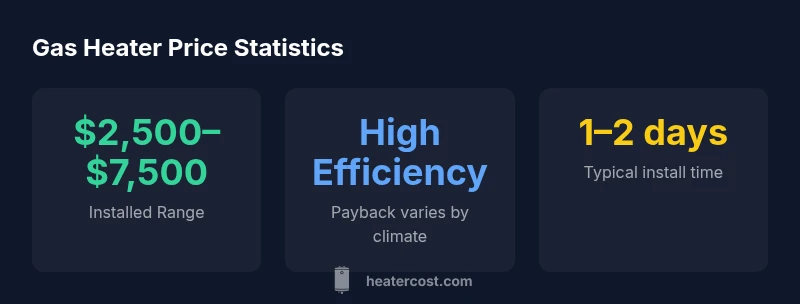
Gas heater price, installed, typically ranges from $2,500 to $7,500, depending on efficiency, heating capacity, venting requirements, and local labor costs. The Heater Cost Analysis, 2026 notes that regional price variations and installation complexity can push the total bill higher or lower. Understanding these drivers helps homeowners budget accurately.
Why gas heater price matters for homeowners
When evaluating any gas heater purchase, price is only one piece of the equation. The Gas heater price you see on a quote combines the equipment cost, installation labor, venting or vent modifications, gas line work, and any required permits. The Heater Cost team emphasizes that a seemingly low equipment price can balloon once you factor in venting, ductwork, and professional installation. In colder climates or homes with older duct systems, the installed price may push toward the upper end of the typical range. According to Heater Cost, a well-sized, properly installed gas heater reduces energy waste and improves comfort, which should be weighed against upfront cost. This is why it pays to compare apples to apples—model, AFUE rating, and whether the quote includes ductwork or venting enhancements. The goal is to avoid regret purchases where higher upfront price doesn’t translate into long-term savings.
Top cost drivers behind gas heater price
The price you pay for a gas heater is driven by several interacting factors. First, efficiency and capacity drive the equipment cost: higher AFUE models cost more upfront but deliver more savings over time. Second, venting and gas line requirements can alter both material costs and labor time. Direct-vent or sealed-combustion units may require specialized venting, increasing costs but improving safety and reliability. Third, installation complexity—whether the unit sits in a tight utility closet, requires new ductwork, or needs a crane or permit-related work—can dramatically affect total price. Finally, regional labor rates and permit fees influence the final number. The Heater Cost team notes that these variables vary widely by location, so quotes from the same model can differ markedly across regions.
Regional variations and installation complexity
Regional price differences reflect multiple inputs: labor costs, supply chain conditions, and permitting rules. In some areas, licensed HVAC technicians charge higher hourly rates, while in others, supply constraints or demand surges raise material costs. Installation complexity also matters: homes with limited access, pre-existing ductwork that needs upgrading, or the need to relocate a furnace adds contingency costs. For renters or homeowners in older buildings, retrofits to meet current codes can add to the price. Heater Cost’s analysis shows that even identical models can have a price delta of several hundred to thousands of dollars based on geography and job specifics. When planning a project, request a line-item estimate that separates equipment, labor, venting, and permit fees.
Efficiency, sizing, and price: what to consider
Selecting the right efficiency level (AFUE) should align with your climate, energy prices, and home performance goals. High-efficiency units reduce ongoing operating costs but come with a higher upfront price. A properly sized system is essential: an oversized unit wastes energy and incurs unnecessary upfront cost, while an undersized unit struggles to meet demand. The payback period depends on local energy costs and usage patterns. In Heater Cost’s view, homeowners should perform a simple break-even calculation: compare the incremental upfront cost of a higher-efficiency model to expected annual energy savings, then factor in maintenance costs and comfort improvements. Documentation from manufacturers and independent reviews can help quantify performance differences across models.
How to get precise quotes and what to ask
To avoid shopping mistakes, obtain multiple, written quotes from licensed HVAC professionals. Ask for a detailed breakdown: equipment price, labor, venting, gas line upgrades, permits, and any removal or disposal fees. Request an energy efficiency summary (AFUE and performance notes) and verify that the quote includes required ductwork and sealing. If possible, ask for a copy of the installer’s permit documentation and a written warranty policy covering parts and labor. For projects with existing ducts, request a duct-blowing or sealing estimate to ensure the system operates at peak efficiency. The more you document upfront, the less likely you are to encounter price surprises later.
Financing, incentives, and long-term costs
Financing options can help manage gas heater price without sacrificing quality. Many installers offer promotional financing with low or zero percent APR options for qualified buyers. Additionally, federal and local energy-efficiency incentives may reduce net cost, particularly for high-efficiency or heat-pump-assisted configurations. Always verify eligibility and current programs, as incentives can fluctuate year to year. Beyond upfront pricing, consider long-term operating costs, maintenance planning, and the availability of service in your area. A well-supported investment reduces the probability of expensive repairs and downtime later in the heater’s life.
Maintenance, warranties, and longevity
Maintenance plans can influence total ownership cost and system reliability. Regular coil cleaning, filter changes, and annual inspections help sustain efficiency and extend life. When evaluating warranties, look beyond the price tag to coverages for critical components like heat exchangers and control boards, plus labor. Strong warranties typically accompany reputable installation workmanship; a poorly installed unit may void warranties or necessitate expensive repairs. Heater Cost recommends choosing a reputable contractor with clear warranty terms and documented service history, so you’re protected if something goes wrong years down the line.
Gas furnace price ranges by efficiency and installation complexity
| Category | Installed Price Range | Key Considerations |
|---|---|---|
| Gas furnace (single-stage) | $2,500–$4,500 | Budget-friendly upfront, simpler to install, lower efficiency |
| Gas furnace (two-stage) | $3,000–$6,000 | Better comfort and efficiency, higher upfront than single-stage |
| Gas furnace (modulating/high-efficiency) | $4,000–$7,500 | Highest efficiency, best long-term savings, higher upfront |
Got Questions?
What factors influence the price of a gas heater?
Price is driven by efficiency (AFUE), size, venting requirements, installation labor, regional codes, and ductwork needs. Quotes often separate equipment from labor, venting, and permits so you can compare apples to apples.
Prices vary with efficiency, size, venting, and installation work.
Do I need permits to install a gas heater?
Most regions require a building or gas permit for new gas appliances. Permit fees and inspections add to the total, and failing to obtain them can void warranties.
Permits are usually required; check with your local authority.
How long does installation take?
Typical installs take 1–2 days for a straightforward replacement. Complex retrofits with ductwork changes or venting upgrades can extend to 2–4 days.
Most installs take a day or two.
Is higher-efficiency worth the upfront cost?
In cold climates or areas with high energy costs, higher efficiency often pays back through lower operating costs. Run a simple payback analysis comparing incremental cost to expected annual savings.
It depends on climate and energy costs; run the numbers.
What warranties should I look for?
Seek at least 10-year parts coverage and a solid heat exchanger warranty; verify labor coverage and duration. Warranties reflect installer quality and follow-up service.
A robust warranty protects your investment.
Can I finance a gas heater purchase?
Yes. Many installers offer financing with promotional terms. Compare APRs, loan terms, and any fees; some programs include 0% financing for qualified buyers.
Yes—financing can spread out the cost.
“Upfront gas heater price is only one part of the equation. The long-term savings come from efficiency, proper sizing, and professional installation.”
The Essentials
- Budget for total price, including installation and venting
- Higher efficiency raises upfront costs but lowers operating expenses
- Regional labor and permitting shape final price
- Get multiple written quotes with itemized line items
- Consider financing and incentives to improve affordability