Heater Price Guide 2026: Costs, Ranges, and Buying Tips
Understand heater price in 2026 with installed cost ranges, regional variation, and practical budgeting tips. Learn how to compare quotes, account for maintenance, and maximize value.


heater price refers to the upfront cost of purchasing and installing a heating system, including equipment, labor, and basic connections. In 2026, prices vary widely by system type, efficiency, and installation scope, with general price ranges reflecting common home setups. This quick snapshot helps homeowners estimate what to budget before a formal quote.
Market Overview
In 2026 the heater price landscape remains highly variable because the final cost depends on multiple moving parts: the type of heating equipment, its efficiency, the complexity of installation, local labor rates, and the required venting or ductwork. According to Heater Cost analysis, 2026, upfront costs can swing widely even within the same city, often driven by differences in insulation, existing ductwork, and whether you need electrical or gas service upgrades. Homeowners should expect a broad price spectrum and should use this information to set a realistic budget before requesting formal bids. This landscape also reflects ongoing preference shifts toward higher-efficiency systems, which save energy over time but typically require higher initial investments. The key takeaway is to frame your heater price discussion around total cost of ownership, not just sticker price.
Price Drivers
Several interrelated factors drive heater price. System type (gas, electric, heat pump, boiler) is the primary determinant, followed by efficiency ratings (AFUE for furnaces; SEER for heat pumps) and equipment size matched to your home. Installation scope matters just as much: ductwork modifications, venting requirements, and whether you’re replacing like-for-like or performing a full system overhaul. Local labor costs and permit fees can add a surprising amount to the total. Finally, installation timing and accessibility—such as attic or crawlspace work—can push labor hours higher. In practice, higher-efficiency units can cost 20-40% more upfront, but many homeowners recover those costs through lower energy bills over several years.
Price by Type
Understanding price ranges by system helps homeowners compare apples to apples. Gas furnaces typically come with moderate to high upfront costs but strong reliability in colder climates. Electric furnaces tend to have lower upfront prices but can incur higher operating costs in regions with expensive electricity. Heat pumps excel in moderate climates and offer air conditioning combined with heating, often at a higher initial price but substantial year-round energy savings. Tankless or on-demand water heaters can have the lowest upfront cost for some installations, but adding proper venting and zoning controls can raise the final price. When evaluating heater price by type, also weigh expected lifetime energy costs and warranty terms.
Regional Variations
Regional differences affect heater price in several ways. Climate influences the preferred equipment type and the required capacity; labor costs vary by city and state; building codes and permit requirements differ, adding variability to total cost. Regions with strict energy codes may require higher-efficiency units or more complex installations, increasing both equipment and labor costs. Conversely, areas with favorable permitting processes or competition among installers may yield lower costs. For homeowners, this means you should actively collect quotes from multiple local contractors and factor in regional price trends when budgeting.
Hidden Costs to Consider
A number of additional costs commonly surprise homeowners. Ductwork alterations or upgrades can significantly raise the price, especially if you’re changing from a ducted to a ductless system. Venting, exhaust, and condensate drainage setup are additional items that some bids omit. Permits and inspections typically add to the expense, and disposal or removal of old equipment is not always included. If you’re upgrading electrical service or adding a new gas line, insurance and inspection fees may apply. To avoid sticker shock, request itemized bids that separate equipment, labor, permits, and ancillary costs.
Financing and Incentives
Financing options and incentives can dramatically affect the heater price you pay over time. Some contractors offer promotional financing or 0% options for qualified buyers, while energy-efficiency rebates and tax credits can offset upfront costs. Availability varies by location and by the specific equipment purchased, so check local utility programs and federal incentives. When evaluating quotes, ask for a dedicated line item showing any rebates or credits and verify eligibility before committing. Even modest incentives can shorten the payback period and improve the total cost of ownership.
How to Estimate Your Total Cost
A practical approach starts with determining your heating load and selecting a few candidate systems. Get at least three quotes with clear itemization: equipment price, installation labor, ductwork or venting, permits, taxes, and any disposal costs. Add a contingency (usually 5-15%) for unforeseen adjustments. Create a simple formula: Total Cost = Equipment + Installation + Venting/Ductwork + Permits + Taxes + Contingency. Then estimate annual operating costs by unit type and local energy prices. Finally, compare the long-term savings from energy-efficiency improvements to the upfront price to decide which option offers the best value.
How to Read Quotes and Compare
Quotes can vary widely in structure. Look for: (1) itemized equipment and installation costs, (2) clear descriptions of included components (ductwork, venting, controls), (3) energy-use estimates (expected annual usage and energy cost), (4) warranty terms and service plans, and (5) the project timeline. Ask for a side-by-side comparison table and ensure all quotes reflect the same assumptions (capacity, climate, insulation level). A lower upfront price isn’t always best if it comes with higher future energy costs or limited warranty coverage. Use the quotes to build a total-cost-of-ownership view.
Authority sources and data considerations
Our analysis relies on widely recognized industry data and ongoing price tracking. We base price expectations on the Heater Cost Analysis, 2026, which synthesizes installer pricing, regional variations, and equipment options. To complement this, we reference public energy data from the U.S. Department of Energy and the Energy Information Administration to contextualize energy cost implications. Consumers should treat the figures as ranges that reflect typical market conditions, not guarantees. When budgeting, factor in local incentives and permit costs, which can vary dramatically by city and state. For more details, see the sources below and consult a licensed local contractor for an exact quotation.
Estimated installed price and annual costs by heater type
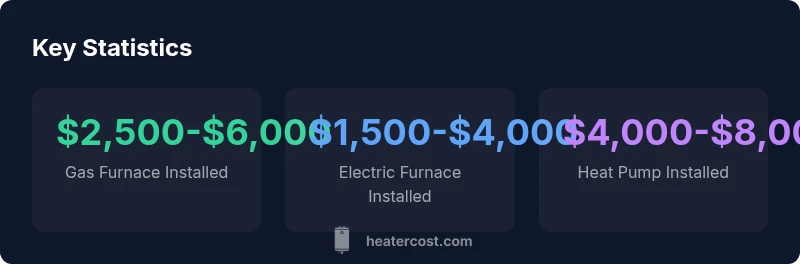
| Heater Type | Installed Price Range | Typical Annual Operating Cost | Notes |
|---|---|---|---|
| Gas Furnace | $2,500-$6,000 | $600-$1,200 | Common in cold climates; reliable heat |
| Electric Furnace | $1,500-$4,000 | $1,000-$2,000 | Lower upfront; electricity-dependent |
| Heat Pump | $4,000-$8,000 | $400-$1,800 | Efficient in mild-to-moderate climates; dual cooling/heating |
| Tankless Water Heater | $1,000-$3,000 | $50-$200 | On-demand water heating; venting costs may apply |
Got Questions?
What is the typical installed price range for common heater types?
Prices vary by type and region; gas furnaces generally cost more upfront in harsh climates, electric furnaces are lighter on upfront costs, and heat pumps can be pricier but save energy over time. Always compare itemized quotes.
Prices vary by type and region; gas furnaces can be pricier upfront, electric furnaces are cheaper upfront, and heat pumps may cost more but save energy over time. Get multiple quotes for an apples-to-apples comparison.
Does higher efficiency always pay off in the long run?
Higher-efficiency units cost more upfront but typically reduce energy bills and may qualify for incentives. The payback period depends on local energy prices, climate, and usage patterns.
Higher efficiency costs more upfront but often lowers energy bills and can qualify for incentives. Payback depends on your climate and energy use.
Are tax credits or rebates available for heater upgrades?
Yes, many regions offer tax credits or rebates for energy-efficient upgrades. Availability varies by country and program year, so check federal, state, and utility programs before purchasing.
Yes, there are often tax credits or rebates for energy-efficient upgrades. Check federal and local programs before buying.
When should I replace an old furnace or boiler?
If your system is older than 15-20 years or requires frequent repairs, replacement is often more cost-effective and energy-efficient. A professional assessment can help decide.
If your system is 15-20 years old or failing frequently, replacing it is usually a wiser choice.
What should I look for when reading a quote?
Look for itemized equipment and installation costs, included venting and ductwork, warranty terms, and a clear timeline. Ensure energy-use estimates are part of the quote for meaningful comparisons.
Make sure quotes itemize equipment, installation, warranty, and timing, and include energy-use estimates.
Can I install a heater myself to save money?
Most heating system installations should be performed by licensed professionals due to safety, venting, and warranty considerations. DIY work can void warranties and create safety risks.
Homeowners should avoid DIY installs to prevent safety risks and warranty issues.
“Upfront price is important, but the real value comes from efficiency, reliability, and service life over time.”
The Essentials
- The Heater Cost team recommends a total-cost-of-ownership approach.
- Prices vary widely by heater type, efficiency, and installation scope.
- Obtain multiple quotes to capture regional labor and permit differences.
- Consider long-term energy costs alongside upfront price.
- Include installation, venting, and permit costs when budgeting.