Gas Water Heater vs Electric: Which Should You Choose in 2026?
Compare gas vs electric water heaters: efficiency, installation, safety, and running costs to decide the best fit for your home. Expert guidance from Heater Cost.


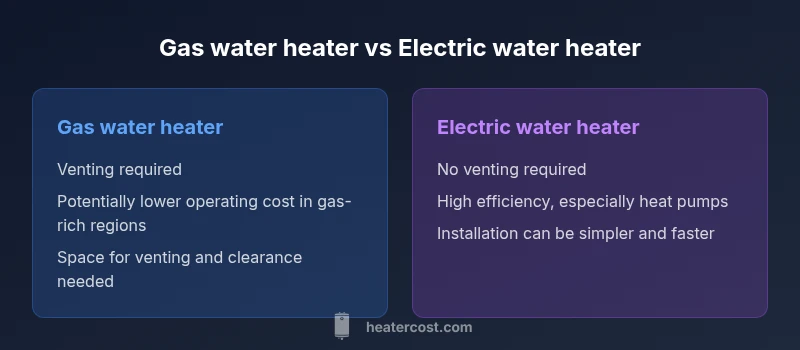
Gas water heaters can be cheaper to operate where natural gas is inexpensive, but they require venting and professional installation. Electric water heaters are easier to install and often more reliable, though operating costs depend on local electricity rates. The best choice hinges on fuel availability, installation constraints, and long-term costs.
Understanding the gas water heater vs electric landscape
Choosing between a gas water heater vs electric involves more than just price tags. Fuel availability, installation constraints, and long-term operating costs shape the decision, often more than initial sticker price. The gas water heater vs electric comparison hinges on your home’s existing infrastructure, local energy prices, and how you use hot water day to day. According to Heater Cost, the most reliable way to decide is to assess fuel access, space constraints, and total cost of ownership over the unit’s lifespan. In this article, we dissect efficiency, installation requirements, safety, and practical scenarios to help homeowners, renters, and property managers make an informed choice.
Energy efficiency and operating costs in the gas water heater vs electric comparison
When you compare energy efficiency, the two fuel pathways diverge in meaningful ways. Gas water heaters have historically shown lower standby efficiency compared with electric models, but modern gas condensing units have narrowed the gap. Electric water heaters—especially heat pump variants—offer high efficiency and very low standby losses. Operating costs depend heavily on your local utility prices and how you use hot water. Heater Cost analysis shows that efficiency improvements in newer gas models can reduce energy waste, yet electricity tariffs can swing overall costs in favor of electric in high-rate regions. For many homes, electric storage or tankless options provide predictable performance with fewer venting concerns. In short, the gas water heater vs electric balance is driven by local energy prices and the efficiency of the chosen model.
Installation, venting, and permits: critical constraints in the gas water heater vs electric decision
Gas water heater installations typically require a dedicated vent through a chimney or exterior wall, a gas supply line, and adherence to local code and permit requirements. This adds to install time and cost and often mandates a licensed professional. Electric units, by contrast, usually require a dedicated 240-volt circuit and a suitable enclosure; no venting is needed. This fundamental difference affects not only upfront costs but also where the unit can be placed. If you’re renting or upgrading in a space-constrained home, the simpler electrical route often wins on practicality, while homes with existing gas infrastructure may justify the venting and hookup work. Always check local permits and utility incentives before starting installation.
Space, sizing, and location considerations for gas water heater vs electric options
Placement matters as much as the fuel source itself when evaluating gas water heater vs electric setups. Gas units typically demand more space for venting clearances and safe operation, often relegated to utility rooms, garages, or larger closets. Electric units can be more flexible, especially compact models or tankless electric systems that suit tight spaces or multi-story layouts. Sizing should reflect peak demand and household size; undersized models struggle to meet hot-water needs, while oversized units waste energy. If you anticipate future changes—like adding appliances or expanding your family—choose a unit that can accommodate higher demand or be upgraded without costly retrofits.
Safety, maintenance, and common failures in the gas water heater vs electric comparison
Safety profiles diverge for gas and electric models. Gas heaters introduce combustion safety concerns, possible gas leaks, and carbon monoxide risks if venting is compromised; this necessitates reliable detectors and regular vent inspections. Electric units carry fewer combustion risks but require attention to electrical safety, especially in damp environments. Regular maintenance helps both types: flush the tank periodically to reduce sediment, inspect connections, test thermostats, and verify relief valves. Anode rod replacement for steel tanks and periodic vent checks for gas units reduce the likelihood of efficiency losses and leaks. With proper maintenance, both pathways deliver dependable hot water for households varying in size and usage.
Longevity, reliability, and replacement planning for gas vs electric water heaters
Lifespan and reliability depend on model quality, water quality, and maintenance cadence more than fuel type alone. Electric tanks tend to have fewer moving parts and can enjoy longer lifespans with fewer mechanical failures, while gas systems rely on burners, heat exchangers, and venting components that may require more frequent service in harder water regions. Regular flushing and corrosion protection extend life for both, and choosing a modern, high-efficiency model helps maximize value. When it’s time to replace, consider not only age but also future energy prices, potential upgrades to more efficient electrics or condensing gas units, and whether new venting or electrical upgrades will be required.
Environmental impacts and energy trends influencing the gas water heater vs electric choice
The environmental footprint of a gas water heater vs electric unit intersects with fuel sources and grid composition. Electric heaters are highly efficient at the device level, and if your electricity comes from cleaner generation, their overall emissions can be lower than gas-fired equivalents. Gas units deliver on-site energy but emit combustion byproducts. As grids decarbonize and heat pump electric heaters gain popularity, the electric pathway often presents a lower-carbon option, especially in regions with high renewable penetration. Local climate, grid mix, and appliance efficiency all shape the true environmental impact, so a home-by-home assessment is essential. Heater Cost emphasizes evaluating both fuel emissions and overall energy use when weighing gas vs electric.
Cost considerations: upfront costs, operating costs, and total ownership in the gas water heater vs electric decision
Upfront costs vary with the complexity of installation. Gas water heaters usually involve venting, gas-line work, and professional permitting, which can raise initial investment. Electric installations are generally simpler and faster but may require electrical panel upgrades in older homes. Operating costs hinge on fuel prices and unit efficiency; in regions with cheap natural gas, gas models may offer lower ongoing costs, while in areas with high electricity rates or more efficient electric options, electric heaters can win on a life-cycle basis. Don’t forget ancillary components like expansion tanks, thermostats, and drain valves, which affect total ownership and maintenance schedules.
Best-use scenarios: gas vs electric for different homes and lifestyles
In homes with existing gas service and venting, a high-demand household might justify gas for its flow capacity and potential cost advantages in gas-rich regions. In urban settings with limited space or no gas access, electric heaters—particularly tankless or heat pump models—offer straightforward installation and reliable performance. Rental properties often favor electric solutions due to simpler permitting and predictable maintenance. For cottages or off-grid homes, gas may be preferred if a reliable fuel supply exists. The optimal path is to map hot-water demand, fuel availability, space constraints, and long-term energy trends before committing.
How to decide: a practical, checklist-based approach to choosing between gas water heater vs electric options
Begin with a fuel availability check and a quick tariff review. Assess venting and electrical capacity, then estimate peak hot-water needs for your household. Compare total cost of ownership by considering upfront install costs, efficiency, and local energy prices. A professional energy audit can help quantify savings. Finally, factor in future plans such as upgrades to appliances or shifts toward low-carbon energy sources. This structured approach makes the gas water heater vs electric decision clear and tailored to your home.
Installation tips and maintenance schedule for the gas water heater vs electric choice
Whether you select gas or electric, establish a practical maintenance calendar. For gas units, schedule annual vent and gas-line inspections, and flush the tank on a regular basis to minimize sediment buildup. For electric units, follow a periodic electrical inspection plan and perform flushes as recommended by the manufacturer. Align service visits with seasonal changes to ensure consistent performance. Keeping records of maintenance, part replacements, and any repairs helps protect your investment and avoids unexpected failures.
Authority sources and further reading for the gas water heater vs electric decision
For evidence-based guidance, reference government and university resources as well as independent reviews. These sources provide technical context, standards, and best practices that underpin a sound choice between gas water heater vs electric:
- https://www.energy.gov/energysaver/water-heaters
- https://extension.illinois.edu/water-heaters (extension resources on home heating systems)
- https://www.consumerreports.org/cro/water-heaters/buying-guide/
Comparison
| Feature | Gas water heater | Electric water heater |
|---|---|---|
| Energy efficiency | Lower standby efficiency in older gas models; modern gas condensing units are much more efficient | Very high efficiency, especially with heat-pump electric models |
| Installation complexity | Requires venting, gas line, and permits | Typically requires no venting; simple 240V circuit may suffice |
| Space and location | Vent requirements and clearance; needs more space for venting | More placement flexibility; often compact and easy to install |
| Operating costs (fuel/energy | Depends on local natural gas prices; can be lower in gas-friendly areas | Depends on electricity rates; can be very cost-effective with off-peak or green power |
| Maintenance | Regular vent checks and combustion-related maintenance | Fewer moving parts; regular electrical safety checks and flushing |
| Lifespan and reliability | Relies on burner, venting, and heat exchanger components | Often fewer mechanical failures; long-lasting with good maintenance |
| Best for | High hot-water demand, existing gas infrastructure, favorable gas prices | Easier installation, tighter spaces, and cleaner grid options |
The Good
- Lower upfront installation risk in ready gas-enabled homes
- Excellent performance for high hot-water demand when gas is available
- Electric options offer easier installation and reduced venting needs
- Modern electric heat pumps deliver very high efficiency
- Potentially lower maintenance with electric systems in some buildings
- Flexible placement and strong reliability in many urban settings
Negatives
- Gas systems require venting and gas line work, increasing cost and complexity
- Fuel costs vary with local prices and availability
- Gas safety risks require detectors and vent maintenance
- Electric options may have higher operating costs in regions with high electricity rates
- Limited by electrical capacity in older homes
Electric water heaters are generally easier to install and maintain, but gas can win when fuel prices are favorable and venting is already in place
Electric is often the safer, simpler choice for upgrades or new installations, especially where space or venting is limited. Gas remains compelling where natural gas is inexpensive and an existing vent/dedicated line is available. Your decision should hinge on local fuel costs, installation practicality, and long-term maintenance expectations.
Got Questions?
Which is generally cheaper to operate, gas water heater vs electric?
Operating costs depend on local energy prices and usage. In many regions, natural gas is cheaper per unit of energy than electricity, which can make gas water heaters cheaper to run. However, this varies with tariffs and efficiency; a life-cycle cost comparison is the most reliable method.
Gas can be cheaper where natural gas is inexpensive, but always compare local tariffs and long-term usage.
Do gas water heaters require permits?
Yes, installation typically requires permits and must meet local codes. A licensed professional should perform the work, and inspections are often required after installation.
Yes, permits are usually required and inspections follow installation.
Is electric water heater more energy efficient than gas?
Modern electric water heaters, especially heat-pump models, can be more energy efficient overall. Efficiency alone doesn’t determine running costs; consider energy prices and usage patterns.
Electric can be more efficient, especially heat-pump types, but running costs depend on local energy rates.
Can I switch from gas to electric or vice versa later?
Switching fuel types involves changes to plumbing, venting, and electrical systems, and is rarely a simple upgrade. A full cost-benefit analysis and code review are essential.
Switching fuels is a major project; consult a licensed professional first.
What maintenance is common to both gas and electric water heaters?
Flush the tank to remove sediment, check the thermostat, and inspect valves and connections for leaks. Regular safety checks help maintain performance for both types.
Regular flushing and safety checks help both gas and electric systems.
Which is better for apartments or small homes?
Electric heaters are typically easier to install in apartments due to minimal venting. Gas remains viable if there’s existing gas service and venting, but electrical upgrades may be needed in some buildings.
Electric is usually easier in apartments unless gas infrastructure already exists.
The Essentials
- Assess local fuel prices before choosing
- Consider venting needs and installation complexity
- Weigh upfront costs against long-term operating costs
- Explore modern electric options (heat pumps) for high efficiency
- Plan for future home upgrades and grid changes