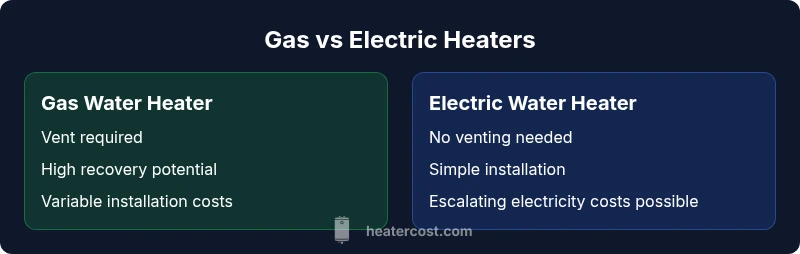
Gas vs Electric Heaters: A Practical Comparison for Homeowners
Compare gas and electric heaters for homes, covering upfront costs, operating efficiency, safety, installation, and long-term value to help homeowners and managers choose wisely.


Gas-fired and electric heaters each bring distinct strengths, costs, and install requirements. This quick comparison helps homeowners evaluate fuel availability, energy costs, safety, and space when deciding between gas and electric options. According to Heater Cost, the best choice depends on your existing fuel sources, local energy prices, and long-term comfort needs in your home.
Understanding the Gas vs Electric Heater Debate
The question of whether a gas heater or an electric heater is the right choice for a home hinges on several practical factors. This section frames the core decision: fuel availability, energy costs, climate, and the logistics of installation. When homeowners evaluate the topic of heater gas vs electric, they should consider how each option performs under their specific hot water or space- heating needs, how easy it is to upgrade or replace, and what local codes require. Throughout this guide, you’ll see how these variables interact with long-term value. Heater Cost notes that the choice is not one-size-fits-all; it’s a balance between upfront feasibility and ongoing affordability, aligned with your household’s usage patterns and budget expectations.
How Gas Water Heaters Work
Gas water heaters rely on a combustion burner to heat water in a tank or on-demand in tankless models. The key components include a gas line, a venting system or direct-vent setup, a burner assembly, and a thermocouple or electronic control. When hot water is demanded, the burner fires and heats the water in the tank or heats via a heat exchanger in tankless configurations. Venting is essential to remove combustion byproducts, and proper venting reduces back-drafting risks. The presence of a vent and gas line means installation is more regulated and may require permits, gas utility coordination, and professional service. Overall, gas models can deliver strong recovery for high-demand households, especially where hot water usage spikes.
How Electric Water Heaters Work
Electric water heaters heat water using one or more electric resistance elements submerged in the tank or via a submerged coil in tankless designs. In traditional electric models, a thermostat controls the element to maintain temperature. Heat pump electric water heaters, an increasingly popular subset, extract ambient heat from the surrounding air and transfer it to the water, improving efficiency. Electric models generally do not require venting, and installation is often simpler—usually just a suitable electrical circuit and space for the unit. In terms of reliability, electric units have fewer combustion-related components, which can translate to lower maintenance needs in many homes.
Upfront Costs and Installation Implications
Upfront costs for gas and electric heaters vary with capacity, model type, and installer requirements. Gas units typically involve higher initial costs due to the need for a gas line, proper venting, and sometimes a dedicated vented chimney or exhaust system; permits and safety inspections are common. Electric heaters usually have lower installation complexity since they do not require venting, but higher electrical load may necessitate panel upgrades or dedicated circuits. For retrofit projects, electricians may bill differently than plumbers or HVAC technicians. In both cases, the decision should account for accessibility of service connections, space constraints, and local permitting processes. Heater Cost notes that your home’s existing infrastructure strongly influences the overall price-to-value equation.
Operating Costs and Efficiency Considerations
Operating costs are driven by fuel prices, efficiency, and usage patterns. Electric heaters tend to have high efficiency at the point of use because electricity converts nearly all input energy into heat; however, electricity prices and usage hours determine total cost. Gas heaters can be economical in regions with relatively low natural gas prices and where demand patterns align with efficient gas-fired equipment, particularly condensing models. Efficiency ratings vary by model—from standard electric resistance to high-efficiency gas condensing designs. When evaluating, compare energy factors for electric units and annual fuel utilization efficiency for gas models. Heater Cost Analysis, 2026 emphasizes that real-world costs hinge on climate, home insulation, and hot water usage habits.
Performance and Recovery for Hot Water Demand
Recovery rate refers to how quickly a heater can restore hot water after a draw. Gas systems generally offer rapid recovery, which is advantageous for households with high peak demand or multiple simultaneous uses. Electric water heaters can meet strong demand too, especially larger electric or heat-pump models, but recovery may not be as rapid in some situations. Tankless gas models provide on-demand heating with virtually endless hot water, while electric tankless options depend on available electrical capacity. In many homes, the choice between gas and electric treatment depends on the balance of peak usage, hot water needs, and how often you’re replenishing your supply.
Space, Ventilation, and Location Considerations
Gas installations require safe venting paths and adequate clearance, which can influence where you place the unit. Utility rooms, basements, or attics are common but must be evaluated for vent routing and exhaust protection. Electric heaters generally fit into tighter spaces and do not need venting, making them attractive for apartments and finished spaces where ventilation is a concern. Consider whether your home has the electrical capacity to support a high-demand electric unit. Space and installation flexibility can be as decisive as cost in the heater gas vs electric decision.
Safety, Maintenance, and Longevity
Safety considerations differ by fuel type. Gas units require CO detectors and regular vent inspection to prevent hazardous buildup, while electric units carry no combustion byproducts but still require electrical safety precautions and circuit protection. Routine maintenance for gas heaters often involves vent inspection and burner cleaning; electric units emphasize element inspection, thermostat checks, and tank integrity (for tanks). Both types benefit from periodic professional servicing to extend lifespan and ensure continued safe operation. The Heater Cost team notes that proactive maintenance reduces the risk of sudden failures and can improve long-term reliability.
Environmental Footprint and Emissions
Environmental impact varies with energy sources. Gas heaters burn fossil fuel, producing direct emissions and CO2, while electric heaters’ emissions reflect the local grid mix—renewables reduce the effective footprint of electric heat. If your area has a clean electricity grid, electric heating can be a very low-emission option at the point of use; in areas with heavy fossil fuel generation, gas may appear comparatively favorable. Consider future grid changes, attainable energy efficiency upgrades, and potential incentives when evaluating environmental impact.
Common Scenarios and Recommendations
In homes with existing gas service and good gas pricing, a gas water heater—especially a condensing or tankless model—often makes economic sense for high hot-water demand. For homes with limited space, no venting, or where electrical upgrades are straightforward, an electric water heater (or a heat-pump variant) may offer simpler installation and strong efficiency. If reliability and minimal maintenance are priorities, electric systems with robust circuitry and high-efficiency design can be compelling. The best choice is context-driven, balancing local energy prices, available fuel sources, and household needs.
Mistakes to Avoid When Choosing
Avoid assuming “the cheapest upfront price is best” without considering long-term costs and installation complexities. Don’t neglect ventilation requirements for gas systems or the electrical capacity for high-demand electric models. Also, ignore local codes or permitting processes; failing to secure proper approvals can delay projects and raise costs. Finally, underestimate the impact of climate and daily usage patterns on hot-water demand. A thoughtful, code-compliant assessment helps prevent regrets after installation.
Quick Decision Framework
Use this framework to guide your move: (1) assess fuel availability and price trends in your area, (2) evaluate installed capacity and electrical or gas service, (3) compare efficiency ratings and expected operating costs, (4) measure space and ventilation constraints, and (5) consider long-term goals, including maintenance and environmental impact. If uncertain, consult a qualified HVAC professional who can tailor advice to your home and climate.
Comparison
| Feature | Gas Water Heater | Electric Water Heater |
|---|---|---|
| Energy efficiency | High efficiency in modern gas condensing models | Very high efficiency in electric models (incl. heat-pump options) |
| Installation requirements | Requires gas line, venting, and permits | Requires electrical supply; no venting needed |
| Operating costs drivers | Gas price fluctuations influence cost | Electricity rates and usage hours drive cost |
| Space and venting needs | Needs venting path and clearance | Smaller footprint; usually no venting required |
| Reliability and maintenance | Burner, valve, and vent components add maintenance points | Fewer moving parts; electrical components require electrical checks |
| Safety considerations | CO risk; requires detectors and vent integrity | No combustion byproducts; electrical safety still matters |
| Best for | Homes with existing gas service and high hot-water demand | Homes seeking simple installation and grid-based efficiency |
| Environmental impact | Direct combustion emissions; grid mix affects overall footprint | Emissions depend on electricity source; potential low-carbon option |
The Good
- Gas heaters can deliver rapid hot-water recovery for high demand
- Electric heaters install more easily and without venting
- Electric heat-pump models offer high efficiency with clean energy
- Gas options are viable where fuel price stability exists
Negatives
- Gas requires venting and CO detectors; safety checks are essential
- Gas prices can fluctuate and affect running costs
- Electric systems depend on electrical service capacity and grid reliability
- Maintenance can be more complex for gas venting systems
Gas is best for high demand with existing gas service; electric is best for quick installs and vent-free homes
Choose gas if you have strong demand and gas access; choose electric for simplicity, safety, and potential integration with clean energy.
Got Questions?
Is a gas water heater more energy-efficient than an electric one?
Both can be highly efficient depending on the model. Modern gas condensing units offer strong efficiency, but electric heat-pump models can rival or exceed gas efficiency in many climates. Your choice should reflect local energy prices, usage patterns, and availability of venting.
Gas can be very efficient in modern condensing models, while electric heat pumps can beat gas efficiency in the right climate. Consider your local energy prices and usage to decide.
Do electric water heaters require venting?
No, standard electric water heaters do not require venting since there is no combustion. This simplifies installation and reduces venting-related concerns. Always ensure adequate electrical capacity and proper clearances.
No venting is needed for electric heaters, but make sure your electrical system can handle the load.
What factors affect installation costs for gas vs electric water heaters?
Gas installations typically involve gas lines, venting, and sometimes a permit, which can raise upfront costs. Electric installations mainly require electrical work and space, with fewer regulatory hurdles. Local codes and labor costs are major variables.
Gas often needs venting and gas lines; electric is usually simpler but may need electrical upgrades.
Which is safer for households with children?
Electric water heaters present no combustion-related hazards and reduce exposure to carbon monoxide. Gas systems require detectors and vent integrity, plus careful installation to prevent leaks or buildup. Regular safety checks are important for both options.
Electric heaters avoid combustion risks; gas needs detectors and proper venting for safety.
Can I switch from electric to gas or vice versa after installation?
A fuel switch typically requires significant changes to utility connections, venting, and may be restricted by local code. It often involves selecting a different appliance type and ensuring the home’s infrastructure supports it. Consult a licensed professional before planning a switch.
Changing fuels is possible but often complex and costly; get professional guidance first.
The Essentials
- Prioritize fuel availability and local energy prices
- Gas works well for high demand with proper venting
- Electric heaters shine in ease of installation and safety
- Consider environmental impact and grid mix
- Plan for permits, ventilation, and electrical capacity