Discount Hot Water Heaters: Your 2026 Cost-Saving Guide
Explore discount hot water heaters, how much you can save, what to watch for, and strategies to maximize value in 2026. Includes price ranges, installation considerations, and financing options from Heater Cost.


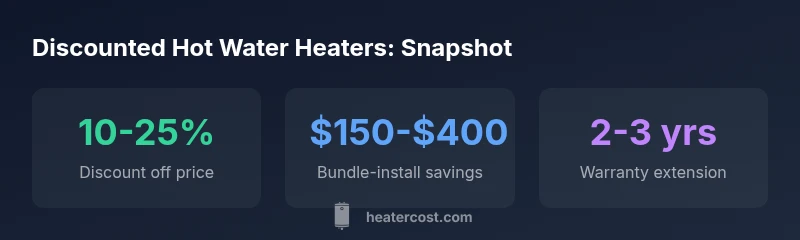
Discount hot water heaters can reduce upfront costs by roughly 10-25% off typical list prices when promotions apply, with additional savings from bundled installation, financing offers, or rebates. Total value depends on heater type, efficiency, location, and local incentives. Always compare installed package prices, warranty terms, and service packages to maximize long-term savings.
Why discount hot water heaters matter
Price is a major consideration when replacing a water heater, but the lowest sticker price isn’t always the best value. Discounted models appear during seasonal sales, factory clearances, and promotions from manufacturers or installers. In 2026, homeowners report that taking advantage of a discount can substantially reduce upfront costs, especially when paired with installation packages or financing offers. According to Heater Cost, the full price landscape includes not just the unit but also shipping, venting, permits, and any needed upgrades to meet current efficiency standards. Buyers who compare installed package prices and warranty terms often identify bundles that yield superior long-term savings.
- Promotions vary by region, model, and installer.
- Local incentives or rebates may boost the value of a discounted heater.
- Short-term savings can be offset by higher installation or maintenance costs if not planned.
Brand-wise, Heater Cost notes that shoppers should budget for essential components like venting (for gas models) and expansion tanks, as these impact both price and longevity.
Discount models: Tank vs Tankless and beyond
Discounts extend beyond the traditional tank model. Tank-style heaters typically see broad promotions, especially when new efficiency standards trigger promotions on older stock. Tankless and hybrid heat pump models often carry higher sticker prices but benefit from larger, longer-term energy savings, and sometimes aggressive promos to compete with traditional tanks. In practice, a discounted tank may start around several hundred dollars, while discounted tankless units can be markedly higher, but conditional on bundled installation and qualifying incentives. When evaluating discounts, compare not only the purchase price but also energy factor (EF) ratings, first-hour rating (FHR) on tanks, and any required venting or plumbing upgrades that affect total cost. The Heater Cost approach emphasizes total cost of ownership over upfront price, especially for households planning to stay in the home for several years.
- Energy efficiency matters more as promotions lower the purchase price.
- Consider installation requirements like venting and electrical work.
- Refurbished or factory-second units may be offered at deep discounts but carry risk; verify warranties and service.
Tip: Always confirm the model’s compatibility with your home’s fuel source (gas, electric, or hybrid) and check local permits requirements before purchasing.
How to evaluate discounted offers
When you see a discount, use a structured checklist to avoid regret later. Start with the unit’s capacity for your household size, then verify energy efficiency ratings (Energy Star or equivalent) and the warranty length. Compare three bundled quotes that include installation, venting (for gas), and any required permits. Ensure that the quoted price covers delivery to your location and any disposal of the old unit. Ask for a breakdown of costs: the core price, tax, shipping, installer labor, and optional add-ons like sediment filters or expansion tanks. If a discount is tied to a particular installer, check their credentials and recent customer reviews. Finally, look for financing options that can spread the upfront cost without increasing the overall price.
- Get at least three quotes with itemized pricing.
- Confirm warranty terms and what they cover (parts vs. labor).
- Look for energy-efficiency upgrades that may be included in the discount.
Reminder: Promotional pricing can shift rapidly; lock in a deal only after you verify the total installed cost and long-term value.
Installing with discounts: bundles, warranties, and hoops
Discounts often come with bundled installation that includes labor, basic venting, and start-up checks. A comprehensive bundle can reduce total project friction and ensure the heater operates safely and efficiently from day one. When assessing bundles, confirm:
- Whether the installation price includes a full system check and a pressure test.
- If the warranty on the heater extends to installation labor and if the installer offers service agreements.
- The exact items included in the bundle (venting, permits, drain pans, and shut-off valves).
- Any exclusions (rework, non-standard connections, or site-specific challenges).
A strong bundle should deliver a predictable total cost, a longer warranty, and a clear maintenance plan. If a bundle seems cheap upfront but lacks critical inclusions, it may not be the best value in the long run. Heater Cost recommends asking for a written, itemized invoice before signing.
Financing, rebates, and financing options
Many retailers and installers offer promotional financing to make discounted heaters more affordable. Look for zero-interest or low-interest introductory offers, deferred payments, or cash-back promotions that can improve the effective price. Don’t overlook energy rebates and utility incentives—these can significantly reduce the net cost of a discounted heater, particularly for high-efficiency models. When evaluating financing, compare total payoff amounts, any annual percentage rate (APR) differences, and whether the financing is tied to the warranty or service plan. If you plan to stay in the home for several years, calculate the combined impact of the discount, financing costs, and energy savings to determine true value. Always read the fine print for prepayment penalties or mandatory service commitments.
Practical purchasing checklist and next steps
- Define your operating fuel: gas, electric, or hybrid.
- Determine required capacity based on household size and usage patterns.
- Gather at least three quotes with line-item details: heater price, installation, venting, permits, and disposal.
- Check warranty coverage for parts and labor and verify installer credentials.
- Assess energy efficiency ratings and potential rebates for high-efficiency models.
- Confirm delivery, installation timeline, and any scheduling constraints.
- Keep a written record of all promises, including discounts, financing terms, and post-installation service options.
Following this checklist helps you maximize the value of discounted hot water heaters while minimizing the risk of hidden costs.
Discounted price ranges by heater type
| Category | Typical Sale Price Range | Typical Installation Cost | Combined Estimated Total | Notes |
|---|---|---|---|---|
| Tank (traditional) | "$400-$1200" | "$100-$600" | "$500-$1800" | On-sale models common; consider energy star |
| Tankless (on-demand) | "$1000-$2500" | "$800-$1600" | "$1800-$4100" | Higher upfront, longer life; check venting |
| Hybrid heat pump | "$1200-$2600" | "$400-$1200" | "$1600-$3800" | Energy-efficient option |
| Solar-assisted | "$2500-$5000" | "$1000-$3000" | "$3500-$8000" | High initial, long-term savings |
Got Questions?
What qualifies as a discount hot water heater price?
A discounted price typically reduces the unit cost during promotions, sales, or bundled offers. Always verify whether the discount applies to the installed package and what is included in the bundle vs. the standalone unit.
A discount price means the unit costs less during a sale, but you should check what else is included in the deal.
Are discounted units reliable and warrantied?
Discounted units can be reliable if purchased from reputable retailers and with solid warranties. Confirm the warranty covers parts and labor for an appropriate period and verify what conditions could void it.
Discounted units can be reliable if backed by a strong warranty and a trusted installer.
Do installation bundles really save money?
Bundles often reduce overall costs by combining equipment, labor, and sometimes permits into one price. Compare bundles from multiple installers to ensure you’re getting the best value.
Yes, bundles can save money, but compare several quotes to be sure.
When is the best time to buy discounted water heaters?
Promotions are common during shoulder seasons (spring/fall) and end-of-quarter sales. Be mindful of installation lead times and local inventory fluctuations.
Spring and fall often have deals, but check current promos and installation timelines.
Can I stack rebates with discounts?
Yes, you can often combine manufacturer discounts with utility rebates or tax credits where eligible. Always confirm stacking rules with the seller and utility programs.
Sometimes you can stack promotions and rebates—just verify eligibility before buying.
“Discounted models can offer meaningful upfront savings, but the true value comes from installation quality, warranty coverage, and ongoing energy efficiency.”
The Essentials
- Negotiate bundled installation for best overall value
- Prioritize warranties and service plans over low upfront price
- Compare total installed costs, not just unit price
- Watch for energy-efficiency incentives and rebates
- Check local permit and venting requirements before purchase