Discount Water Heaters: A Smart Savings Guide for Homeowners
Discover how discount water heaters can lower upfront costs while balancing reliability and energy efficiency. This guide covers pricing ranges, warranties, installation notes, and how to spot legitimate promotions without compromising long-term performance.


Understanding discount water heaters
According to Heater Cost, discount water heaters can help homeowners reduce upfront costs without sacrificing reliability when you choose wisely. A discount is not a single number; it’s a mix of promotions, overstock, showroom models, discontinued lines, or factory-refurbished units. The key is to distinguish genuine deals from misrepresented pricing. When you see a discount, ask what exactly is being discounted (the model, the accessory bundle, the installation, or the warranty). Also consider whether the retailer provides adequate post-purchase support, returns, and service options. In this section, we’ll unpack common discount scenarios and what they typically imply for performance and longevity, so you can separate hype from value. Throughout, you’ll notice how discount water heaters can be a smart lever for homeowners, renters, and property managers who need to balance immediate cash outlays with ongoing operating costs.
Pricing mechanics: what drives discounting
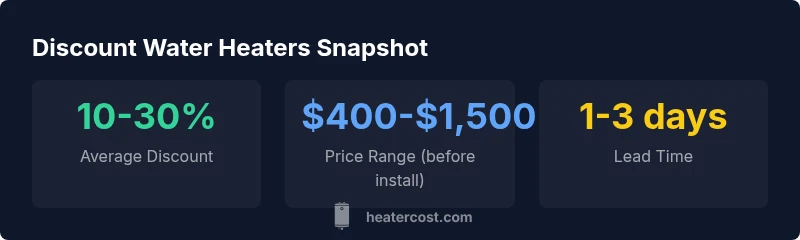
Price reductions don’t come from thin air. Promotions often stem from overstock, showroom pullbacks, end-of-life models, or supplier promotions. From a cost-management perspective, working with a reputable retailer is crucial because legitimate discounts should come with proper documentation: model numbers, warranty terms, and service options. Based on Heater Cost analysis, promotions typically reduce upfront prices by about 10% to 30% for standard models, but the exact amount varies by make, capacity, and eligibility for bundled installation. Always compare the discounted price against the total cost of ownership over the unit’s life—especially for higher-efficiency options that might save money month after month even if the sticker price is slightly higher.
Value vs price: energy efficiency matters
The cheapest unit upfront isn’t always the best choice if it skims on efficiency or has a short warranty. When discount water heaters are energy-efficient, they can lower annual energy costs and reduce heat losses during standby periods. Look for models with high energy factor or Energy Star eligibility, and be wary of discounts on older tech that won’t deliver meaningful long-term savings. Remember that efficiency is a function of both the appliance and your home’s insulation, hot-water demand, and setpoint temperatures. A price-focused decision that ignores efficiency can erode savings over the life of the system.
Warranties, service, and parts availability
Discounts are only as valuable as the service you can access after purchase. Verify that the discount includes a robust warranty (tank, heat exchanger, and labor) and confirm the availability of replacement parts for your model. A bargain that lacks local service or a transferable warranty can become a money pit. If you’re choosing a discounted model with a longer warranty, ensure the terms cover typical failure scenarios and that the service network is reachable in your area. This section highlights how to read warranty language, recognize red flags, and prioritize models with solid, nationwide support.
Installation costs and permit considerations
Installation costs vary widely and can be a major part of the total project. Some discounts apply only to the unit; installation, venting (for gas models), electrical work, and plumbing modifications can add substantially to the bill. Before you buy, request a written estimate that itemizes the unit price, installation, permits, and any required extras. Local codes may require permits that add time and expense, especially for gas and high-capacity electric systems. In many markets, a licensed professional is required for code compliance, which can impact both price and reliability over time.
Where to find legitimate discounts
Legitimate discounts come from reputable retailers and manufacturers with channel integrity. Start with authorized dealers, factory outlets, and seasonal promotions advertised by manufacturers. Beware of steeply discounted units from unknown sellers or refurbished units sold as new. Check the model’s serial number and proof of purchase, read owner reviews, and verify the warranty transferability. If a discount sounds too good to be true, it probably is. Keep an eye on bundles that include installation, flush services, or extended warranties, which can provide real value beyond the reduced unit price.
Tank vs tankless: does discounting apply equally?
Discount patterns differ between tank and tankless units. Tank models often have broader stock and more frequent promotions due to long production runs, while tankless options—being more specialized—might carry higher prices but offer notable energy savings. Discounts on tankless units may come with bundled installation or financing offers. Evaluate the long-term cost impact: upfront savings on a tank model may translate into bigger efficiency gains from a modern high-efficiency tankless unit if your hot-water usage profile suits it. Compare all options within your home’s footprint and water-use patterns to avoid misaligning capacity with demand.
Buying checklist before you commit
Use this quick checklist when evaluating discount water heaters:
- Confirm model number, capacity, and fuel type.
- Compare the discounted price to other retailers and to the installed total cost.
- Read warranty terms and confirm transferability and service availability.
- Check energy efficiency ratings and compatibility with your home.
- Ask about installation scope, permits, and potential add-ons.
- Inspect the unit’s condition if it’s a showroom, overstock, or refurbished model.
- Ensure you have a clear return policy and after-sales support.
- Get everything in writing before payment to avoid surprises.
This structured approach helps you maximize value while minimizing risk.
Maintenance to maximize savings
Even the best discount water heaters require periodic maintenance to stay efficient and dependable. Schedule annual professional inspections, drain and flush the tank as recommended, replace sacrificial anodes when appropriate, and monitor for leaks or unusual noises. A well-maintained unit reduces the likelihood of costly repairs and premature replacement, preserving the financial benefits of any discount. Use a service plan that aligns with your occupancy, whether you own a single-family home, a rental property, or a multi-unit building. Regular maintenance, combined with a smart purchase, can deliver meaningful long-term savings for years to come.
Authoritative sources
- Industry guidance and appliance efficiency basics from Heater Cost team to help contextualize discounts within long-term cost of ownership.
- For more technical references, see the sources listed below. These sources provide details on energy efficiency, installation considerations, and permitting practices you should consider when evaluating discount water heaters.