Water Heater Sales Near Me: How to Score Deals in 2026
Discover how to find water heater sales near you, compare offers, and maximize savings on installation and energy-efficient models with practical guidance from Heater Cost.


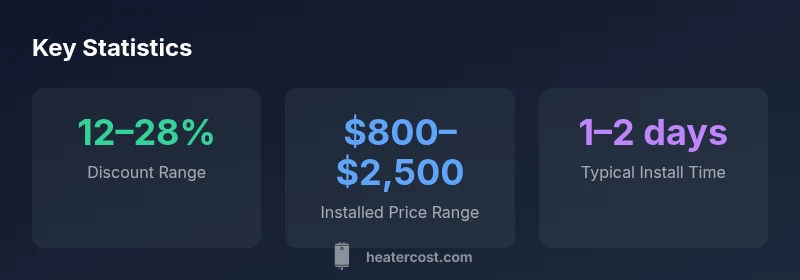
Water heater sales near me typically surface during major retailer promotions, with total out-the-door prices often reduced by about 12–28% in 2026 when installation is included. Promotions frequently bundle delivery, disposal, and limited warranty extensions, and may pair with rebates. Planning ahead and comparing at least three offers helps homeowners and property managers maximize value. For context, the figures come from Heater Cost Analysis, 2026.
Where water heater sales near me surface and how to search for deals
According to Heater Cost, the best deals surface during scheduled promotions at local retailers and online marketplaces. Home improvement centers, appliance chains, and regional distributors run price drops timed to inventory and energy-efficiency rebates. In 2026, Heater Cost analysis shows spring clearance events and late-summer promotions are especially common, often paired with manufacturer rebates that reduce the effective price. When you search for water heater sales near me, use both store scans and online aggregators to compare advertised prices, coupons, and installation packages. Collect at least three quotes to establish a baseline and avoid pressure purchases. Verify whether a price includes delivery, haul-away services, and permit-related fees, which can dramatically affect the total out-the-door cost. Tracking promotion calendars and retailer terms helps homeowners, renters, and property managers identify genuine discounts rather than transient price spikes. This approach minimizes overspending and improves overall value.
How to compare sale offers effectively
Start with the out-the-door price and compare apples-to-apples. Ask for a single, itemized quote that includes the unit price, delivery, removal of the old heater, permits (if required), venting components, and a labor charge for installation. Look at energy efficiency metrics such as EF/UEF ratings, first-hour rating (for gas models), and expected operating costs over 5–15 years. A higher-efficiency model can pay back the premium through lower energy bills. Check warranty length and what it covers (parts, labor, and service). Confirm whether any bundled accessories (expansion tanks, anti-siphon valves) are included. Also consider financing options or promotional rebates from manufacturers and utilities. Cross-check the retailer’s reputation with reviews and local licensing requirements. For credibility, reference official sources like DOE Energy.gov and Energy Star product pages for guidance on efficiency standards and eligible rebates.
Negotiating, warranties, and bundled deals
Negotiation is often possible, especially when multiple offers exist. Ask the seller to honor the lowest out-the-door quote, and request a matched price from a rival retailer. In discussions, secure a comprehensive warranty that covers parts and labor for at least 1–2 years, and verify what maintenance is included. Some promotions include installation labor or expansion tanks at no extra cost; others waive delivery fees. Be wary of very low quotes that require you to buy optional add-ons later, as they can inflate the total cost. Document every promise in writing and keep a copy of all warranty terms. If you’re upgrading to a more efficient model, ensure the new unit’s compatibility with your existing plumbing and venting.
Permits, timing, and local rules
Understand permit requirements with your city or county; many jurisdictions need a permit for new water heaters and venting work, and permits can add days to the timeline. Ask the installer to handle permit applications when included in the sale, or confirm responsibility if you’re obtaining permits yourself. Plan for potential inspection windows that could delay installation. During a sale, stock availability matters; choose a model with flexible delivery options and confirm installation windows that fit your schedule. Check local utility programs for rebates tied to installation date, and verify deadlines to ensure you don’t miss incentives.
Quick-start sale-day checklist
Before you buy, gather model numbers, energy ratings, and warranty terms from quotes. On sale day, confirm the final price, including all components and services. Ensure the installer will handle venting, pressure relief valve, expansion tank, and old unit removal. Bring proof of residency and any financing approvals if using financing options. After installation, test the unit and review start-up instructions with the installer.
Common mistakes to avoid during water heater sales
Rushing to buy without an apples-to-apples quote; failing to verify permits; ignoring energy efficiency; overlooking warranty limitations; assuming the lowest price equals best value; not budgeting for future maintenance and potential repairs. Avoid bundling too many add-ons you don’t need.
Common water heater options and installed costs
| Model Type | Typical Installed Cost | Best For |
|---|---|---|
| Tank-style Electric | $800-$1,600 | Budget-friendly, simple install |
| Gas Tankless | $1,200-$2,500 | Space-saving, high efficiency |
| Hybrid Electric | $1,000-$2,200 | Efficient for mixed fuel homes |
Got Questions?
What counts as a 'sale' for water heaters near me?
A sale includes advertised discounts, bundle offers, rebates, or financing incentives from retailers; verify that the price applies to the unit, delivery, and installation.
Sales include discounts, bundles, rebates, or financing; make sure delivery and installation are included.
Should I buy during a sale or wait for a bigger event?
Sales vary by region, and stock can run out. Waiting for the biggest event isn’t always ideal—balance your timing with inventory and budget.
Waiting for the biggest sale isn’t always best; stock and timing matter.
Are installation costs included in sale prices?
Some offers include installation; others require a separate quote. Always request a complete out-the-door price.
Check if installation is included or priced separately.
How can I verify a seller's credibility during a water heater sale?
Check reviews, verify licenses where required, request written warranties, and compare terms across vendors.
Read reviews and ask for written warranties.
What energy efficiency factors should I compare at sale time?
Compare EF/UEF ratings, first-hour ratings for gas models, and potential rebates for high-efficiency units.
Look at EF/UEF ratings and available rebates.
Are there tax credits or incentives I should consider?
Yes—look for federal, state, or local rebates for ENERGY STAR water heaters; check eligibility and deadlines.
Rebates may be available; verify eligibility and deadlines.
“The Heater Cost team recommends taking a prepared, side-by-side approach to sales: compare total costs, confirm warranty terms, and favor energy-efficient models for long-term savings.”
The Essentials
- Shop during official sale events to maximize discounts
- Get an itemized, out-the-door quote including installation
- Prioritize energy-efficient models to lower operating costs
- Factor permits and disposal into the total cost