Why Would a Heater Stop Working? Troubleshooting Guide 2026
Urgent, step-by-step guide to diagnose and fix a heater that won't start, with safety tips, professional help guidance, and prevention strategies. Learn fast how to get heat back in your home.


The most common reason a heater stops working is a power or control fault. Start by verifying the power supply, checking the thermostat settings, and ensuring safety switches are reset. If the pilot light or ignition won’t ignite, examine fuel supply and ignition components. If basic checks fail, follow the diagnostic flow or call a professional for a detailed guide.
Why would a heater stop working
In plain terms, why would a heater stop working can happen for several reasons—power, controls, safety interlocks, or fuel supply depending on the system. According to Heater Cost, the most common culprits are simple, everyday faults rather than complex mechanical failures. In this guide we address electric furnaces, gas furnaces, boilers, and heat pumps with a practical, step-by-step approach. Start with the question in mind: what changed last time the unit operated? Was there a recent power outage, a tripped breaker, a thermostat update, or a clogged air filter? By narrowing down the possibilities, you can avoid unnecessary repairs and preserve energy efficiency. This section lays the groundwork for safe, rapid troubleshooting and helps you decide when it’s time to bring in professional help.
Quick safety checks you can perform safely
Before you touch any system components, kill power at the breaker and wear non-conductive gloves if you need to handle wiring. Check for obvious hazards like frayed cords, oily residues, or a buzzing sound that suggests a loose connection. Confirm the thermostat is set to heat and not a lower setting, and ensure that the room temperature setting hasn’t fooled you into thinking the unit is broken. If you have a pilot light, note whether it’s present and steady; a flame that won’t stay lit usually signals a system safety lockout or fuel-supply issue. Keep a flashlight handy and take clear notes of any unfamiliar sounds, smells, or error codes. If you see burnt smells or see exposed wires, stop immediately and call a licensed professional. These basic checks form the safe, initial screen that saves time and money.
Electrical problems: power, fuses, breakers
Electrical faults top the list of why a heater won’t operate. A tripped breaker, blown fuse, or a loose disconnect can cut power to the furnace or heat pump, leaving you with no heat even when the thermostat calls for it. Inspect the main service panel: reset any breakers labeled with the heating equipment, and replace any blown fuses if you’re comfortable doing so. Don’t ignore signs of overheating, warm panels, or a burning smell. If the system is dual-voltage or has a condenser outside, verify connections at the outdoor unit as well. If the power check doesn’t restore heat, the issue may migrate to the control board or a failed capacitor, which typically requires professional testing and replacement. Heater Cost emphasizes prioritizing power issues first, since they’re the easiest to confirm and most often reversible.
Controls and sensors: thermostat, limit switches, flame sensor
A malfunctioning thermostat or a tripped limit switch can fool the system into thinking heat is not needed, preventing ignition or forcing a shutdown. Verify that the thermostat is communicating with the furnace properly—check batteries if it’s a wireless or wall-mounted unit, and try lowering and raising the setpoint to trigger a response. For gas furnaces, a dirty or faulty flame sensor can prevent ignition by signaling unsafe conditions to the control board. If your system uses a ducted air handler, ensure the fan limit switch is set to the appropriate position and isn’t stuck. If you notice inconsistent readings on the thermostat or persistent error codes, consult the manufacturer’s manual for reset procedures or call a pro for a safer diagnostic.
Fuel supply and ignition: gas valve, ignition system
Gas furnaces and boilers rely on a steady fuel supply and a reliable ignition system. If the gas valve is closed or the supply is interrupted, the burner won’t ignite. For propane or natural gas systems, check that the main gas valve is open and there is no interruption in the gas line. Ignition components—whether a standing pilot or electronic ignition—can fail due to wear, dirty electrodes, or moisture. In electric heat systems, ignition is replaced by elements and relays; a failed ignition requires professional testing. If you’re seeing error codes related to fuel delivery, a professional should inspect pressure regulators, gas lines, and the ignition module to prevent dangerous conditions.
Airflow and sensors: dirty filters, blower issues
Restricted airflow is a common yet overlooked reason for heat loss, delays, or shutdowns. Dirty air filters, closed registers, or a blocked return can stress the blower and trigger safety protections. A failing blower motor or faulty motor capacitor can produce unusual noises and reduce airflow, prompting the thermostat to call for heat that never arrives. Regularly changing or cleaning filters and ensuring vents are open can dramatically improve performance. If you hear humming or clanking from the blower, or notice uneven heating across rooms, this section may point to a mechanical issue that a technician should inspect. Proper airflow is essential for efficient and safe operation.
Diagnosing the issue: step-by-step diagnostic flow
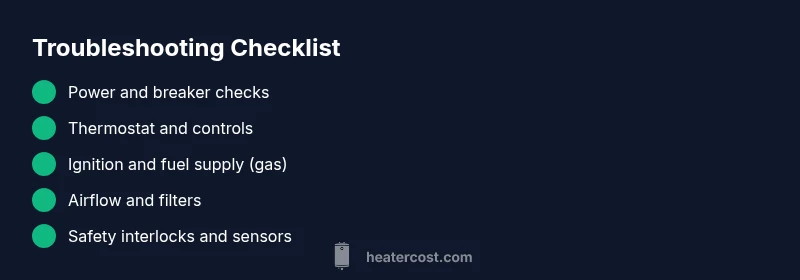
When your heater won’t start, follow a simple diagnostic flow to isolate the root cause. Start with power and thermostat checks, then move to ignition and fuel supply for gas systems. If those areas check out, inspect safety interlocks, flame sensors, and air circulation components. Collect any error codes from the control board and consult the manual for their meanings. If you’re uncomfortable handling gas lines, electrical components, or heat exchangers, stop and call a licensed technician. This process minimizes guesswork and helps you avoid unsafe troubleshooting. Remember to document symptoms, times, and any changes you observed to provide to a technician if needed.
When professional help is needed and what to expect
Some issues are beyond DIY, especially those involving gas lines, high-voltage components, or sealed heat exchangers. If you’ve ruled out obvious power and control issues, or if you smell gas, hear gas leaks, or see scorch marks, contact a licensed HVAC technician immediately. A pro will perform a pressure test, combustion analysis, electrical safety checks, and a thorough system inspection. Expect a diagnostic visit to include setting expectations for repair or replacement and a clear explanation of potential parts and labor costs. Heeding professional advice early can prevent dangerous situations and ensure the system operates safely and efficiently. Heater Cost’s guidance emphasizes safety first and getting a clear repair plan before any invasive work.
Prevention tips to avoid future outages
Prevention is your best defense against unexpected heater failures. Schedule regular inspections, replace filters monthly during high-use seasons, and clear dust from vents and intakes. Keep combustible materials away from the furnace and ensure outdoor units are free of debris. Maintain a simple maintenance log noting service dates, observed issues, and any code readings. This practice helps you spot trends and catch issues before they escalate. Upfront investment in routine maintenance can extend equipment life and enhance energy efficiency. By following these proactive steps, you’ll reduce the likelihood of sudden outages and improve overall home comfort.
Steps
Estimated time: 1-2 hours
- 1
Power cycle and safety reset
Turn off the system at the breaker, wait 60 seconds, and turn it back on. If you have a power switch on the furnace, switch it off and on again. After resetting, listen for the blower and check if the thermostat responds to heat calls.
Tip: Always reset power from the main breaker, not just a thermostat button. - 2
Thermostat sanity check
Verify thermostat settings are correct (set to heat, appropriate temperature). If it’s a programmable model, review recent schedules. Replace batteries if it’s wireless and confirm the thermostat wiring is intact.
Tip: Even a misreading schedule can make it seem like the system is broken. - 3
Ignition and burner check (gas systems)
If you have a gas furnace, observe whether the burner lights when heat is called. For intermittent ignition, inspect the flame sensor and ignition electrodes for cleanliness. Do not bypass safety interlocks.
Tip: Never bypass safety controls; they exist to prevent dangerous conditions. - 4
Airflow and filter check
Inspect and replace dirty air filters, ensure supply vents and returns are open, and verify the blower is operating. Restricted airflow can cause the system to shut down or fail to reach setpoints.
Tip: Clean filters can restore performance in minutes; avoid running with clogged filters. - 5
Safety interlocks and pressure checks
Check limit switches and any external safety devices for proper position. If your system is heat-pump or dual fuel, verify the emergency heat setting isn’t engaged incorrectly.
Tip: A tripped limit switch often signals an underlying airflow or flame issue. - 6
Call for professional help when needed
If you’ve completed the above steps and the heater still won’t run, schedule an HVAC technician visit. A professional can safely diagnose control boards, gas safety, and combustion efficiency.
Tip: Document any error codes and times you observed to help the technician diagnose faster.
Diagnosis: Heater won't start or stay on
Possible Causes
- highPower issue
- mediumThermostat or control fault
- lowFuel supply or ignition problem (gas systems)
Fixes
- easyReset breakers/fuses and inspect wiring for damage
- mediumTest and replace thermostat or control board as needed
- hardCheck gas valve, gas supply, and ignition for gas systems
Got Questions?
What is the first thing I should check if my heater won't start?
Start with basic safety and power checks: ensure the breaker isn’t tripped, the thermostat is set correctly, and the furnace access is clear. If the unit still won’t start, proceed through the diagnostic flow.
First check the breaker and thermostat, then move through the diagnostic flow if needed.
Can a dirty filter cause a heater to stop working?
Yes. A clogged air filter can restrict airflow, cause the system to overheat, and trigger safety shutoffs. Replacing or cleaning the filter is a simple, often effective fix.
A dirty filter can definitely stop heat from flowing; clean or replace it to restore airflow.
Is it safe to reset the furnace control board myself?
Resetting a control board is sometimes possible, but many gas furnaces require professional handling due to gas and electrical safety. Follow manufacturer guidelines and avoid bypassing safety features.
Resetting can be risky; consult the manual or a pro if you’re unsure.
When should I replace my heater instead of repairing it?
If the furnace is old, shows frequent failures, or repair costs exceed a practical portion of replacement, replacement may be the safer, longer-term option. Consult a technician to assess reliability and efficiency.
If repairs keep adding up and efficiency is poor, replacement may be wiser.
Do heat pumps require special maintenance?
Heat pumps benefit from regular checks of airflow, refrigerant levels, and outdoor unit cleanliness. A professional can perform a full check, especially for charging and coil cleanliness.
Yes, heat pumps need regular maintenance for efficiency and longer life.
Watch Video
The Essentials
- Identify the most probable cause from power and controls first
- Follow a safe, step-by-step diagnostic flow
- Call a licensed pro for gas, electrical, or sealed-system issues
- Maintain regular maintenance to prevent future outages