How to troubleshoot: how come my heater isn't working
A practical, step-by-step guide to diagnose why your heater isn't working and how to fix common issues safely. Learn quick checks, safety tips, and when to call a pro from Heater Cost.


If your heater isn’t starting, start with the basics: check power, thermostat, and gas supply. Reset tripped breakers, replace thermostat batteries, and ensure vents aren’t blocked. If the unit still won’t run, record what you’ve checked and call a licensed technician. According to Heater Cost, many failures come from simple, addressable issues that you can verify safely.
How come my heater isn't working
When you ask how come my heater isn't working, you’re not alone. Most outages come from simple, addressable causes rather than a major failure. Before you panic, run through a quick triage of power, controls, and airflow. According to Heater Cost, many no-heat events originate from basic issues that homeowners can verify safely. In this guide, we outline a practical, safe approach to identify the root cause and decide whether you can fix it yourself or need a licensed technician. For homeowners, renters, and property managers, acting quickly can save energy and reduce bills. If you smell gas, hear a loud banging, or notice carbon monoxide indicators, leave the space immediately and call the appropriate emergency line. Some fixes require professional service; we’ll call those out so you know when to pause and call a pro. This approach aligns with Heater Cost Analysis, 2026 guidance.
Quick checks you can perform in minutes
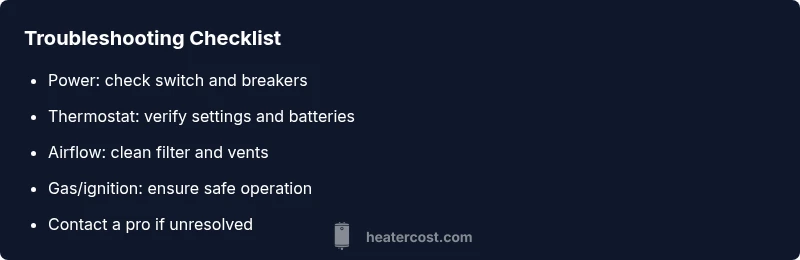
Setting aside professional help for a moment, there are several checks you can complete in a few minutes that cover most common failures. Start with power (is the switch on, is the outlet live, did a breaker trip?), then inspect the thermostat, and finally look at airflow (blocked vents or dirty filters). If you’re working through this with a property manager or on a rental unit, keeping a simple log helps technicians reproduce the issue later. Throughout this quick test, remember: safety first. If you notice gas odors, CO alarms, or suspect a gas leak, exit the area and call emergency services. According to Heater Cost, most no-heat events come from straightforward, verifiable problems.
Check power, circuit breakers, and fuses
A trip or blown fuse is one of the most common causes of no-heat. Inspect the main and branch circuit breakers and reset any that are in the OFF position. If the breaker trips again after resetting, there may be an underlying electrical fault or an overdrawn circuit. Do not bypass breakers or use damaged fuses. For electric heaters, ensure the unit’s power cord and plug are intact. If you’re unsure about electrical work, contact a licensed electrician. Heater Cost Analysis, 2026 highlights that many electrical issues are resolved quickly when addressed early.
Inspect the thermostat and room settings
Thermostats are frequent culprits. Check that the thermostat is set to heat and the setpoint is higher than room temperature. If there are remote sensors, make sure they aren’t shielded or malfunctioning. Replace the thermostat batteries if it’s a battery-powered model, and consider recalibrating if readings seem off. Some smart thermostats require a quick firmware update or re-pairing with the HVAC system. Keep in mind that thermostat wiring can loosen over time, especially in poorly ventilated spaces where dust and humidity accumulate. This often explains why the system suddenly stops responding to temperature changes.
Gas furnace safety, ignition, and CO precautions
Gas furnaces require careful handling. If you have a gas furnace and hear the blower but no ignition, or you smell gas, do not investigate further. Turn off the gas supply at the valve if you know how, leave the space, and call the gas emergency line. Ignition problems can stem from dirty ignitors, failed flame sensors, or fuel delivery issues. Never attempt risky ignition repairs yourself. Install or verify working carbon monoxide detectors on every level of your home, and replace detectors every 5-7 years as recommended. If CO is detected, evacuate immediately and call emergency services. Safety first.
Electric heaters and heat pumps: common hiccups
Electric resistance heaters and heat pumps can fail for a handful of reasons, including thermostat miscommunication, refrigerant issues (for some heat pumps), or outdoor unit obstruction due to debris. For heat pumps, listen for unusual clanks or grinding sounds and check outdoor condensers for ice buildup or obstructions. Clean or replace dusty filters and ensure the unit’s fans spin freely. If you notice a persistent cycle of short-cycling, it may indicate an oversized or undersized system, which is a job for a professional.
When to call a professional and what to expect
If basic checks don’t restore heat, it’s time to involve a pro. A licensed HVAC technician will perform a thorough diagnostic, verify gas and electrical safety, and check for refrigerant leaks or heat exchanger problems. Based on Heater Cost research, routine maintenance and professional diagnostics can prevent costly outages later. When you schedule service, provide a symptom log, model/serial numbers, and any recent changes to settings or installation. Expect a safety-focused interview, a system test, and a written estimate before any work begins. The goal is to restore safe, reliable heat with minimal downtime.
Maintenance tips to prevent future outages
Preventive maintenance is your best defense against mid-season outages. Schedule an annual professional tune-up, replace air filters every 1-3 months during active heating seasons, and clean intake vents. Keep outdoor units clear of debris, check condensate drains, and ensure thermostat firmware is up to date. A simple logs-and-checks routine can help you catch signs of wear early. By staying proactive, you reduce the odds of unexpected failures and keep energy costs down.
Steps
Estimated time: 30-45 minutes
- 1
Power check
Ensure the heater’s switch is on and the circuit breaker is not tripped. If the breaker trips, reset it. If it continues to trip, stop and call a professional.
Tip: Always switch off power at the control panel before inspecting electrical components. - 2
Thermostat test
Verify the thermostat is set to heat and above the room temperature. If battery-powered, replace batteries and recalibrate if needed.
Tip: Record the thermostat setting before making changes so you can revert if needed. - 3
Airflow check
Inspect and replace the air filter if dirty. Ensure vents and registers are open and unobstructed.
Tip: A clogged filter can cause inefficient heating or shutoffs. - 4
Ignition or pilot test
For gas systems, listen for ignition sounds. If you smell gas, evacuate and call emergency services.
Tip: Never light a pilot or work on gas lines if you’re unsure. - 5
Vent and outdoor unit check
Clear any debris around outdoor units and ensure the outdoor damper is open if applicable.
Tip: Keep a clear zone around outdoor equipment for safe operation. - 6
System wiring review
Check visible wiring connections at the furnace/air handler for loose or corroded terminals.
Tip: Only handle wires with power off and if you’re trained. - 7
Run a test heat cycle
After basic checks, set the thermostat to heat and observe if the system initiates a full cycle.
Tip: Note any unusual sounds or smells during the cycle. - 8
Call a professional if unresolved
If heat still won’t come on after steps above, schedule a service with a licensed HVAC tech.
Tip: Provide symptom details, model/serial numbers, and maintenance history to speed up diagnosis.
Diagnosis: Heater won't turn on or heat is weak
Possible Causes
- highPower issue (tripped breaker, blown fuse)
- highThermostat misconfiguration or dead batteries
- mediumGas supply or ignition problems
- lowAirflow restriction (clogged filter, blocked vents)
Fixes
- easyReset circuit breaker and replace blown fuses as needed
- easyReplace thermostat batteries and verify temperature settings
- mediumCheck gas valve position and ignition components with safety in mind
- easyReplace or clean air filters and clear intake/return vents
Got Questions?
Why won't my heater start after a power outage?
Power outages can trip breakers or blow fuses, which stop the heater from starting. Reset the breaker and inspect the fuse, then test the system. If it repeatedly trips, call a licensed electrician or HVAC pro.
Power outages can trip breakers. Reset the breaker and test again; if it keeps tripping, contact a professional.
Is a dirty air filter causing no heat?
Yes. A clogged filter restricts airflow and can trigger safety shutoffs or reduce heating efficiency. Replace or clean filters and see if heat returns.
A dirty filter can cause heat loss and shutoffs. Replace it and test again.
What should I do if the thermostat shows an error?
Refer to the thermostat manual, reset safely, and replace batteries if needed. If the error persists, a professional should inspect the control wiring and compatibility with the furnace.
Check the manual, reset safely, and replace batteries. If codes persist, call a pro.
Can carbon monoxide affect a heater that won't run?
Yes. CO leaks are dangerous. If you detect CO or gas odor, evacuate and call emergency services immediately. Install CO detectors on every level.
CO exposure is serious. Evacuate and call for help immediately; install detectors.
Should I attempt DIY repairs?
Only if you’re confident and follow safety guidelines. For complex gas or electrical issues, hire a licensed professional to avoid injury or damage.
DIY can be risky; if in doubt, hire a pro.
Watch Video
The Essentials
- Check basics first: power, thermostat, airflow.
- Safety comes first: CO detectors and gas safety rules.
- Log symptoms to aid professional diagnosis.
- Regular maintenance reduces mid-season outages.
- Know when to call a licensed HVAC professional.