What to Do If Your Heater Is Not Working
Urgent troubleshooting guide for homeowners: diagnose common causes, perform safe checks, and know when to call a pro to restore warmth fast.


If your heater won’t start, begin with the basics: power, thermostat settings, and safety interlocks. Check the circuit breaker and any fuses, confirm the thermostat is set to heat, and inspect for returned airflow obstructions. For gas systems, verify the gas valve is open and the pilot light is lit. If it still won’t run, shut off power and contact a licensed technician.
Why Your Heater Isn't Working
When the heat suddenly goes cold, it can feel alarming, especially in colder months. The most common causes are simple, quick fixes, but some situations demand professional assessment. If you’re asking what to do if heater is not working, remember that many failures start with power or control issues rather than a furnace breakdown. According to Heater Cost, the majority of residential heating problems originate from easily checked elements such as breakers, thermostats, and safety interlocks. This section explains how to assess those factors and distinguish between safe DIY steps and situations that require an expert.
In practice, homeowners should approach repairs with urgency but caution. Before you dive into diagnostics, ensure all safety protocols are in place. If you ever smell gas, hear unusual noises, or see burnt components, evacuate and call emergency services or a licensed technician immediately. The goal is to restore warmth while avoiding hazard or further damage.
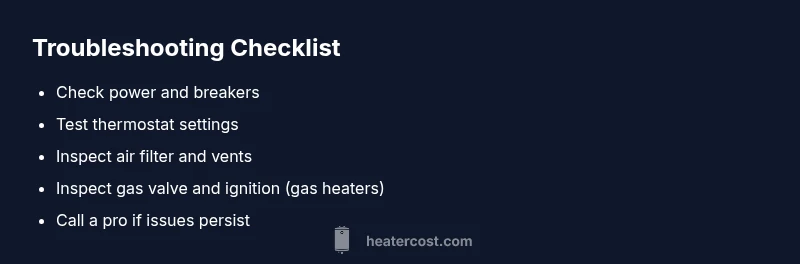
Key actions: check power, confirm thermostat accuracy, verify air intake and venting, and inspect safety switches. These steps set the foundation for more in-depth troubleshooting and help you communicate effectively with a technician when professional help is needed.
Quick Checks You Can Do Safely
It’s natural to want a quick fix when the house is chilly. Start with safe, low-effort checks that cover the most common culprits. You’ll often identify the issue without tools.
- Check the power: Look at the furnace outlet, wall switch, and any reset buttons. If a breaker has tripped, reset it and test the system.
- Verify thermostat settings: Ensure the thermostat is set to heat, not cool, and that the temperature is above the current room temperature. If you rely on a programmable model, confirm the schedule hasn’t overridden the setting.
- Inspect airflow: Vacuum or replace dirty air filters, and ensure vents aren’t blocked by furniture or drapes. Restricted airflow can trigger safety shutoffs and reduce heating performance.
- Listen for signals: A furnace or heat pump that’s stubborn to start may emit clicking sounds or a humming motor. While some noises are normal, unusual sounds can indicate a motor, blower, or relay issue that requires a pro.
- Look for error codes: If your furnace display shows codes, consult the manual or Heater Cost resources to decode them. Codes guide you toward the likely cause without guesswork.
If you’re uneasy about any step or you notice signs of danger, stop and call a professional. The aim is to narrow the fault safely and accurately, rather than guessing and risking damage or injury.
Gas vs Electric: Common Causes and Quick Fixes
Different heater types show different patterns when they fail. Electric heaters typically error out on circuit or thermostat issues, while gas furnaces might trip safety switches or lose ignition. Here’s how to approach each:
- Electric heaters: Check power supply, outlet integrity, and internal thermostat. A faulty element or blown fuse may require replacement by a technician.
- Gas furnaces: Verify the gas supply, ensure the valve is open, and check the pilot light or electronic ignition. Gas systems involve combustion safety and should be handled by pros if ignition fails or you detect gas odor.
For both types, if the unit attempted to start but didn’t reach full heat, you should consider airflow and venting, furnace filter condition, and potential thermostat communication issues with the control board. These factors are common, solvable with proper steps, and often inexpensive to fix compared to full replacement.
Safety First: When to Call a Professional
Certain scenarios demand professional evaluation immediately. If you smell gas or hear a hissing leak, evacuate and contact your gas provider or emergency services. Any suspected electrical fault should be treated with caution—shut off power at the main panel if safe to do so and call a licensed electrician or HVAC technician. Routine maintenance and diagnostics that involve gas piping, refrigerant, or electrical wiring should always be performed by trained technicians to avoid hazards.
Before a professional visit, gather basic information: model and serial number, symptoms, when the issue started, and any error codes. This helps the technician diagnose quickly and accurately, reducing downtime and cost.
Step-by-Step Troubleshooting Guide
This section provides a practical workflow to identify and address the most common issues behind a non-working heater. It’s designed to be followed in order, from easiest to more involved checks. If you encounter safety concerns or the steps don’t resolve the problem, stop and contact a pro.
- Confirm power and reset: Reset breakers, replace fuses if accessible, and cycle the power to the unit.
- Check thermostat: Replace batteries if applicable, recalibrate, and ensure wiring is connected and communicating with the furnace.
- Inspect air flow: Clean or replace air filters; ensure intake and exhaust paths are clear.
- Inspect safety interlocks: Ensure internal switches are engaged properly and that the blower is not blocked.
- Review gas components (if applicable): Verify valve position and ignition sequence; do not attempt to relight if you’re uncertain.
- Test after each step: If heat returns, you have identified the issue; if not, continue to the next step or call a professional.
Tip: Keep a simple log of which steps worked as you go. This helps the technician reproduce and fix the problem faster.
Steps
Estimated time: 30-60 minutes
- 1
Check power supply
Locate the main breaker for the furnace and confirm it is in the ON position. If your system has a dedicated reset switch, use it and plug the unit back in if applicable. After cycling power, wait a few minutes to see if heat returns.
Tip: Power issues are the top reason for sudden heat loss; a quick reset often resolves it. - 2
Verify thermostat settings
Ensure the thermostat is set to heat, and that the setpoint is higher than the current room temperature. If you have a programmable thermostat, confirm the current mode and schedule haven’t overridden the setting.
Tip: Some thermostats require a delay timer to allow the system to respond. - 3
Inspect airflow and filters
Check and replace dirty filters. Ensure air intakes and registers aren’t blocked. Poor airflow can trigger safety protections and reduce heating efficiency.
Tip: A clean filter can improve efficiency by up to 5–15% in some homes. - 4
Check gas components (if applicable)
For gas heaters, verify the gas valve is fully open and that you can hear the furnace attempting ignition. If you smell gas or cannot safely relight, exit and call a professional.
Tip: Do not attempt to force ignition if the gas smell persists. - 5
Reset safety switches and control board
Some units require a reset of internal safety switches or the control board after a fault. Follow the manufacturer’s manual to perform a safe reset.
Tip: If you’re unsure, skip this step and call a pro to avoid electrical shocks. - 6
Call a professional if unresolved
If the heat still won’t return after these steps, it’s time to contact a licensed HVAC technician for a thorough diagnosis and repair.
Tip: Provide your notes from steps 1–5 to speed up the inspection.
Diagnosis: Heater won't start or produce heat
Possible Causes
- highPower issue
- mediumThermostat fault or miscalibration
- lowGas supply issue or pilot light out (gas furnaces)
- lowClogged air filter or blocked vents
Fixes
- easyReset the breaker and confirm the unit is powered
- easyReplace thermostat batteries or recalibrate
- mediumRelight pilot or inspect gas valve; call a pro if needed
- easyClean/replace air filter and clear duct obstructions
Got Questions?
What is the most common reason a heater stops working?
Power issues, thermostat faults, or safety interlocks are the usual culprits. Start by checking these three areas before pursuing more complex fixes.
Most heater problems come from power, thermostat, or safety interlocks. Check those first.
Can I fix a gas heater myself?
Gas-related repairs should be performed by a licensed professional. If you smell gas, evacuate and call emergency services. Handling gas lines yourself is dangerous.
Gas issues require a pro. If you smell gas, leave the area and call emergency services.
How long does a professional diagnosis take?
A typical visit lasts about 60 to 90 minutes, depending on the fault and accessibility of the unit. They’ll provide an estimate for parts and labor.
Most diagnostics take about an hour to an hour and a half.
Is it safe to reset the furnace circuit breaker myself?
If you know the correct procedure and there’s no gas smell or water exposure, you can reset the breaker. If you’re unsure, call a pro.
You can reset if you’re confident, but don’t attempt risky steps if you’re unsure.
When should I replace a furnace rather than repair it?
Consider replacement if repairs are frequent, the system is old, or efficiency has declined despite maintenance. A pro can help compare long-term costs.
Replacement is worth considering if repairs keep cropping up or efficiency is low.
Watch Video
The Essentials
- Start with power, thermostat, and airflow checks.
- Gas-related issues require a professional—don’t risk ignition hazards.
- Document symptoms and steps for faster pro diagnostics.
- Regular maintenance reduces recurring heat failures.