Reasons Your Heater Isn’t Working: A Practical Troubleshooting Guide
Urgent troubleshooting for when your heater won’t start. Learn common causes, step-by-step checks, and safe actions to restore warmth quickly.


The most likely reasons your heater isn’t working are power or thermostat problems, flame or ignition issues, and fuel supply or airflow blockages. Start with quick checks: verify the power source and thermostat settings, inspect the filter and vents, and reset the system. If the problem persists, advance to the diagnostic flow and consider professional service for safety.
Why the heater isn’t working: top reasons
When your home suddenly feels chilly, you want fast answers and reliable fixes. The core issue usually comes down to power, thermostat signals, or basic maintenance. According to Heater Cost, the most common reasons heater not working are simple, repeatable faults: a tripped breaker or blown fuse, a thermostat that isn’t communicating with the control board, and a dirty air filter or blocked vents that choke airflow. In addition, ignition or flame problems (for gas systems) and worn-out components can stop heat production. Understanding these categories helps you triage effectively and avoid unnecessary service calls. This guide stays practical: you’ll learn quick checks, how to read system alerts, and when to escalate to a licensed professional to protect your safety and investment. This is not a luxury—it's a necessary step in preserving comfort and avoiding expensive outages.
Even if the issue seems obvious, starting with the simplest steps often resolves the problem. Keep a record of symptoms, fault codes, and when the problem started; this helps when you call a technician and can speed up repairs. By knowing the typical culprits, you can decide whether to act now or wait for professional help.
Electrical power and thermostat basics
Power issues are by far the most common reason a heater won’t start. Start with the obvious: confirm the circuit breaker hasn’t tripped and that a fuse hasn’t blown. If you rely on a power strip, disconnect it and plug the unit directly into a wall outlet to test. Next, check the thermostat settings and batteries; a simple mis-set or a dead battery can stop heat without any other symptoms. Most modern systems rely on a low-voltage thermostat signal to trigger the furnace. If the signal isn’t reaching the control board, the blower won’t ignite. Finally, inspect the air filter; a clogged filter can trigger safety shutoffs or reduce heat delivery even if the system runs. If you notice frequent breaker trips, buzzing, or burning smells, stop and call a pro immediately.
Fuel type, burners, and ignition
Gas furnaces rely on a healthy gas supply, a clean burner, and a reliable ignition system. If the pilot light or electronic ignition is out, heat won’t form even if the blower runs. A dirty burner or a flame sensor can keep the system from achieving a flame; so clean or replace as per manufacturer instructions. If you smell gas, evacuate and call emergency services; do not relight. For oil systems, check the oil supply and the pump pressure. If you hear the furnace cycling on/off rapidly (short cycling), this can indicate ignition or flame sensor faults as well as thermostat issues. In any gas-related situation, safety comes first; avoid attempting repairs beyond basic cleaning and inspection unless you are qualified.
Airflow, filtration, and ductwork
Cold air returns and blocked ducts can cause a heater to seem like it’s not working because it can’t move heated air efficiently. Inspect and replace air filters every 1–3 months, depending on usage and filter type. Ensure supply and return vents are open and unobstructed by furniture or dust buildup. Clean intake grills and check for blocked exhaust or venting if you have a gas furnace. Dirty ducts and restricted airflow can overheat the heat exchanger or trigger safety switches, leading to a shutdown. If you notice excessive dust or burning smells, shut off the system and seek professional help.
Controls, safety switches, and fault codes
Modern heaters include safety switches and fault-coded diagnostics. If the system shows fault codes, consult the user manual or manufacturer app to decode them. Some errors point to thermostat miscommunication, overheat protection, or blocked heat exchangers. Resetting the system sometimes clears codes, but don’t ignore persistent warnings. Always follow proper safety steps: turn off power before opening panels, never bypass safety devices, and if you’re unsure, call a licensed technician to interpret codes and perform required tests.
Proactive maintenance to reduce outages
Regular maintenance reduces the chance of a sudden failure. Schedule an annual tune-up, replace filters on schedule, and keep the area around the unit clean. Keep an eye on weather-driven wear, such as ice buildup on outdoor units, and clear debris from the outdoor condenser or furnace enclosure. A simple pre-season check list—thermostat tests, filter replacement, and vent inspection—can catch issues before the cold hits. As Heater Cost analysis notes, a proactive maintenance plan saves money and lowers the risk of expensive emergencies.
Diagnostic path: from symptom to fix
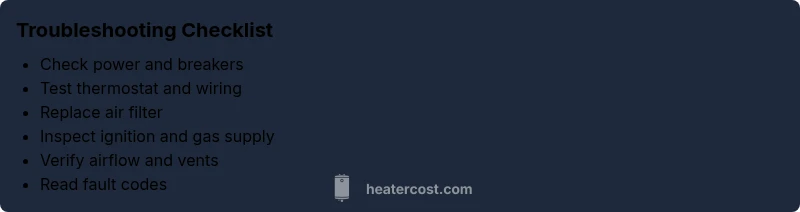
Start with the symptom you observe (not heating, cycling on/off, strange noises, or smell). Verify power and breaker status first, then confirm the thermostat is sending a correct signal. If the thermostat looks fine, test the burner/ignition and watch for safe flame and proper ignition if you have a gas system. Next, evaluate airflow: is the air filter clean, are vents clear, and is the ductwork free of obstructions? Read fault codes if available and reset the system if permissible. Document the steps and codes you encounter so a technician can pick up where you left off. This flow reduces guesswork and speeds up professional service.
When to replace vs repair and cost considerations
Most residential heaters can be repaired if the issue is a worn component or sensor, but some failures warrant replacement, especially with older equipment and frequent outages. If you’re facing multiple failures per season or rising repair bills, replacement may be more cost-effective over time. A preventative tune-up can extend life and reduce energy costs, while proper sizing and installation influence long-term performance. According to Heater Cost analysis, budgeting for a replacement heater can vary with fuel type and efficiency, but long-term energy savings often justify the upfront investment. Keep track of efficiency, fuel costs, and maintenance history to decide whether to repair or replace, and consult a licensed pro for a quote and feasibility study.
Steps
Estimated time: 1-2 hours
- 1
Check power and breakers
Begin by inspecting the circuit breaker panel for a tripped switch or a blown fuse. If a reset restores power but the heater trips again, there may be an overload or short in the circuit. Use a non-contact tester to confirm power at the furnace outlet before proceeding.
Tip: If you’re unsure about electrical work, call a licensed electrician to avoid shock or fire risk. - 2
Test thermostat signals and batteries
Remove the thermostat cover and inspect wiring connections for looseness or corrosion. Replace batteries if needed and verify the thermostat is calling for heat when set to a higher temperature. If the unit still won’t engage, test with a known-good thermostat if available.
Tip: A simple thermostatic test can save a lot of time—swap to a spare before replacing components. - 3
Inspect the air filter and vents
A clogged air filter restricts airflow and can trigger safety shutoffs. Replace with the correct filter type and ensure all supply and return vents are clear of furniture and dust. After replacing, run the system for a short cycle to verify airflow.
Tip: Mark your calendar to replace filters every 1–3 months depending on usage and filter type. - 4
Check ignition and burner (gas systems)
If you have gas, inspect the ignition assembly and flame sensor for dust or soot. A dirty flame can prevent ignition, causing intermittent heating. If you smell gas, evacuate immediately and call emergency services.
Tip: Only perform cleaning if you’re comfortable; otherwise, contact a licensed technician immediately. - 5
Confirm fuel supply and pressure
For gas systems, ensure the gas valve is open and the pressure is within the rated range. For oil systems, check oil level and pump pressure as per the manufacturer guidance. Abnormal pressure can prevent ignition or heat delivery.
Tip: Do not attempt to adjust gas pressure without proper training. - 6
Check blower motor, belts, and limits
A failing blower or a stretched belt can stop heat from circulating. Listen for abnormal noises and verify the blower starts when heat is called. Inspect limit switches and safety interlocks for proper operation.
Tip: A tripped limit switch is a common safety failure—don’t bypass it. - 7
Read fault codes and reset safely
Many modern furnaces display fault codes that point to the problem area. Record codes, consult the manual, and perform a safe reset if advised by the manufacturer.
Tip: Never reset codes repeatedly without understanding the cause. - 8
Decide on repair vs replacement
If outages are frequent or repairs exceed a reasonable portion of the unit’s replacement cost, replacement may be more economical. Get a written quote from a licensed pro and compare to new unit efficiency gains.
Tip: Ask about energy efficiency and eligible incentives to lower long-term costs.
Diagnosis: Heater won't start or stay on
Possible Causes
- highPower supply issue or tripped breaker
- highThermostat miscommunication or faulty wiring
- mediumIgnition or flame sensor problems (gas systems)
- lowRestricted airflow or dirty filter
Fixes
- easyReset breaker or replace blown fuse, then retest the unit
- easyTest thermostat signal and replace batteries or recalibrate
- mediumClean or replace ignition/ flame sensor; verify gas supply and venting
- mediumReplace air filter and clear vents, ensure ductwork is unobstructed
Got Questions?
What should I do first when my heater won't turn on?
Check power at the furnace, ensure the breaker is on, and verify thermostat settings. If the unit still won’t start, inspect the air filter and briefly reset the system per the manual.
First, check power and thermostat. If it still won’t start, inspect the air filter and reset per the manual.
Why would a gas furnace fail to ignite even with noise from the system?
Ignition or flame sensor problems, or a restricted gas supply can prevent ignition even if the blower runs. If you smell gas or cannot identify the issue, evacuate and call for help.
Ignition or flame sensor problems or gas supply issues can prevent ignition. If you smell gas, exit and call for help.
Is it safe to reset a furnace myself?
A safe reset is often fine after you’ve checked power and cleared fault codes, but never bypass safety devices. If codes recur, contact a professional.
A safe reset is usually okay after checks, but don’t bypass safety devices. If codes recur, call a pro.
How often should I replace air filters to prevent heater problems?
Most homes should replace filters every 1–3 months, depending on usage and filter type. A clean filter improves airflow and efficiency.
Replace filters every 1–3 months, depending on usage and filter type.
When should I replace rather than repair a heater?
If outages are frequent or repair costs approach a significant portion of a new unit’s price, replacement is often more cost-effective.
If repairs keep piling up, replacement can be more affordable in the long run.
Should I call a professional for fault codes?
Yes. Fault codes point to the problem area, and a professional can interpret codes accurately and perform safe repairs.
Yes—fault codes often require professional interpretation for safe repair.
Watch Video
The Essentials
- Identify likely causes before expensive service
- Start with power, then thermostat and airflow checks
- Fault codes guide professional diagnosis and repair
- Regular maintenance reduces outages and energy costs