Why My Water Heater Leaks: A Practical Troubleshooting Guide
Urgent guide to diagnosing and fixing a leaking water heater with safety steps, a clear diagnostic flow, practical fixes, and budgeting tips for homeowners.


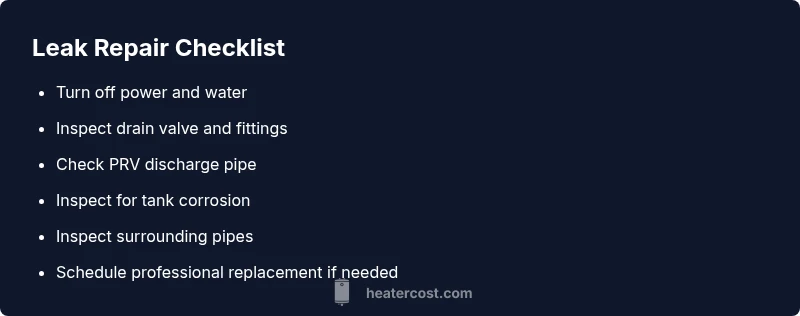
Most water-heater leaks stem from loose connections, a faulty pressure-relief valve, or a corroded tank. To stop immediate damage, shut off the cold-water supply and the power or gas, place a bucket beneath the leak, and tighten or reseat fittings that are dripping. If water continues after basic checks, call a licensed plumber.
Why My Water Heater Leaks: Immediate Causes
If you’ve noticed water pooling around your heater or damp spots in the utility closet, you’re likely dealing with a leak. This question—why my water heater is leaking—has a few common culprits. According to Heater Cost, leaks are more often caused by aging tanks and failing pressure-relief valves than dramatic bursts. Start by identifying whether the water is coming from the tank itself or from connected fittings. A leaking tank is the most serious sign of imminent failure and may require replacement, while pinhole drips around valves or threads can sometimes be tightened or reseated. Understanding the difference helps you respond quickly to minimize damage and decide between repair and replacement, a decision the Heater Cost team supports with practical cost-focused guidance for homeowners, renters, and property managers. If you’re unsure, you can perform a cautious initial inspection: look for damp spots on the tank shell, pools of water on the floor, and moisture at valve joints. Safety first: avoid opening valves while the tank is hot, and never pry at rusty metal.
Common Leak Points You Can Inspect Safely
Leak sources aren’t all the same. Here are the points you can check safely before calling a pro:
- Drain valve at the bottom of the tank: if the valve is loose or cracked, a slow drip is common and fixable.
- Cold-water inlet and supply lines: loose or corroded fittings can leak at the joints.
- Hot-water outlet and piping: check for drips where pipes meet the tank.
- Pressure relief valve (PRV) discharge pipe: a leaking PRV is a serious sign that the system is over-pressurized; never cap or block the discharge.
- Tank shell: visible rust, pitting, or bulges indicate the tank is failing and replacement is usually required.
- Drain pan or catch basin: water on the floor may be due to overflow or a pan leak rather than a tank leak.
Note: Do not attempt to seal a leaking PRV with tape or sealant; PRVs are safety devices and require professional replacement if faulty.
Safety First: When to Shut Off Power and Gas
Your first step when you notice a leak is safety. If your heater is electric, switch off the power at the main breaker to prevent shock or fire; for gas heaters, shut off the gas supply at the valve. Then close the cold-water shutoff valve to limit more water from entering the tank. If you smell gas, evacuate and call the utility emergency line. Keep children and pets away from the area. These steps protect you while you assess the leak or wait for a plumber. After shutting off power and water, do not reuse the heater until a professional has inspected it. If the leak is large or you see steam, treat it as an emergency and call emergency services.
How to Tell If It’s Condensation vs a Leak
Not every damp spot means a true leak. Cold air in basements or a cool evening can cause condensation on cold pipes, which can resemble a leak. To differentiate, wipe a dry area and check again after a few hours. If moisture reappears in the same spot continuously, it’s more likely a leak. Inspect the valves and connections first, as they’re easier to fix than a corroded tank. If you notice mineral deposits or a persistent drip from the tank itself, the issue is more likely a leak requiring attention from a professional.
Diagnostic Flow: Symptom-to-Diagnosis Path
Follow this straightforward path to determine the likely cause:
- Symptom: water dripping from a specific point or pooling near the base.
- Diagnosis: assess whether the source is a connection, valve, or the tank shell.
- Solutions: tighten fittings, replace a valve, or plan tank replacement if corrosion is evident.
This flow helps you decide between a quick DIY fix and scheduling a professional inspection. Remember, a leak from the tank often means replacement is the longer-term solution, while fittings can frequently be repaired with modest effort.
Step-by-Step Fixes for the Most Common Causes
Below are hands-on steps for the most frequent issues. Take your time and wear eye protection.
-
Tighten drain valve: With the system off and cooled, use an adjustable wrench to snug the drain valve. If dripping persists, the valve may be worn and require replacement. Tip: tighten slowly to avoid cross-threading.
-
Tighten loose supply-line fittings: Check the cold-water inlet and hot-water outlet connections at the tank. Use a wrench to snug but do not over-tighten and damage fittings. Tip: apply thread seal tape where threads are worn.
-
Replace worn valves: If the drain valve or PRV shows wear, replacing them is usually straightforward but can be tricky for non-professionals. Tip: shut off water and power/gas before starting.
-
Inspect for tank corrosion: If you see rust or pitting on the tank shell, plan for replacement. Temporary patches aren’t reliable. Tip: schedule a professional assessment to compare replacement options and warranties.
-
Clean the drain valve area and trap sediment: Sediment buildup can cause leaks, especially around the drain. Tip: perform a full flush during maintenance to prevent future leaks.
-
Verify surrounding pipes: Sometimes leaks originate from nearby pipes not directly attached to the tank; check meters and valves in the surrounding area.
-
When you smell gas or see signs of a gas leak: Leave the area immediately and call the gas company.
Estimated time: 60-90 minutes depending on your system and comfort level.
Preventing Future Leaks and Extending Lifespan
Routine maintenance is the best defense. Flush the tank yearly to remove sediment, inspect the anode rod if you have a tank with one, and replace worn valves or seals. Install a drain pan with a secondary containment if your heater sits on a wooden floor, and ensure proper clearance around the unit. Consider a thermal expansion tank if your home experiences high pressure changes. The goal is to reduce stress on the tank and fittings so leaks stay rare. As you plan, remember the value of proactive checks and timely repairs in extending your heater’s life.
When to Replace vs Repair
There comes a point when repair is no longer cost-effective or safe. If your tank shows persistent corrosion, significant leaks, or frequent valve failures despite maintenance, replacement is often the wiser choice. In other scenarios, a targeted repair—such as replacing a faulty PRV or drain valve—can extend the life of the unit. Weigh the cost of ongoing repairs against the reliability of a modern unit with improved energy efficiency. Heed the guidance of a professional to determine the best path for your home and budget.
Cost Considerations and Budgeting (Heater Cost insights)
Cost considerations aren’t just about parts; they include labor, accessibility, and long-term reliability. Heater Cost analysis shows that homeowners who address leaks promptly can minimize damage and prevent bigger problems down the line. Practical budgeting involves planning for a potential replacement, evaluating warranty coverage, and comparing quotes from licensed plumbers and installers. The Heater Cost team emphasizes that every situation is unique, so obtain multiple estimates and ask about warranties, disposal fees, and any needed upgrades (like an expansion tank or new piping). By staying informed about options, you can balance upfront costs with long-term energy efficiency and home safety. The Heater Cost team recommends consulting a professional to determine the most economical and reliable path for your home.
Steps
Estimated time: 60-120 minutes
- 1
Shut off power and water
Turn off electrical power at the breaker and shut off the cold-water supply before touching the heater. Cool the tank before inspection to avoid scalding. Keep a bucket handy for any residual drips.
Tip: Always test for voltage with a non-contact tester before touching wiring. - 2
Check drain valve and immediate fittings
Inspect the drain valve for corrosion or a loose connection. If you can tighten the valve safely, do so with the system cooled.
Tip: Do not force tightness if metal is damaged; replace the valve instead. - 3
Tighten or reseat inlet/outlet fittings
Inspect cold-water inlet and hot-water outlet connections. Hand-tighten, then snug with a wrench if needed. Use thread seal tape on worn threads.
Tip: Avoid over-tightening to prevent stripping threads. - 4
Inspect the pressure-relief valve (PRV)
Look for signs of leakage around the PRV and discharge pipe. If the valve is leaking, replacement is usually required by a professional.
Tip: Never cap the discharge pipe or block the PRV. - 5
Assess tank condition for corrosion
Check for rust, pitting, or bulges on the tank shell. Visible corrosion often means replacement is the safer long-term option.
Tip: Document the condition and plan a replacement with a pro. - 6
Flush and clean to remove sediment
Attach a hose and flush the tank to remove sediment that can cause leaks at the drain valve area. Refill and test for leaks after maintenance.
Tip: Perform this step annually as part of routine maintenance. - 7
Check surrounding pipes and area
Leak sources can be nearby pipes or fittings not directly attached to the tank. Inspect the surrounding area for dampness and signs of wear.
Tip: Inspect the floor drain or pan for proper containment. - 8
Decide on repair vs replacement
If leaks persist from the tank, plan replacement. If only a valve or fitting is bad, a targeted repair may suffice.
Tip: Consult a licensed plumber to compare options and warranties.
Diagnosis: Visible water pooling around water heater or damp area near the unit
Possible Causes
- highLoosened drain valve or pipe fittings
- highCorrosion or pinhole leaks in the tank shell
- mediumFaulty pressure-relief valve discharge pipe
- mediumLeaking cold-water inlet or supply line
- lowCondensation mistaken for a leak
Fixes
- easyTighten or reseat loose fittings and drain valve
- mediumReplace worn valves (drain valve or PRV) if damaged
- hardReplace the tank if corrosion is evident and leaks persist
- easyAddress condensation sources or insulation if necessary
- mediumRepair surrounding piping if leaks originate there
Got Questions?
Is a leaking water heater dangerous?
Yes—leaks can indicate tank failure or gas/pressure issues. Treat it as urgent and shut off power and water. If you smell gas or see steam, evacuate and call emergency services.
Yes, leaks can be dangerous. Shut off power and water and call a plumber right away.
What parts typically leak on a water heater?
Common leak sources are the drain valve, PRV discharge, fittings on supply lines, and the tank shell if corroded. Inspect each area safely before deciding on repair or replacement.
Most leaks come from the drain valve, PRV, or worn fittings.
Can I fix a leak myself?
Some small leaks around fittings can be addressed by reseating or tightening. Tank leaks or PRV replacements are not recommended for novices; call a professional for safety and reliability.
Might be possible for small leaks, but avoid complex repairs if you’re not trained.
Should I turn off gas supply if there’s a leak?
If you suspect a gas leak, leave the area immediately and call the gas company. Do not operate electrical switches or appliances in the area.
Leave the area and call the gas company right away.
How long does a water heater last?
Water heaters wear out with age and use. If leaks recur after maintenance, or corrosion appears, replacement is often the safer option.
Heaters wear out over time; persistent leaks usually mean replacement.
What maintenance helps prevent leaks?
Annual draining and flushing, inspecting valves, and testing the relief valve help prevent leaks and extend life.
Regular maintenance helps prevent leaks and extend efficiency.
Watch Video
The Essentials
- Shut off power and water at first sign of a leak.
- Identify if the source is a valve/connection or the tank.
- Replace corroded components rather than patching a tank.
- Schedule professional help for tank replacement or major valve work.
- Maintain regular drain and valve inspections to prevent future leaks.