Reasons for Water Heater Leaking: Quick Troubleshooting and Fixes
Urgent, practical guide to diagnosing the reasons for water heater leaking with step-by-step checks, safety tips, and fixes to stop water damage fast.


Most water heater leaks come from loose or corroded connections, a failing temperature/pressure (T&P) relief valve, or a tank issue. Quick steps: shut off the power and cold-water supply, drain a bit to inspect the valve area, and tighten fittings or replace a faulty valve. If leaks persist, call a licensed plumber.
Why Water Heater Leaks Happen
Understanding the common causes of water heater leaking helps homeowners act quickly to prevent water damage and escalating repair costs. The primary culprits are loose or corroded connections at the top of the unit, a failing temperature/pressure (T&P) relief valve, and tank deterioration due to rust or thermal stress. Condensation can masquerade as a leak, especially in humid basements, so it’s important to differentiate between a dribble and steady streams. When the tank is old, corrosion may create small pinholes that worsen with time. Finally, a misbehaving expansion tank or pressure regulator can lead to excess pressure, forcing water through joints. By recognizing these patterns early, you improve your chances of a cost-effective fix and reduced downtime.
As you assess the leak, search for staining around fittings, a oily residue at valves, or damp insulation. The phrase you want to remember is not just “leaking,” but where the water is coming from and whether it’s a one-time condensation or a continuous flow. This initial identification sets the course for safe, effective repair and prevents unsafe conditions in living spaces.
Key terms to know: drain valve, hot water outlet, cold water inlet, T&P relief valve, expansion tank, anode rod, corrosion. Understanding these parts helps you communicate with a plumber and avoid unnecessary replacements. According to Heater Cost, accurate diagnosis starts with basic inspection and careful observation of where moisture appears most.
Immediate Safety Steps You Should Take
When you spot water pooling around a water heater, safety is the top priority. Begin by turning off the power supply to the unit: for electric heaters, switch off at the breaker panel; for gas models, set the control to pilot or off as appropriate. Next, shut off the cold-water supply valve to stop new water from entering the tank. If you can reach the drain valve, turn it slightly to release some water and check the area for the source of the leak. Place a bucket or towels under the suspected site to catch drips and prevent mold growth.
Avoid using heat or electric tools near a wet area, and do not rely on surface condensation to determine the leak’s severity. If you smell gas or hear a hissing sound that suggests a gas line issue, evacuate and call the utility company or emergency services. Do not attempt repairs if you are unsure about the gas system or if the tank shows signs of severe corrosion. In many cases, minor leaks from fittings and valves can be addressed after power shutdown, but tank leaks require professional intervention to ensure safety and code compliance.
After you’ve secured the area, monitor where water appears and whether it slows down after tightening a valve. Document dates and symptoms to share with a plumber if you call one. According to Heater Cost, acting quickly reduces the risk of structural damage and long downtime while you plan next steps.
Common Leak Points: Valves, Fittings, and the Tank
Water heater leaks most often originate at three areas: valve connections, the pressure-relief components, and the tank itself. First, drain valves and inlet/outlet fittings can loosen over time from vibration or improper installation. Tightening these fittings or replacing worn washers often resolves slow drips. The T&P relief valve is a critical safety component; if it leaks even when the system is not under high temperature or pressure, the valve may be worn or misaligned and needs replacement. Finally, tank leaks usually indicate corrosion at the bottom or sides of the tank, a sign that the unit has reached the end of its expected life.
Other potential sources include loose piping connections to the home’s supply and discharge lines, mineral buildup inside the tank that increases pressure, and faulty expansion or pressure-control devices. It’s common to see a combination of issues on older units. In all cases, a visual inspection of the area, listening for slow seepage, and checking for mineral deposits can guide you toward the root cause. Heater Cost notes that a careful evaluation of leaks helps determine whether a repair or full replacement is the best course of action.
Step-By-Step Troubleshooting: From Valve to Tank
- Power down and isolate the unit: Switch off the electrical breaker or gas control, then close the cold-water supply valve. This stops both electricity and water from feeding the leak.
- Identify the source: Wipe the area dry, observe for active drips, and inspect each potential point—drain valve, inlet/outlet connections, T&P valve, and tank seams.
- Tighten simple fittings: If the leak comes from a loose connection, snug the fitting carefully with a wrench. Do not overtighten, which could damage seals.
- Inspect and test the drain and relief valves: If the drain valve leaks or the T&P valve shows weeping, replace them following manufacturer instructions. Use a replacement kit with compatible parts.
- Check for tank corrosion: Look for rust or blistering on the tank surface. A small pinhole leak may be addressed with patching, but large or progressive corrosion generally means replacement is necessary.
- Consider an expansion tank or regulator check: If there is chronic pressure pressure, verify that the expansion tank is functioning and the pressure reducing valve is set correctly; install a new expansion tank if needed.
- Refill and test: After repairs, slowly reopen the cold-water supply and power to the heater. Monitor the area for several hours to confirm the leak is resolved.
- When to call a pro: If the leak persists after basic fixes, or if you notice significant corrosion, gas smell, or boiler-room hazards, contact a licensed plumber or HVAC technician for safe, code-compliant service.
Preventive Maintenance to Reduce Future Leaks
Proactive maintenance is your best defense against leaks. Schedule annual inspections that include checking all fittings and valves for moisture, testing the T&P relief valve, and inspecting the anode rod in tank-type heaters to slow corrosion. Flushing the tank every 12–24 months helps remove mineral buildup that can increase pressure and stress joints.
Keep electrical connections dry and ensure hoses and pipes are properly supported to minimize stress. In climates with hard water, you may need more frequent flushing and valve checks. Installing an expansion tank can help manage pressure surges, especially if your home’s supply pressure is high. By incorporating these steps into your routine, you reduce the chances of unexpected leaks and extend the life of your system.
When to Replace vs Repair: Making the Right Call
A leaking water heater is not automatically a reason to replace, but age and condition matter. If the unit is more than 10–12 years old and shows multiple signs of corrosion, repeated leaks, or costly repairs, replacement is usually a better long-term solution. If a single leak is localized to a valve or fitting and the tank shows minimal corrosion, a repair or valve replacement may be cost-effective. Consider energy efficiency and future reliability when deciding between repair and replacement.
Consult with a licensed professional to evaluate the tank’s interior corrosion, insulation condition, and overall efficiency. A high-efficiency model can reduce energy costs over time, which may offset the upfront expense of replacement. Heater Cost recommends weighing the total cost of repairs, expected remaining life, and potential risk of catastrophic failure before making a decision.
Tools and Safety Gear You Need
To troubleshoot leaks safely, assemble essential tools: adjustable wrench, pliers, flathead and Phillips screwdrivers, a bucket, rags, and a flashlight for dark corners. Wear rubber-soled shoes, safety glasses, and gloves to protect against sharp edges and hot surfaces. Have a hose ready for draining, a drain pan for spills, and a backup power source if you’re working near electrical components. If you’re unsure at any point, pause and contact a professional.
In short, always prioritize safety over speed. Leaks can indicate dangerous issues beyond simple fixes. Heeding this guidance reduces risk and gives you a clearer picture of whether you can complete the repair yourself or should call a pro. Heater Cost emphasizes safety first in all leak-prone situations.
Common Mistakes to Avoid
- Skipping safety shutdowns or failing to fully de-energize electric units
- Over-tightening or cross-threading fittings, causing more leaks
- Assuming condensation equals a leak without verification
- Delaying professional assessment when corrosion or the T&P valve is involved
- Forgetting to test the system after repair and leaving the area unchecked
These mistakes can turn a minor issue into major water damage or costly repairs. Take a methodical approach, document your steps, and seek professional help when needed. Heaters require careful handling and adherence to local codes to ensure long-term reliability.
Quick Checklist for Homeowners
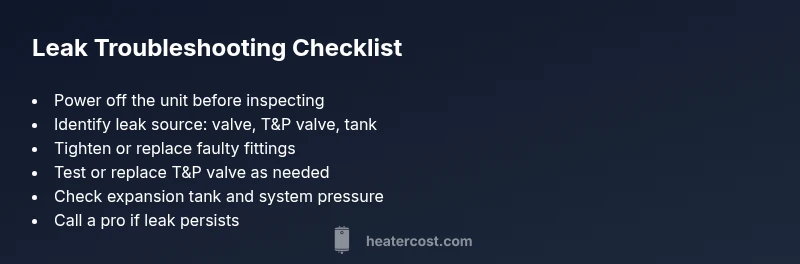
- Confirm power and water are shut off before inspection
- Identify the exact source of moisture (valves, fittings, or tank)
- Tighten or replace faulty valves or fittings as needed
- Inspect and test the T&P relief valve and expansion tank
- Flush the tank if mineral buildup is suspected
- Decide between repair and replacement based on age and corrosion
- Schedule an annual maintenance check to prevent future leaks
Steps
Estimated time: 60-120 minutes
- 1
Power down and isolate the unit
Shut off electricity at the breaker or gas control and close the cold-water supply. This prevents further water flow and eliminates live electrical hazards while you inspect.
Tip: Ensure you stand on a dry surface and use a non-contact voltage tester if available. - 2
Identify the leak source
Wipe the area dry and observe where water is actively dripping or pooling. Check the drain valve, hot and cold connections, and the T&P relief valve.
Tip: Label suspected areas with masking tape to keep track during inspection. - 3
Address simple fittings
If a fitting is loose, tighten carefully with the appropriate wrench. Replace worn washers or gaskets to stop slow drips.
Tip: Avoid overtightening, which can crack fittings. - 4
Inspect relief and drain valves
Test the T&P valve for proper operation and inspect for weeping. Replace the valve if it shows signs of wear or leakage.
Tip: Follow manufacturer instructions when removing or installing valves. - 5
Assess the tank for corrosion
Look for rust spots, blisters, or wetness on the tank surface. Localized leaks near the base often indicate tank deterioration.
Tip: A small patch is not a fix; rust usually means tank replacement is necessary. - 6
Reassemble and test
Reopen the cold-water supply slowly and restore power. Watch the heater for a few hours to confirm the leak is resolved.
Tip: Check for new leaks after the system stabilizes.
Diagnosis: Visible water pooling or dampness around the water heater
Possible Causes
- highLoose drain valve or inlet/outlet fittings
- highFaulty or mis-seated T&P relief valve
- mediumTank corrosion or pinhole leaks in the tank wall
- lowCondensation misinterpreted as a leak or minor leak that stops after drying
- mediumHigh system pressure or faulty expansion valve
Fixes
- easyTighten loose fittings or reseal drain valve with appropriate washers
- mediumReplace a faulty T&P valve or reseat it according to manufacturer guidance
- hardDrain and inspect the tank for corrosion; replace tank if corrosion is extensive
- mediumTest and, if needed, replace expansion tank or adjust pressure regulator
- easyIf unsure, call a licensed plumber for safe diagnosis and repair
Got Questions?
What are the most common causes of a water heater leaking?
The most common causes are loose or worn fittings and valves, a failing T&P relief valve, and tank corrosion in older units. Condensation can mimic a leak, so verify the source carefully.
Most leaks come from fittings or a faulty relief valve; check those first, then look for tank corrosion if the unit is old.
Can a leaking water heater be repaired, or should I replace it?
Many leaks from fittings or valves are repairable. If the tank shows significant rust, has multiple leaks, or is past its expected life, replacement is usually more reliable and energy-efficient.
Repair is possible for fittings or valves, but a severely corroded tank often means replacement.
How do I know if the T&P relief valve is the problem?
If the relief valve leaks intermittently or drips after heating, it may be worn or misadjusted. A professional should replace it to ensure safety and proper pressure management.
Leak from the relief valve usually means it’s worn or needs replacement.
What maintenance can prevent leaks in the future?
Annual inspections, flushing the tank, testing the T&P valve, and maintaining proper pressure with an expansion tank can reduce leak risks.
Regular maintenance helps prevent leaks and extends heater life.
Is there a difference between a leak and condensation?
Condensation appears as damp spots and evaporates with temperature changes. A true leak will show persistent water and staining, not just moisture on cold surfaces.
Condensation is not a leak, but persistent water is. Watch for staining and running water.
When should I call a professional?
If you’re unsure about power, gas, or the tank’s condition, or if the leak persists after checks, contact a licensed plumber or HVAC technician.
Call a professional if you’re unsure, or the leak continues after basic checks.
Watch Video
The Essentials
- Inspect and identify the leak source before acting
- Prioritize safety: power and water off, proper PPE
- Tighten fittings or replace faulty valves first
- Consider tank condition and expansion/pressure controls for longer-term fixes
- Schedule professional help when corrosion or gas concerns arise