Leak from Water Heater: Troubleshooting Guide 2026
Urgent guide from Heater Cost to diagnose and fix a leak from a water heater, with safety steps, common causes, and maintenance tips for homeowners and property managers.


Immediate quick answer: A leak from a water heater is usually caused by a faulty valve, loose fittings, or tank corrosion. First, shut off power or gas and close the cold-water supply. Then inspect the drain valve, inlet/outlet connections, and the pressure-relief valve for drips. If you can’t locate the source, call a licensed plumber.
Understanding where leaks originate
Leaks around a water heater can stem from several parts. Most leaks are not from the tank itself but from fittings and valves. The drain valve at the bottom is a frequent source, especially if it is left slightly open or damaged. Leaks at the cold-water inlet or hot-water outlet connections may also appear when pipes or fittings loosen over time due to pressure or vibration. A puddle near the unit, or a steady drip from a valve, is often a sign to inspect these components first. Another source is the pressure-relief valve (T&P valve) on the side or top of the tank; if it sticks or the discharge pipe is blocked, it can leak water. Finally, an older or corroded tank seam can develop leaks, but that typically indicates the unit has reached the end of its life. Distinguishing between active leaks and condensation is important; condensation can occur in humid spaces and isn’t a water heater failure. Identifying the right source guides safe, effective next steps.
Safety first: immediate steps you should take
If you notice water pooling around your water heater, act quickly but calmly to prevent damage or scalds. Start by turning off the power to electric heaters at the circuit breaker, or shut off the gas supply and set the thermostat to pilot/low on a gas unit if accessible. Then close the cold-water supply valve to stop more water from entering the tank. If the discharge valve is actively leaking, avoid applying force to it; instead relieve pressure by opening a hot-water faucet somewhere in the house. Place a bucket or towels to catch drips and protect flooring. Do not attempt to drain a hot water heater without proper instructions, as the combination of hot water and electricity or gas can cause injury. If you smell gas, hear hissing or detect a propane-like odor, evacuate and call emergency services.
Common leak sources explained
Leaks most often originate from the drain valve, lime or mineral buildup on fittings, or a loose connection at the cold-water inlet. The T&P relief valve is another frequent culprit if it sticks or the discharge line is blocked. Tank seams can corrode in older units, creating a slow seep that worsens with temperature and pressure. Condensation is common in humid garages or basements and isn’t always a leak from the tank itself. By recognizing these sources, homeowners can triage quickly and decide whether to tighten, replace, or call a professional. According to Heater Cost analysis, the two most frequent residential leaks are the drain valve and loose fittings, while tank corrosion tends to signal a replacement is closer than a repair.
Diagnostic flow: understanding symptoms and sources
Observing where water emerges—base of the tank, valve connections, or a discharge pipe—helps identify the source. A persistent drip from the drain valve usually means it needs tightening or replacement. A leak from the T&P valve often indicates excessive pressure or a faulty valve. If the base of the tank is damp, the tank may be corroded and require replacement. Condensation leaks can be addressed by insulation and humidity control. Always consider safety and consult a pro if you’re unsure about the source or if the unit is gas-powered or heavily corroded.
How to fix the most common causes (overview)
If you identify a loose drain valve or fittings, gently tighten the connection with appropriate tools and reseal with plumber’s tape or a new washer as needed. If the drain valve itself is damaged, replacing it is often straightforward for a homeowner with basic plumbing skills. A faulty T&P valve should be replaced by a professional to ensure proper sizing and discharge piping. Major leaks from tank seams or severe corrosion require replacement of the water heater. Insulation and proper venting reduce condensation-related leaks and improve efficiency.
Prevention and maintenance to avoid future leaks
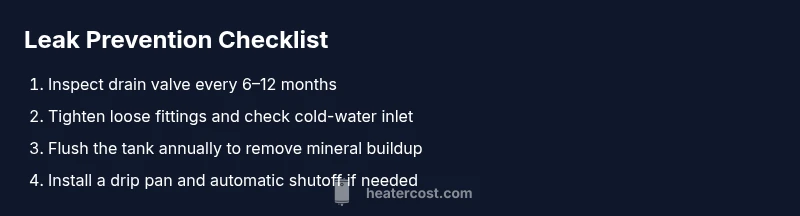
Regular inspection of valves, fittings, and discharge piping can catch leaks early. Schedule annual flushes to remove mineral buildup, and replace older components before they fail. Install a drip pan and an automatic shutoff if your space is prone to water damage. Maintain proper temperature settings to prevent excessive pressure. By staying proactive, homeowners save on emergency repairs and protect home structure.
Steps
Estimated time: 45-60 minutes
- 1
Power down and isolate
Turn off electricity at the circuit panel for electric water heaters or shut off gas and set the thermostat to pilot for gas units. This eliminates the risk of shock or ignition while you inspect.
Tip: Use a non-contact voltage tester to confirm the power is off before touching any wires. - 2
Shut cold-water supply and relieve pressure
Close the cold-water inlet valve to stop more water from entering. Open a hot-water faucet somewhere in the house to relieve pressure and drain excess water safely.
Tip: Keep towels handy to absorb any remaining drips. - 3
Inspect obvious leaks first
Check the drain valve, inlet/outlet fittings, and the discharge pipe for drips or moisture. Tighten fittings if feasible and reseal with appropriate washers.
Tip: Do not force fittings or overtighten, which can damage threads. - 4
Examine the T&P relief valve
Look for moisture around the top or side of the tank and discharge pipe blockages. A stuck or leaking T&P valve usually requires replacement.
Tip: If the valve drips when testing, it should be replaced by a professional. - 5
Assess the tank itself
If water leaks from the base or seam, the tank is likely compromised. This typically means replacement is the safest option.
Tip: Do not attempt to weld or repair a corroded tank. - 6
Decide on next steps
If you can fix the leak safely, monitor closely for repeat leaks. If not, contact a licensed plumber or replace the water heater.
Tip: Document any leaks and maintenance for future reference.
Diagnosis: Visible water leaking from water heater or pooling near unit
Possible Causes
- highLoose drain valve or fittings
- mediumWorn/displaced T&P relief valve or blocked discharge pipe
- lowCracked tank seam or severe corrosion
- lowCondensation from cold water line or humid space
Fixes
- easyTighten or reseal the drain valve and fittings
- mediumReplace faulty T&P relief valve or clear the discharge pathway
- hardConsult a licensed plumber to assess tank corrosion and potential replacement
- easyImprove insulation and reduce humidity around the unit to minimize condensation
Got Questions?
What should I do immediately if my water heater is actively leaking?
Shut off the power or gas, close the cold-water supply, and drain the area if safe. Then call a licensed plumber if you cannot locate or fix the leak.
Shut off power or gas, close the water supply, and call a plumber if the leak won’t stop.
Is a small drip from the drain valve normal?
A small, steady drip is not normal and usually means the valve needs tightening or replacement. Do not force the valve.
A small drip isn’t normal and often means the drain valve needs replacement.
Can leaks be fixed without replacing the tank?
Some leaks from valves or fittings can be fixed without replacing the tank, but leaks from the tank seam typically require replacement. A pro can help decide.
Fixes depend on the source; some leaks don’t require a full tank replacement.
When should I replace my water heater due to leaks?
If the leak is from the tank seam or corrosion is extensive, replacement is usually the best option to prevent future failures.
If the tank is corroded or leaking from the body, replacement is usually the safer choice.
Are there safety concerns with a gas water heater leak?
Yes. A gas leak is dangerous. If you suspect a gas leak, evacuate and call emergency services immediately.
Gas leaks are dangerous—evacuate and call for help right away.
Watch Video
The Essentials
- Shut off power/gas and water supply before inspection.
- Identify the exact leak source before attempting fixes.
- Many leaks come from valves or fittings, not the tank.
- Persistent leaks usually require professional assessment or replacement.