Why Is Water Heater Too Hot? Troubleshooting Guide
Learn why your water heater delivers dangerously hot water, the risks, and practical fixes. This Heater Cost troubleshooting guide covers quick checks, safety tips, and prevention for homeowners.


Most likely, your water heater is producing water that's too hot because the thermostat is set too high or the thermostat is failing. According to Heater Cost, other common culprits include a stuck mixing valve, mineral sediment around heating elements, or a faulty high-temperature cutoff. Lower the thermostat to a safe setting (about 120°F), test the water for scalding, and consider professional inspection if it persists.
Causes of Excessively Hot Water
Many homeowners notice water comes out hotter than expected. The leading culprits are straightforward: thermostat settings that are too high, a thermostat that has drifted out of calibration, or a failing high-temperature cutoff. Less obvious are issues with the mixing valve, which blends hot and cold water before it reaches taps; when the valve sticks or leaks, the result can be dangerously hot water at fixtures. Mineral sediment can accumulate on the bottom of the tank and around heating elements, causing uneven heating or overheating at the top. Finally, damaged heating elements or sensors can misread water temperature, pushing the burner or electric coils to heat more than needed. If your system is older, wear and tear on controls is more common and can lead to erratic temperatures. According to Heater Cost analysis, these issues are the most frequent reasons why hot water temperatures creep upward, so starting here saves time and risk.
Safety Considerations and Immediate Risks
Hot water scalds can cause severe injuries, especially to children and older adults. If you have young children, set the thermostat to 120°F and use anti-scald devices on taps. Before you touch any equipment, shut off power or gas supply and keep kids away from the area. When handling a gas water heater, never peek at the flame with bare hands; if you smell gas or detect a hissing sound, evacuate and call emergency services. Use a thermometer to check water temperature at a few taps to assess consistency. If you notice water that remains dangerously hot after a service attempt, treat this as an urgent safety issue and stop troubleshooting beyond basic checks.
How to Check the Thermostat Settings
Start by locating the thermostat on your water heater. For electric units, there are usually two thermostats behind the access panels; for gas units, the thermostat may be integrated with the control knob. With the power off, carefully remove the panel and test the setpoint with a thermometer inserted into the hot water stream. Compare readings to the recommended 120°F. If temperatures drift above target even after adjusting, the thermostat or control module may be failing and require replacement. After adjusting, reassemble and reheat water, then recheck at multiple taps to confirm consistency.
Troubleshooting Workflow: Quick Checks (Overview)
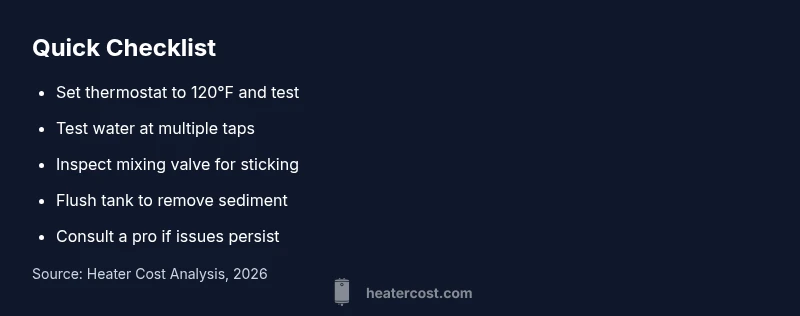
In this section we outline practical checks in order of ease. Start with basic thermostat adjustment, then test water temperature at several taps, then verify the mixing valve operation, and finally inspect the heating element or burner. If the water remains dangerously hot after these steps, there may be a more serious control issue or a component failure. Always stop if you smell gas or feel heat that could indicate a fire risk and call emergency services if necessary.
Maintenance and Prevention to Avoid Overheating
Preventive care is the best defense against overheating. Schedule annual professional inspections, flush the tank to reduce mineral sediment buildup, and inspect the expansion tank and pressure relief valve for proper operation. Keep the heater closet clear for safe service access and ensure venting (for gas units) is unobstructed. By reconciling temperature settings with actual water temperature and performing regular maintenance, you reduce the chance of unexpected overheating and improve overall efficiency.
Steps
Estimated time: 1-1.5 hours
- 1
Power down and safety check
Turn off electrical power at the breaker or switch and shut off the gas supply if it’s a gas heater. Confirm you have clear, dry access to the unit and that children and pets are away. This protects you from shock or gas exposure as you begin inspections.
Tip: Use a non-contact voltage tester to verify power is off before touching wiring. - 2
Verify current temperature setting
Locate the thermostat(s) and remove any access panels with care. Read the setpoint with a thermometer and compare to 120°F. If above, note the value for later adjustment. If you’re unsure which knob controls the temp, photograph before moving anything.
Tip: Take a photo of the wiring before removing panels to aid reassembly. - 3
Adjust thermostat and test
If you determined the setting was too high, adjust to 120°F. Replace the panel(s) and power the unit back on. Run hot water from several taps and note the temperature at each. Wait 20-30 minutes and recheck to confirm stability.
Tip: Avoid turning the temperature up again after the first test—overheating returns quickly to safe levels. - 4
Check the mixing valve
If the thermostat is correct but temperatures still run hot, locate the mixing valve (often near the inlet). With power off, inspect for sticking or leaks and replace if necessary. This ensures cold water is blended properly with hot water before it reaches taps.
Tip: Ask for a pro if you’re unsure how to access or test valves safely. - 5
Inspect sediment and heating elements
Drain a small amount of water from the tank to see if sediment is present. If you notice a milky color or grit, flush the tank following manufacturer instructions. For electric units, inspect heating elements for scale and replace if needed.
Tip: Routine flushing helps extend tank life and stabilizes temperatures. - 6
Test the high-temperature cutoff
The cutoff should shut off at a safe limit. If you suspect a fault, this is a job for a qualified technician since it involves gas or electrical components. Do not bypass safety devices.
Tip: Never bypass cutoff switches—they protect against scalding and equipment damage. - 7
Reassemble and perform final test
Secure panels, restore power or gas, and run hot water again from multiple taps. Compare temperatures and verify consistency across fixtures. If temps remain inconsistent or high, escalate to a professional evaluation.
Tip: Keep a log of temperatures over several days to spot patterns. - 8
Document outcomes and plan next steps
Record temperatures, actions taken, and parts replaced. If the issue persists, schedule service with a licensed technician. For renters, share findings with the property owner and request a pro visit.
Tip: Documenting steps helps you avoid repeated troubleshooting and speeds up repair.
Diagnosis: Water comes out too hot or dangerously hot at multiple taps
Possible Causes
- highThermostat set too high
- highFaulty thermostat or control module
- mediumStuck/malfunctioning mixing valve
- lowSediment buildup around heating elements
- lowFaulty high-temperature cutoff
Fixes
- easyLower the thermostat to about 120°F and re-test at multiple taps
- mediumTest and replace a faulty thermostat or control module
- mediumInspect and replace a stuck/malfunctioning mixing valve
- easyFlush the tank to remove mineral sediment and recheck temperatures
- hardCheck and, if necessary, replace the high-temperature cutoff
Got Questions?
What is the safe water heater temperature?
Most guidelines recommend 120°F for safe, comfortable showers and reduced scald risk. Always verify with a thermometer at several taps.
Aim for about 120 degrees Fahrenheit for safe, consistent hot water at your taps.
Why is my water heater suddenly hotter than usual?
A high thermostat setting or a failing thermostat can cause hot water to rise quickly. A stuck mixing valve or sediment buildup can also cause this issue.
Usually a thermostat setting or a faulty control is to blame; another possibility is a sticking mixing valve.
Can a faulty mixing valve cause hot water?
Yes. A malfunctioning mixing valve can fail to blend cold water properly, delivering hotter water to faucets.
Yes, a bad mixing valve can let too much hot water through to taps.
Is it safe for a DIY fix?
Basic checks like adjusting the thermostat or flushing a tank are generally safe for homeowners. More complex tasks, such as replacing a thermostat or heating element, should be done by a pro.
Some simple steps are okay for DIY, but when in doubt, call a pro.
How can I prevent overheating in the future?
Keep the thermostat at a safe setting, flush the tank regularly, and schedule annual professional inspections to catch problems early.
Regular maintenance helps prevent overheating and keeps efficiency high.
When should I replace the water heater because of overheating?
If overheating persists after fixes or the unit is old and inefficient, replacement is often more cost-effective and safer.
If issues persist despite fixes, a replacement may be the best option.
Watch Video
The Essentials
- Lower temp to 120°F, then re-test across taps.
- Faulty thermostat is a leading cause of hot water.
- Mixing valve issues can override temp settings.
- If overheating persists, call a licensed pro for safety.