Why is My Water Heater Overflowing? Urgent Troubleshooting Guide
Urgent troubleshooting guide for why a water heater is overflowing, with safe steps, common causes, and when to call a pro to prevent damage.


An overflowing water heater is a serious warning sign. The most common causes are excessive incoming water pressure, a faulty or stuck temperature and pressure relief valve, or a malfunctioning expansion tank. If you’re facing this, take immediate action: turn off the power or gas, close the cold-water inlet, and contact a pro if the problem persists. Heater Cost explains why this happens and what to do next.
why is my water heater overflowing
If you're wondering why is my water heater overflowing, you're not alone. This situation is a safety-critical warning that demands calm, deliberate action. In most homes, the culprit is a buildup of pressure that exceeds what the tank can safely hold. Another frequent driver is a malfunctioning temperature and pressure relief (TPR) valve that should open to vent excess heat and pressure. A third factor is thermal expansion, which can overwhelm an undersized or absent expansion tank as water heats and expands. According to Heater Cost, addressing overflow quickly protects your home from water damage and potential electrical hazards. Reading this guide from Heater Cost helps homeowners, renters, and property managers understand the root causes and the exact steps to take, so you can regain control with confidence.
In the short term, do not ignore an overflowing scenario. Small leaks around fittings or a visibly damp area near the heater could indicate a slow failure that may escalate. The goal of this section is to help you distinguish between a minor nuisance and a safety event, and to lay a clear plan for safe investigation and remediation.
Immediate safety steps you should take
Overflow events demand decisive safety actions. First, switch off the heat source—power to an electric heater at the breaker or shut off gas to a gas unit. Then, if it’s safe, close the cold-water supply to stop more water from entering the tank. Do not attempt to seal a leaking relief valve or tamper with pressure settings. Place towels and a bucket to manage drips, and vent the area if you smell gas. If you notice flames, electrical hazards, or a persistent, uncontrolled overflow, evacuate and call emergency services. This initial response minimizes risk while you plan the next steps. Heater Cost emphasizes safety and timely action to prevent expensive damage and injuries.
Check the pressure relief valve (TPR) and water pressure
The TPR valve is designed to release water if pressure or temperature gets too high. A common overflow cause is a valve that leaks or won’t seal properly. With the heater off, inspect the valve for corrosion or mineral buildup and gently lift the test lever to see if a small amount of water is discharged. If it pours continuously, leaks around the valve, or if it fails to reseal, the valve or the entire assembly likely needs replacement. Separately, measure incoming water pressure. If the pressure reading is consistently high, a pressure-reducing valve (PRV) may be required. Replacement and installation of a PRV are best performed by a licensed professional.
Heater Cost notes that valve issues are one of the most common and dangerous causes of overflow, so prioritize valve inspection and replacement if needed.
Expansion tank and thermal expansion considerations
An expansion tank acts as a cushion for thermal expansion. If it’s absent, undersized, or waterlogged, the system can experience excess pressure and overflow. Look for signs of a swollen tank, rust, or water inside the tank’s top or bottom. If your system lacks an expansion tank, or if the tank is failed, you’ll likely see repeated overflow episodes even after addressing the valve and pressure. In many cases, installing or replacing an expansion tank resolves the overflow problem and stabilizes system pressure. If the tank is waterlogged, it may need to be drained and recharged or replaced altogether. Heater Cost highlights expansion tanks as a common fix that prevents future overflow—and a wise investment for long-term reliability.
Draining and flushing the tank safely
Sediment buildup is another frequent overflow trigger, especially in older heaters. Sediment acts as an insulator and can cause the bottom of the tank to overheat, increasing pressure and prompting the relief valve to vent. Before draining, ensure the power is off and the cold-water supply is closed. Attach a hose to the drain valve and direct water to a floor drain or outdoors. Open the drain valve slowly while inspecting for leaks. Flushing until the water runs clear can reduce sediment, improve heating efficiency, and reduce overflow risk. Do not forcefully drain if you suspect a leak elsewhere in the system.
Heater Cost recommends completing a controlled flush during a cool day to minimize thermal shock and to avoid scalding during re-fill.
When to call a licensed plumber and what to expect
If overflow persists after addressing valve, pressure, expansion, and sediment, it’s time to call a licensed plumber. An expert can verify unit compatibility, test the TPR valve with professional tools, and assess the system’s overall health. Plumbers can also evaluate whether a full replacement is warranted, particularly for units approaching the end of their life cycle. When you call, provide your model type, age, and recent maintenance history so the technician can tailor the inspection. Heater Cost emphasizes that professional oversight can prevent repeated overflow and ensure safe operation.
Prevention tips to avoid future overflow
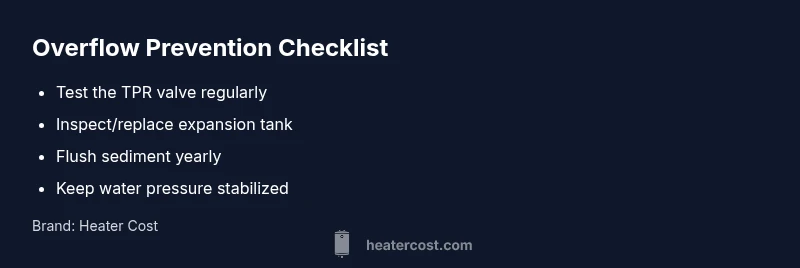
Preventive steps include annual inspections of the TPR valve, regular testing of the expansion tank, and a yearly flush to remove sediment. Maintain a reasonable water pressure in your home by using a pressure regulator if you notice fluctuations. Keep the area around the heater clean and accessible to facilitate quick inspections. Finally, consider upgrading an older unit with a modern, more efficient model that includes built-in safety features and better resistance to overflow. Consistent maintenance is the best defense against unexpected overflow events.
Steps
Estimated time: 60-120 minutes
- 1
Shut off power or gas and close the cold-water inlet
For safety, immediately shut off the power supply to an electric heater or the gas valve for a gas heater. Then close the cold-water inlet to stop new water from entering the tank. This reduces further overflow and limits risk of scalding or electrical hazards.
Tip: Use a dry cloth to grip controls and stand on a dry surface. - 2
Inspect the relief valve and test response
Locate the TPR valve and gently lift the lever to test its function. If water flows freely or drips steadily after release, the valve likely needs replacement. Do not force a stuck valve; proceed to the next steps and plan replacement if needed.
Tip: Do not drain water directly from the valve; use a bucket if a small drip is present. - 3
Check expansion tank condition
If your system has an expansion tank, inspect it for signs of a waterlogged condition or corrosion. A failed expansion tank can force pressure into the heater. If you’re unsure, schedule a professional inspection to assess charge and capacity.
Tip: A quick visual check can reveal a waterlogged tank—look for dampness at the air valve. - 4
Assess incoming water pressure
Measure household water pressure or consult your water provider. If the pressure is too high, install or adjust a PRV to bring it within a safe range. This step helps prevent future overflow and protects plumbing fixtures.
Tip: High pressure can cause overflow even with a working valve; PRV installation is best left to a pro. - 5
Drain and flush to remove sediment
Attach a hose to the tank drain valve and safely drain some water into a suitable location. Open the drain valve and flush until the water runs clear. This reduces sediment and improves heating efficiency, which can curb overflow risk.
Tip: Keep children and pets away; wear eye protection and gloves when draining. - 6
Refill, power up, and monitor
Close the drain valve, reconnect the cold-water supply, and restore power or gas. Slowly bring the heater back online and monitor for any signs of continued overflow. If overflow recurs, contact a licensed plumber for a thorough diagnostic.
Tip: Test for leaks around fittings after refill; note any abnormal noises or rust.
Diagnosis: Water is overflowing from the tank or relief valve
Possible Causes
- highHigh incoming water pressure
- highFaulty or stuck temperature and pressure relief valve
- mediumMalfunctioning or missing expansion tank
- lowSediment buildup causing overheating and expansion
- lowOpen drain valve or recent draining
Fixes
- mediumTurn off power/gas and shut the cold-water inlet; inspect the relief valve and replace if leaking beyond a slow drip
- mediumTest water pressure and install/adjust a pressure-reducing valve (PRV) if needed
- hardInspect expansion tank; install or replace if waterlogged or absent
- easyFlush sediment from the tank to reduce overheating and restore normal operation
- easyEnsure the drain valve is closed and fix any external leaks
Got Questions?
Why is my water heater overflowing?
Overflow is typically caused by high water pressure, a faulty relief valve, or expansion tank issues. Inspect these components and follow safe procedures to diagnose and address the problem.
Overflow is usually due to pressure problems or a bad relief valve; inspect the valve and expansion tank, and call a pro if you’re unsure.
Can I fix this myself?
You can perform basic safety steps, like shutting off power and water and inspecting the valve. More complex repairs, such as valve replacement or expansion-tank work, should be done by a licensed plumber.
You can do basic checks, but call a pro for valve or tank work.
What is an expansion tank and do I need one?
An expansion tank cushions thermal expansion in the system. If it's missing or failed, overflow becomes more likely, especially in homes with high water pressure.
Expansion tanks help manage pressure; you might need one if your system lacks it or it's not functioning.
Is a leaking TPR valve dangerous?
Yes. A leaking relief valve poses a safety risk and should be addressed promptly. Turn off water and power if advised, and call a pro.
A leaking relief valve is a safety concern; get professional help.
Should I flush the tank to fix overflow?
Flushing can remove sediment that contributes to overheating and overflow. Follow safety steps and consult a guide or pro if unsure.
Flushing can help, but do it safely and correctly.
When should I replace my water heater?
If the unit is old or repeatedly overflows despite fixes, replacement may be the best long-term solution.
If it’s old or keeps overflowing, replacement might be necessary.
Watch Video
The Essentials
- Identify root causes with valve and pressure checks
- Shut off power and water before investigation
- Address expansion tank and sediment buildup promptly
- Call a licensed plumber if overflow persists