Is 150 Too Hot for a Water Heater? A Practical Guide
Discover whether the common question is 150 too hot for water heater holds true, and learn how temperature choices affect safety, energy costs, and performance. This data-driven guide covers testing, safe settings, and practical alternatives for households of all sizes.


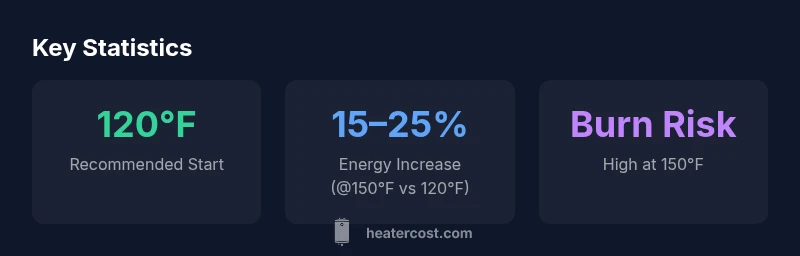
Is 150 too hot for water heater? For most households, yes. A 150°F setting delivers very hot water quickly, but it increases scald risk, especially for children and seniors, and it raises standby and usage energy. The safer starting point is 120°F, with adjustments only if you have special appliances or high demand.
Why 'is 150 too hot for water heater' matters in real homes
Is is 150 too hot for water heater a question that surfaces in households with varying needs. The short answer is that 150°F is generally hotter than what most homes require and is not necessary for safe, comfortable use. It increases the risk of scald injuries, particularly for children, the elderly, and anyone with reduced sensitivity. On the energy front, maintaining 150°F means the heater works harder to compensate for heat loss and standby, which can lift annual energy costs even if you don’t run extra loads. For many residents, the best balance is to start at 120°F and monitor performance before deciding whether a higher setting is truly needed for a specific appliance or demand scenario.
Why temperature choices matter: Water heater temperatures influence safety, comfort, and efficiency. A small change can ripple through your daily routines—from how quickly your shower reaches the desired warmth to how much hot water your dishwasher and laundry systems rely on. The decision should factor in household size, climate, and water usage patterns.
As you consider adjustments, it’s useful to frame the question around both risk and reward: does the benefit of hotter water offset the safety concerns and potential energy costs?
Safety implications when the thermostat reads high
Raising the water heater temperature to 150°F changes the safety calculus. Burns can occur in seconds on exposed skin, and even brief contact with hot taps or faucet components can harm sensitive skin. This is particularly important for homes with young children or older adults who may have slower reaction times. In addition, higher temperatures can aggravate scalding risks for vulnerable individuals in the shower, tub, or bathroom sinks. To mitigate risk, many households adopt a conservative baseline of 120°F and only consider modest increases if a clear need arises—such as infrequent direct hot water availability or specific appliance requirements. Always run a comprehensive test with a calibrated thermometer after any adjustment to verify the actual delivered water temperature at the tap.
Energy use implications of higher water temperatures
Water heating accounts for a meaningful portion of residential energy use, and temperature is a primary driver. Heating water from 120°F to 150°F requires more energy to reach and maintain, particularly in colder homes or long draws. The incremental energy cost varies with usage patterns, climate, tank insulation, and whether simultaneous hot water draws occur (e.g., multiple showers, laundry, and dishwasher). Even if you don’t increase your daily usage, the higher setpoint raises the baseline energy needed to keep water hot, which translates to higher utility bills over time. For most households, the energy savings achieved by using cooler temperatures outweigh the marginal benefit of hotter water.
How to safely test and adjust your water heater temperature
Begin with a benchmark: measure the water temperature at the tap after the heater has cycled and stabilized. If your current setting is 150°F, lower it in small increments—e.g., to 140°F, then 130°F, and finally 120°F—testing at each stage. Use a calibrated thermometer to confirm actual delivery. After any adjustment, run hot water through showers and taps for 1–2 minutes to confirm comfort. If you rely on very hot water for a particular appliance, consider alternative approaches such as a tempering valve or a dedicated small heater for that device, rather than raising the entire tank temperature. Document changes and monitor for any impact on energy use and safety.
The role of household size, water use, and fixtures
Household size heavily influences whether a higher temperature is ever justified. Large families with high daily hot water demand may feel the need for hotter water temporarily, but this is often better addressed with improved fixture performance, faster-recovery heaters, or recirculation solutions rather than sustained high temps. Fixtures like low-flow showerheads reduce overall hot water consumption, while recirculating pumps can deliver hot water faster without raising the tank temperature. For most homes, a 120–140°F range manages safety and efficiency well, with higher temps reserved for very specific scenarios and always paired with safety devices.
When you might intentionally keep higher temps
There are niche scenarios where higher temperatures are used deliberately—for example, to improve dishwashing sanitation or to compensate for long piping runs in large homes. If you must operate near 150°F, implement safeguards: verify thermostats are accurate, install a tempering valve downstream to mix hot with cold water at the point of use, and keep children and elderly away from direct exposure to hot streams. Regular maintenance remains essential; ensure the tank’s insulation is intact and that mineral buildup won’t impede safe operation.
Tools and devices that help manage hot water safely
Smart thermostats, tempering valves, and point-of-use heaters can help tailor hot water delivery without forcing the entire system to run at very high temperatures. A tempering valve blends hot and cold water to a safer, user-friendly temperature at fixtures, reducing scald risk while preserving fast hot-water delivery where needed. Consider upgraded controls or two-stage heating if you have consistent high demand. Ensure any new device complies with local codes and manufacturer instructions.
Maintenance and regular checks to prevent overheating
Regular maintenance pays off in safety and efficiency. Inspect the thermostat calibration, test the emergency shutdown, and verify the inspector-grade temperature settings with a thermometer. Look for signs of overheating, such as sediment buildup, corroded connections, or moisture around the tank. Drain and flush the tank per the manufacturer’s recommendations to reduce mineral deposits that impede efficient heating. A well-maintained system is less likely to run at unnecessarily high temperatures, reducing both energy costs and safety risks.
Quick-start steps for homeowners
- Start at 120°F and observe comfort, then adjust in small steps if needed.
- Measure actual water temperature at the faucet after a stable cycle.
- If higher temperatures are necessary, install a tempering valve to avoid exposing users to extremes.
- Schedule an annual professional check to verify thermostat accuracy and system safety.
- Keep kids and seniors away from hot water sources during adjustments; use safety covers and child-proof controls where possible.
Temperature setting options and trade-offs
| Temperature Setting | Pros | Cons | Best For |
|---|---|---|---|
| 120°F (49°C) | Low burn risk; energy efficient | May feel cool for some users | Families with kids or seniors |
| 135–140°F (57–60°C) | Balanced safety and hot water readiness | Slightly higher energy use | Mid-size households |
| 150°F (66°C) | Faster hot water delivery; potential disinfection | High burn risk; greater energy use | High-demand households or specialized appliances |
Got Questions?
Is 150°F dangerously hot for households?
Yes. 150°F can cause burns quickly, especially for children and older adults. Lowering to 120°F is safer for everyday use, with higher temps only for specific needs and with safety measures in place.
Yes—150 degrees can burn skin in seconds. For most homes, 120 degrees is safer and saves energy; raise temps only when necessary and with safety devices in place.
What is the recommended water heater temperature?
Most experts recommend around 120°F for safety and energy efficiency. Adjust only if you have specific appliances or high-demand scenarios.
A common safe setting is about 120 degrees; adjust only if you have a particular need.
Will lowering the temperature save energy?
Yes, lowering from hotter settings to 120°F generally reduces energy use, with the exact savings depending on usage and household characteristics.
Lowering the temperature saves energy in most cases, though results vary by household.
How can I safely increase hot water without raising the thermostat?
Use a tempering valve to blend hot water with cold at fixtures, or install a point-of-use heater for high-demand outlets without boosting tank temperature.
Add a tempering valve or use a separate small heater for needed outlets.
Does Legionella risk affect this debate?
Legionella concerns exist, but for typical homes, proper cleaning and maintenance, plus safe temps at the tap, are more impactful than chasing high heat.
Legionella concerns come up, but regular maintenance and sensible temps matter more.
What should I do if my temperature readings jump?
If readings are inconsistent, have the thermostat and sensor checked by a licensed professional. A faulty reading can lead to unsafe temperatures or wasted energy.
If temps jump or seem off, get a professional to check the thermostat.
“"Setting your water heater too high increases the risk of scalding and raises energy use. Start low, test carefully, and use safety devices when higher temps are essential."”
The Essentials
- Start at 120°F to balance safety and comfort
- Avoid prolonged contact with hot water at high temps
- Use a thermometer to verify actual temperatures at taps
- Consider a tempering valve if higher temps are necessary
- Regular maintenance lowers overheating risk