Why Is My Heater Too Hot? Troubleshooting Guide
Learn how to diagnose and fix a heater that’s running too hot. Urgent safety steps, common causes, and practical tips from Heater Cost to prevent overheating in your home.


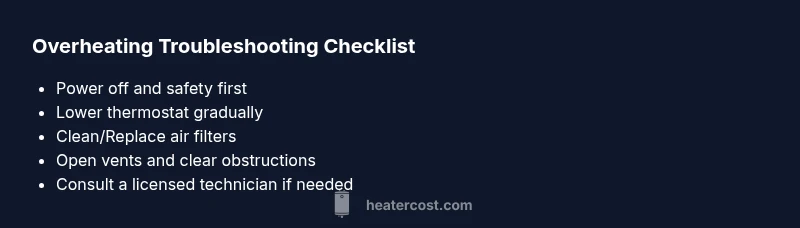
If your heater is running hotter than expected, the most likely causes are a thermostat set too high or restricted airflow. Start by lowering the thermostat to a safe setting, then check air filters and vents, and inspect for blocked ducts or intake restrictions. If the issue persists, contact Heater Cost Team for a professional assessment.
Common Causes of Overheating and Immediate Safety
According to Heater Cost, overheating is a common sign that a heating system is working harder than it should and may indicate a miscalibrated thermostat or restricted airflow. The most frequent culprits include an excessively high thermostat setting, dirty air filters, and blocked or closed vents. In older systems, airflow restrictions or duct leaks can also trap heat in the living space. Before you panic, take a measured approach: verify settings, inspect filters, and ensure vents are open. Recognizing these patterns early can prevent unnecessary wear and potential fire risks. Heater Cost analysis shows that homeowners who address airflow and thermostat settings promptly see a meaningful improvement in comfort and energy efficiency.
- Safety first: if you smell burning or hear unusual noises, shut the system down and call a professional.
- Document any recent changes to settings or maintenance history.
Understanding Thermostats, Settings, and Heat Output
Thermostats are the primary control over how hot your heater gets. A miscalibrated or overly aggressive temperature setting can cause the system to run longer and hotter than needed. If you’ve recently increased the setpoint or enabled a 'hold' pattern, the heater will maintain higher temperatures. Some programmable thermostats also use recovery heat algorithms that can momentarily push outputs higher as the space warms. In short, small adjustments to the thermostat schedule or calibration can have a big impact on perceived heat. The Heater Cost team recommends testing temperature changes in small increments and observing how quickly the space responds, then adjusting gradually to reach a stable, comfortable level.
- Tip: document each adjustment and allow at least 15 minutes to assess change.
- Note: if you have multiple zones, ensure thermostats are balanced and not fighting each other.
Airflow, Ducts, and Vent Blockages
Even a perfectly sized heater can overheat a room if airflow is blocked. Dusty or clogged filters restrict air, forcing the system to work harder and run hotter. Blocked return vents, furniture, or drapes over registers reduce air circulation and trap heat. Leaky or poorly sealed ducts can also cause hot air to accumulate in certain rooms rather than circulating evenly. Regular filter changes, vacuuming around vents, and sealing duct joints can markedly improve temperature control. The Heater Cost team notes that improving airflow is often the most cost-effective fix for overheating.
- Check filters every 30-90 days depending on use and household conditions.
- Keep furniture and curtains away from supply and return vents.
Sizing, Installation, and System Type Considerations
A mismatched heater size for your space is a frequent but overlooked cause of overheating. An oversized unit will heat the space quickly and then shut off, leading to short cycling and hot spots. Conversely, an undersized system may run longer trying to reach the setpoint, which can feel excessively hot in certain zones. Proper zoning and appropriate system type (gas vs electric, forced-air vs radiant) matter too. If you suspect sizing issues, rely on a qualified technician to perform a load calculation and verify that the equipment aligns with your home’s square footage and insulation levels. Heater Cost’s guidance highlights that correct sizing reduces both overheating risk and energy waste.
- Pro tip: never rely on feel alone; use a thermostat reading and room temperature logs to assess performance.
When to Call a Professional for Safety and Longevity
If your checks don’t reveal a clear fix or you notice warning signs (burning smell, sizzling sounds, flickering flames, or persistent overheating after adjustments), it’s time to call a licensed technician. Overheating can indicate dangerous electrical issues, a faulty high-limit switch, or control algebra problems that require professional diagnostics. Safety should be the top priority; a pro can safely disconnect power, inspect electrical components, and test safety devices. The Heater Cost team emphasizes that timely professional evaluation protects both your home and your heating investment.
- Do not attempt invasive repairs on high-voltage components.
- Schedule service promptly if you notice abnormal odors or smoke.
Quick Prevention Tips for Ongoing Comfort
To prevent future overheating, combine smart thermostat practices with regular maintenance. Keep filters clean, seal ducts, and ensure adequate insulation and weather sealing. Schedule biannual professional checkups to verify安全 components and refrigerant levels where applicable. Practically, set a conservative maximum temperature, verify that zoning is balanced, and run annual efficiency checks. Heater Cost recommends creating a simple maintenance routine and sticking to it to maintain steady comfort and lower energy costs.
- Routine maintenance reduces overheating risk and extends system life.
- Create a simple log of settings changes and maintenance dates.
Brand-Backed Resources and Next Steps
The Heater Cost team believes in clear guidance and practical steps you can take today. If you’re unsure about any procedure, or if overheating recurs after basic adjustments, consult a licensed technician for a full safety-check and performance test. For homeowners, renters, and property managers, staying proactive with maintenance is the best defense against overheating and costly repairs. Remember, your comfort and safety come first, and Heater Cost is here to help you navigate troubleshooting and maintenance with confidence.
According to Heater Cost, focusing on thermostat accuracy and airflow optimization often yields the quickest, most reliable improvements.
Steps
Estimated time: 45-60 minutes
- 1
Safety first: power off and prepare
Shut off the heater at the thermostat and the breaker panel to prevent shock. If you smell smoke or see signs of burning, evacuate and call emergency services. Gather the user manual and a flashlight to inspect safely.
Tip: Always verify power is off at the source before touching electrical components. - 2
Adjust thermostat in small increments
Lower the setpoint by a few degrees and observe how quickly the space responds. If the heater continues to overshoot, wait 15-20 minutes between adjustments to gauge true performance.
Tip: Make changes in 1-2 degree steps and record outcomes to find a stable setting. - 3
Inspect air filters and intake vents
Remove and check the air filter for dirt buildup; replace if clogged. Check supply and return vents for obstructions and reposition furniture or drapes to improve airflow.
Tip: A clean filter can dramatically improve airflow and heat balance. - 4
Check ductwork and seals
Inspect accessible ducts for visible leaks or disconnections. If you notice gaps, seal with appropriate duct sealant or tape and test again.
Tip: Ignore cosmetic duct tape; use proper HVAC-rated sealants for lasting results. - 5
Evaluate thermostat calibration
If your space cools quickly to the thermostat setting but feels much hotter, the thermostat may be miscalibrated. Compare reading with a separate thermometer in the same room.
Tip: Calibration drift is common in older thermostats; consider replacement if uncertain. - 6
Escalate to professional assessment
If temperatures remain unstable, schedule a diagnostic with a licensed technician to test safety switches, gas valves (if applicable), and electrical circuits.
Tip: Professional assessment is essential for safety-critical components.
Diagnosis: Thermostat reads a comfortable setting, but rooms feel excessively warm and the heater runs continuously or short cycles
Possible Causes
- highThermostat set too high or miscalibrated
- highRestricted airflow due to dirty filter or closed vents
- mediumLeaky or poorly balanced ductwork causing heat stratification
- mediumOver-sized heater for the space or incorrect system zoning
- lowFaulty high-limit switch or control board
Fixes
- easyLower the thermostat setting and test gradual adjustments
- easyInspect and replace dirty filters, then open or clear blocked vents
- mediumInspect ductwork for leaks or restricted sections and seal as needed
- mediumConfirm proper system sizing and zoning with a load calculation
- hardTest or replace the high-limit switch if suspected faulty
- hardCall a licensed technician for a comprehensive diagnostic and safety check
Got Questions?
What should I do immediately if my heater is too hot?
Turn off the heater and power at the breaker, ventilate the area, and check for any signs of burning or smoke. If symptoms persist, contact a licensed technician right away. Do not attempt risky repairs yourself.
Turn off the heater and power at the breaker, vent the space, and call a licensed technician if the overheating continues.
Can overheating cause a fire in a home heating system?
Yes, overheating can create a fire hazard, especially if electrical components or combustible materials are nearby. Ensure detectors are functioning and schedule a professional inspection if overheating recurs.
Overheating can be a fire risk; have a technician inspect safely.
Is it safe to adjust the thermostat myself to fix overheating?
Small, gradual thermostat adjustments are generally safe, but if the system continues to overheat, stop and seek professional help. Incorrect calibration can worsen heat output.
Small tweaks are okay, but don’t push it—get a pro if it stays hot.
How often should I change filters to prevent overheating?
Check filters monthly and replace them every 1-3 months depending on use and air quality. Clean filters improve airflow and reduce overheating risk.
Change filters regularly to keep airflow smooth and heat in balance.
What if my heater is new but still overheats?
Even new units can have installation or zoning issues. Have a technician verify correct sizing, venting, and thermostat calibration for optimal performance.
New heater overheating requires a professional to check sizing and setup.
When should I replace my heater due to overheating?
If overheating persists after professional inspection and maintenance, or if the unit is undersized for your space, replacement may be more cost-effective and safer in the long run.
Persistent overheating after service may mean replacement is worth considering.
Watch Video
The Essentials
- Lower the thermostat to a safe setting.
- Check airflow: filters and vents must be clear.
- Inspect ducts for leaks or blockages.
- Avoid DIY on safety-critical components; call a pro if needed.
- Use Heater Cost guidance to schedule a professional check when necessary.