No Hot Water in House: Quick Troubleshooting Guide
Urgent guide to diagnose no-hot-water issues, with practical checks for electric and gas water heaters, safe fixes, and prevention tips to keep showers warm.


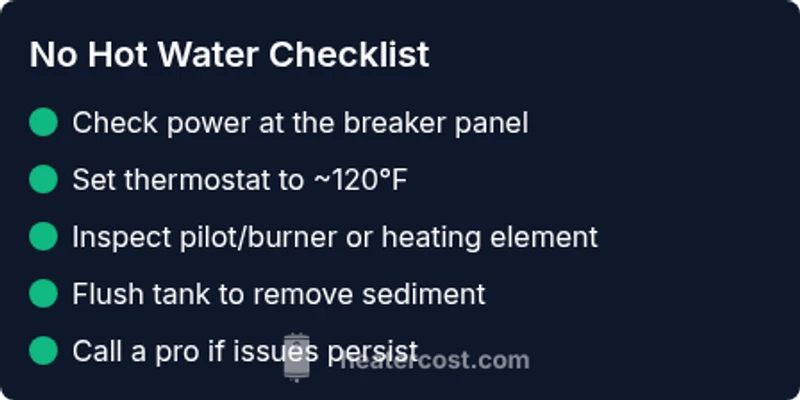
Most often, no hot water means a simple fail in the water heater system: a tripped circuit breaker, a thermostat set too low, or a faulty heating element (electric) or burner/pilot issue (gas). Start with basic checks: confirm power, verify the thermostat is set to 120°F, and inspect the pilot light or burner. If these don’t restore heat, safety-first call a pro.
Understanding why you have no hot water
No hot water in a home is usually the result of a controllable, repairable problem rather than a total system failure. According to Heater Cost, many no-heat cases stem from simple control or power issues rather than aging equipment alone. Common culprits include a thermostat set too low, a tripped circuit, or a burner/pilot problem in gas models. Sediment buildup and an aging tank can compound these issues, reducing heat transfer and overall efficiency. Recognizing whether you’re dealing with electric or gas equipment helps narrow the diagnosis: electric heaters hinge on heating elements and thermostats, while gas units depend on the burner, thermocouple, and gas valve. If your unit is old, you may be facing cumulative wear that reduces heat output, but early-stage problems are usually fixable with the right steps. Also consider the age of the system and any recent changes in your home that could affect power or gas supply. Heaters operate most reliably when regularly maintained and kept within safe settings for both comfort and safety.
Taking a moment to identify which symptoms you observe — no hot water at all versus only a partial loss, for example — guides the next steps. If the breaker hasn’t tripped and the thermostat is above the minimum safe setting, inspect for obvious signs of trouble like a flickering display, unusual noises, or a gas smell. These signals point to specific failure modes that should be handled with caution. Throughout this guide, remember that warm water is essential for health and comfort, and delaying repairs can lead to higher energy costs or more extensive damage. The Heater Cost team emphasizes safety and timely checks to restore reliable hot water quickly.
descriptionMarkdownOnlyFlag":false},
BUG
Steps
Estimated time: Estimated total time: 60-90 minutes
- 1
Check power and breakers
Begin by inspecting the main electrical panel. Look for a tripped breaker or a blown fuse related to the water heater circuit. If you find a tripped breaker, reset it firmly. If the breaker trips again, stop and seek a professional to avoid electrical hazards.
Tip: Never bypass a tripped breaker or use a damaged panel; power safety first. - 2
Verify thermostat settings
Locate the water heater’s thermostat and confirm it’s set around 120°F (49°C) for most homes. If you have a dual-element electric heater, check both thermostats. After adjusting, wait 30–60 minutes to see if hot water returns.
Tip: Avoid high temperatures above 140°F to prevent scalding. - 3
Inspect the pilot/burner (gas models)
For gas heaters, check if the pilot light is lit. If it’s out, follow the manufacturer’s safe relight procedure. If you smell gas or cannot relight, leave the area and call your gas provider or a licensed plumber.
Tip: Never attempt DIY gas repairs if you’re uncertain about the flames or gas smell. - 4
Test heating elements or burner operation
Electric heaters rely on upper and lower heating elements; if one fails, you may have no hot water. Use a multimeter or call a pro to test continuity. For gas heaters, ensure the burner ignites and the flame remains steady.
Tip: Faulty elements or a clogged burner often require professional replacement. - 5
Check for gas supply and venting (gas models)
Ensure the gas valve is fully open and there’s no interruption in supply. Inspect the vent and flue for obstructions that could trigger safety shutoffs.
Tip: A blocked vent can cause dangerous buildup; stop if you notice smoke or odors. - 6
Flush and inspect the tank for sediment
Sediment buildup can insulate the heat source and reduce efficiency. Turn off power/gas, drain a few gallons, and refill. Look for cloudy water, gunk, or mineral deposits.
Tip: Regular flushing helps extend tank life and maintain heat output. - 7
Test hot water after each fix
After performing a fix, restore power or gas, and run hot water from a faucet to confirm heat. If there’s a delay, give the system time to recover and check for leaks.
Tip: Document what you tried to help a technician later. - 8
Plan for professional help if needed
If hot water remains elusive after these steps, or you’re uncomfortable with gas or electrical work, contact a licensed technician. They can diagnose control faults, gas safety issues, or component failures safely.
Tip: Prioritize safety—electrical and gas work often requires licenses.
Diagnosis: House has no hot water
Possible Causes
- highPower issue (tripped breaker or blown fuse)
- highThermostat set too low or failed
- mediumElectric heating element or gas burner failure
- lowGas supply off or pilot out (gas models)
- lowSediment buildup or tank failure (tank-type heaters)
Fixes
- easyReset the circuit breaker and restore power
- easyIncrease thermostat to 120°F (49°C) and test hot water
- hardReplace heating element or thermostat for electric heaters
- mediumRelight pilot or service gas valve/burner (gas models)
- mediumFlush tank to remove sediment or consider tank replacement
Got Questions?
Why is there no hot water after a power outage?
A power outage can trip the water heater breaker or reset digital controls. Begin by restoring power and checking the breaker, then re-test hot water. If power restoration doesn’t bring heat, there may be a thermostat or element failure.
A power outage often trips the heater’s breaker or resets controls. Restore power and test; if heat doesn’t return, you may need a component check.
What if the pilot light won’t stay lit on a gas heater?
A faulty thermocouple, dirty burner, or gas valve issue can cause the pilot to go out. Try relighting following the manufacturer’s safety steps. If it keeps going out, contact a licensed gas technician.
If the pilot won’t stay lit, it could be a thermocouple or burner issue. Relight per safety steps, but call a pro if it repeats.
Can sediment buildup cause no hot water?
Yes. Sediment can insulate heat, reduce heating efficiency, and cause longer wait times for hot water. Flushing the tank can restore heat output and improve performance.
Sediment can block heat transfer. Flushing helps restore heat and save energy.
When should I replace my water heater?
If your unit is more than 10-15 years old, frequently needs repairs, or shows rust/leaks, replacement is often more cost-effective than continued fixes.
If it’s old or leaking, replacement is wiser than constant repairs.
Is it safe to relight a gas water heater myself?
Relighting can be safe if you follow the manufacturer’s instructions and nothing smells of gas. If you’re unsure or uncomfortable, call a pro; gas work is hazardous.
Relighting can be safe with careful steps, but don’t take risks if you smell gas or can’t start it.
Watch Video
The Essentials
- Check power first to rule out a simple fix
- Set thermostat to a safe, effective temperature
- Differentiate electric vs gas troubleshooting paths
- Call a pro for gas/electrical repairs or if uncomfortable
- Regular maintenance prevents future no-heat situations