Why Is the Hot Water Heater Overflow Leaking? Troubleshooting & Fixes
Urgent guide to diagnose and stop overflow leaks from hot water heaters. Learn causes, safe checks, and when to call a licensed plumber.


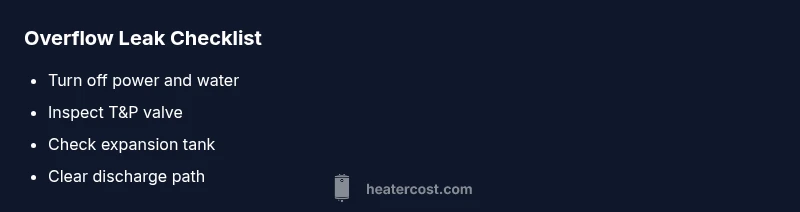
Overflow leaks from a hot water heater are usually caused by a failing temperature and pressure relief valve or a malfunctioning expansion tank. Quick fix steps: shut off the power or gas, close the cold-water supply, and place a bucket under the overflow pipe. If the leak continues, contact a professional immediately. Safety first.
Understanding overflow leaks in hot water heaters
When you ask yourself why is the hot water heater overflow leaking, you’re not alone. Overflow is a safety vent that releases pressure, but a persistent leak signals a problem that can escalate quickly. In most homes, leaks come from the temperature and pressure relief valve (T&P) or the expansion tank. Understanding these parts helps you decide whether you can handle a fix safely or if you need a licensed plumber. Heater Cost sees these scenarios frequently and has practical guidance to keep your home safe while you determine next steps.
This knowledge isn’t just academic — it translates into practical actions you can take this week to protect floors, cabinets, and electrical systems in your home. The Heater Cost team emphasizes that quick acknowledgement and early diagnosis reduce risk and cost over time. By identifying the specific component leaking, you can focus on targeted fixes rather than costly, unnecessary replacements.
Steps
Estimated time: 45-90 minutes
- 1
Turn off power and water supply
For electric heaters, switch off the breaker; for gas heaters, set the thermostat to pilot or OFF and turn the gas valve to off. Shut the cold-water supply valve to stop new water from entering the tank.
Tip: Ensure you have a dry path to the shutoffs and wear non-slip footwear. - 2
Inspect the T&P valve and discharge pipe
Look for corrosion, leaks, or mineral buildup around the valve and the discharge line. If you can safely reach, gently test the valve by lifting the test lever once to see if water releases.
Tip: Do not force the valve open; if you hear hissing or see steam, stop and call a pro. - 3
Check the expansion tank (if present)
Locate the expansion tank near the heater. Check for signs of waterlogged conditions or a ruptured bladder. If the tank is not maintaining air pressure, it may need charging or replacement.
Tip: If you must pressurize, use the correct air gauge and follow manufacturer guidelines. - 4
Evaluate system pressure and temperature settings
Measure your home’s water pressure (typical 40-60 psi, up to 80 psi). Verify the water heater thermostat is not set too high (aim for 120-130°F). High pressure or temperature can trigger the T&P valve.
Tip: Lowering the temperature setting can reduce thermal expansion and relieve valve stress. - 5
Relieve pressure safely or call a pro
If you can safely reduce pressure by opening a hot water faucet elsewhere to bleed hot water, do so gradually. If you’re unsure or the leak persists, contact a licensed plumber for a proper repair.
Tip: Do not attempt to bypass the T&P valve or cap the discharge pipe. - 6
Test the system after repairs
Once fixes are completed, restore power/gas and water supply. Let the tank fill, then monitor for several hours. Check the T&P valve and discharge line for continued leaks.
Tip: Keep towels or a bucket handy for the first 24 hours after a repair.
Diagnosis: Water heater overflow leaking from T&P valve or discharge pipe
Possible Causes
- highExcess pressure or temperature causing valve discharge
- highFaulty or stuck temperature/pressure relief valve
- mediumClosed plumbing system with insufficient expansion space
- lowSediment buildup causing overheating and pressure spikes
Fixes
- easyReset or replace the T&P valve as needed and inspect the discharge path
- mediumInstall or replace an expansion tank in a closed system
- mediumTest water pressure and install a PRV if high pressure
- easyFlush or clean sediment from the tank to reduce overheating
Got Questions?
What causes overflow leaks in a hot water heater?
Overflow is typically caused by a faulty T&P valve, a failing expansion tank, or high water pressure. Sediment buildup can also contribute by causing overheating. A professional should diagnose and repair to avoid safety risks.
Overflow usually comes from the pressure relief valve or expansion tank; a professional can diagnose and fix it safely.
Is it safe to ignore a leaking overflow valve?
No. Continuous overflow can lead to scalding, electrical hazards, and water damage. Shut off power and water supply and call a plumber.
Don’t ignore it; get it checked as soon as possible.
Can I fix overflow leaks myself?
Some basic checks are safe, like inspecting the valve and inlet, but most fixes (valve replacement, expansion tank) require a licensed plumber.
Some checks are okay, but proper repairs should be performed by a pro.
How do I test the T&P valve safely?
Turn off power, place a bucket, gently lift the test lever to see if water releases. If you see steam or hissing, exit and call a pro.
Carefully test only if you know what you’re doing.
Should I replace the water heater due to overflow?
If leaks persist after valve replacement or the unit is old, replacement may be more cost-effective. A plumber can assess life expectancy.
Sometimes replacement is the better option.
What maintenance helps prevent overflow leaks?
Regular flushing to remove sediment, testing the valve, ensuring a functional expansion tank, and maintaining proper pressure reduce overflow risk.
Regular upkeep helps prevent leaks.
Watch Video
The Essentials
- Identify whether the leak is from the T&P valve or expansion tank
- Do not ignore persistent leaks — they signal safety risks
- Perform safe checks and call a pro for valve replacement or expansion-tank work
- Regular maintenance reduces future overflow risks
- If in doubt, prioritize professional assessment and replacement when needed