Hot Water Heater Dripping: Urgent Troubleshooting Guide
Learn fast, practical steps to diagnose and fix a dripping hot water heater. Safe practices, common causes, and when to call a pro to prevent damage and wasted energy.


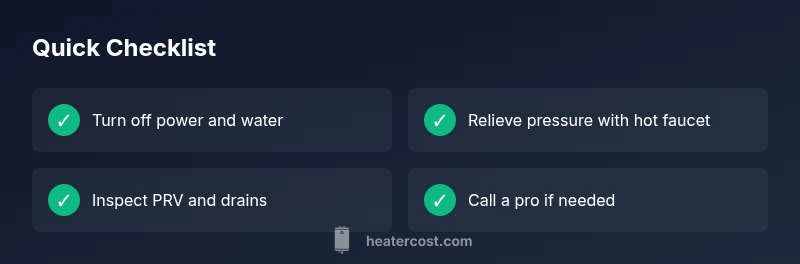
Dripping from a hot water heater is usually a sign of a valve leak or a tank issue. Start with safety: shut off power and the cold-water supply, then relieve pressure by opening a hot faucet. This guide walks you through the most common causes, quick checks, and clear steps to fix or escalate.
Why hot water heater dripping matters
Dripping is a red flag that you should address quickly to prevent water damage, mold growth, and higher energy costs. The phenomenon is commonly caused by a failing valve, loose fittings, or a tank that has started to corrode. In many homes, a leaking or dripping water heater is not just a nuisance; it can lead to significant property damage if left unchecked. According to Heater Cost, addressing leaks early helps homeowners save time, money, and avoid costly repairs later. The sources of a drip are usually the pressure relief valve (PRV), the drain valve, or connections on the inlet/outlet piping, but a crack in the tank is a possibility too. If you notice drips, log the time, the amount of water, and any accompanying noises or odors—these details help you diagnose quickly. As you proceed, stay mindful of electricity or gas safety: never touch live electrical components, and avoid opening panels if you’re unsure. A drip isn’t just a nuisance; it’s a sign to check for pressure, temperature, and wear in your heating system.
Safety first: immediate precautions and risks
Safety must come before any inspection. If your heater is gas-powered, shut off the gas supply at the valve and turn off the power at the breaker (for electric heaters) or the furnace switch (for gas). Close the cold-water supply valve to the heater to minimize additional water flow. If you notice a strong gas smell, swelling vibration in pipes, or hissing from a gas line, evacuate and call emergency services. Never attempt to plug or seal a leak on a pressured reservoir—the high pressure can cause a rupture. After securing safety, open a hot water faucet in a nearby sink to relieve pressure and reduce the risk of scalding when you inspect components.
Diagnostic flow: from symptom to solution at a glance
Symptom: water dripping around or from the heater. Diagnosis: one of several common culprits (PRV discharge, drain valve leak, loose fittings, or tank corrosion). Solutions range from simple tightening or valve replacement to professional tank repair or replacement. Progress through the steps: verify the source, check for pressure or overheating issues, and assess whether a replacement part will fix the problem. If in doubt, the safest move is to consult a licensed plumber. Heeding early warnings reduces the chance of flood damage and extends the life of your system.
Common causes and how to verify them
- Pressure relief valve (PRV) discharge: The PRV may leak if pressure is too high or the water is overheating. Signs include a steady drip or intermittent spray near the valve. You can temporarily reduce the cause by lowering the thermostat setting to about 120°F and ensuring the expansion tank is correctly installed. If the PRV continues to leak, replacement is often required.
- Drain valve weep/leak: The drain valve is used to empty the tank for maintenance. A loose or damaged valve can drip. Tighten gently if it’s simply loose; if dripping persists after tightening, replace the valve.
- Tank corrosion or cracks: Corrosion weakens the tank, leading to leaks at the seams or body. Visible rust or damp spots near the bottom indicate the tank may be failing and likely needs replacement.
- Loose connections or fittings: Leaks can originate at joints in inlet/outlet connections or piping. Look for moisture around threaded fittings and tighten with appropriate tools; reseal with plumber-grade sealant if needed.
Maintenance steps you can take now (summary)
- Set the thermostat to 120°F to minimize temperature-related PRV discharge.
- Check the expansion tank size and ensure it’s functioning; a failed expansion tank can cause overpressure.
- Inspect the discharge line for cracks or obstructions and ensure it’s properly directed to a safe drain.
- Consider a professional inspection if you see visible tank wear, or if the leak persists after basic fixes.
Step-by-step and escalation path (linking to the formal guide)
This section provides a high-level roadmap you can use alongside the official step-by-step instructions. Start with confirming the exact source of the drip, then address simple fixes like tightening a valve or resetting the thermostat. If the source is the tank itself or you suspect corrosion, prepare for replacement estimates and professional evaluation. The goal is to stop water damage efficiently while preserving household safety and comfort.
Preventive maintenance to minimize future drips
Regular maintenance can dramatically reduce dripping incidents. Annual or semi-annual flushing of the tank to remove sediment reduces corrosion-related leaks. Test the PRV and ensure the discharge line remains clear. If you have an older unit, verify the presence and condition of an expansion tank. Keeping the temperature lower and maintaining clean, tight connections minimizes leak risk and extends system life.
Steps
Estimated time: 1-2 hours
- 1
Power down and isolate the heater
Begin by turning off the power at the circuit breaker (electric) or the gas shut-off valve and the thermostat for gas units. Close the cold-water supply valve to the heater to stop incoming water. These steps reduce risk while you inspect the system.
Tip: Always confirm power is off with a non-contact tester before touching wires. - 2
Relieve pressure safely
Open a hot-water faucet somewhere in the house to relieve pressure inside the tank. This helps prevent scalding and keeps water from spraying when you inspect the discharge path.
Tip: Have a bucket or towel ready to catch any residual water. - 3
Inspect the discharge path
Check the T&P valve and its discharge pipe for signs of leakage. If you see moisture around the valve, it may be discharging due to overpressure or overheating. Do not force the valve open unless you know what you’re doing.
Tip: Only lift the lever on the valve briefly if you are trained to do so; otherwise skip this step and call a pro. - 4
Check the drain valve
Locate the drain valve at the bottom of the tank. If you detect a drip, tighten the valve gently. If still dripping, plan to replace the valve or drain and reseal the valve seat with a new washer.
Tip: Don’t over-tighten, which can damage the seat and worsen the leak. - 5
Evaluate tank condition
Inspect the tank body and seams for rust, pitting, or cracks. If you observe visible damage, a professional replacement is typically required.
Tip: Do not attempt a patch or sealant on a pressurized tank. - 6
Restore power and test
Return water supply and power once you’ve addressed the leak or replaced components. Monitor for new leaks for the next several hours and test hot water flow at a faucet.
Tip: If any new leaks appear, stop and call a professional immediately.
Diagnosis: Dripping from a hot water heater
Possible Causes
- highPressure relief valve is discharging due to high pressure or overheating
- mediumDrain valve leak or not fully closed
- lowCracked tank or corrosion
- lowLoose pipe connections or fittings
Fixes
- mediumTest system pressure and thermostat; set to about 120°F; inspect expansion tank; replace PRV if leaks persist
- easyTighten or replace the drain valve as needed; ensure proper seating and gasket
- hardIf tank shows cracks or heavy corrosion, plan for tank replacement by a licensed professional
- easyTighten loose connections or replace worn fittings; inspect all inlet/outlet piping for leaks
Got Questions?
What does a dripping hot water heater usually indicate?
Drips often come from the T&P valve, drain valve, or pipe fittings, and sometimes from a tank crack. A leak may also indicate overpressure or overheating. Use caution and assess source before attempting repairs.
Drips usually come from the relief valve, drain valve, or fittings, not just the tank. Check the source before DIY repairs.
Can I fix this myself?
You can perform simple fixes such as tightening a valve or adjusting the thermostat. If the tank shows corrosion, or the leak persists after basic fixes, contact a licensed plumber. Safety and building codes matter.
Simple fixes are sometimes okay, but if you see corrosion or leaks continue, call a professional.
Is it dangerous to have a dripping heater?
Drips can lead to flooding, mold, and electrical or gas hazards. Turn off power and water and call a pro if you’re uncertain about the source or safety.
Leaks can be hazardous—turn off power and water and contact a professional if unsure.
Should I replace the expansion tank?
If your system uses an expansion tank to manage pressure, a failed tank can cause constant drips. Replacement is usually straightforward for a qualified technician.
A failed expansion tank can cause leaks; replacement is best done by a pro.
How long can I continue using a leaking heater?
Continuing to use a leaking heater risks water damage and higher energy costs. It’s best to address the leak promptly and schedule a professional inspection if needed.
Don’t delay—leaks waste energy and can cause damage; seek help soon.
Watch Video
The Essentials
- Shut off power and water before inspecting.
- Identify the source: PRV, drain valve, or tank.
- Tighten or replace faulty valves to stop drips.
- The Heater Cost team recommends professional evaluation for tank failures.