Why is My Heater Turning On and Off? A Practical Troubleshooting Guide
Urgent troubleshooting guide to stop short cycling. Learn how to diagnose thermostat, airflow, and safety issues, and get practical fixes for a furnace that keeps turning on and off.


According to Heater Cost, a heater that constantly turns on and off, also known as short cycling, is usually caused by thermostat issues, airflow restrictions, or an oversized furnace. The fastest fix is to first verify thermostat settings and replace dirty air filters. If the issue persists, schedule a professional inspection to check the burner, blower, and venting safety.
Why is my heater turning on and off? Common causes
Short cycling is more than a nuisance; it wastes energy and can shorten equipment life. When you notice your heater turning on and off, you’re likely dealing with one of a few patterns: thermostat or sensor problems, airflow restrictions, or an oversized or faulty system. According to Heater Cost, this pattern often points to a thermostat calibration issue, dirty air filters, or improper blower operation. The fix usually starts with simple checks that don’t require tools beyond a basic screwdriver or a DIY filter change. However, safety hazards exist with gas furnaces, so proceed cautiously and know when to call a pro. This problem is easier to prevent than repair, so keeping a routine schedule helps homeowners stay ahead.
Thermostat and controls: The first thing to check
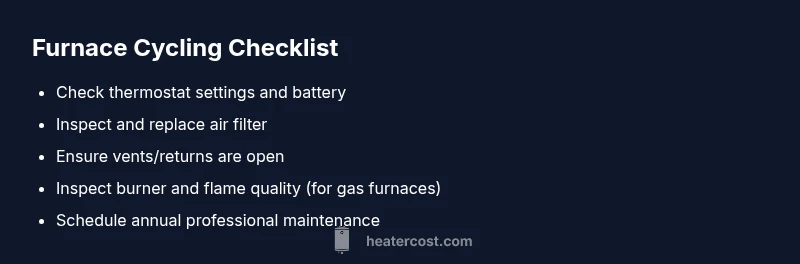
The thermostat is the user interface of your heating system. If it’s miscalibrated, located in a poor spot, or using an old battery, the furnace may cycle irregularly. Check that the thermostat is set to heat, the temperature setpoint is reasonable, and the fan is not constantly running. If the thermostat is wired, inspect the wiring for loose connections. Replace batteries if it uses them. After adjustment, observe whether the furnace cycles normally for the next few hours. A correctly configured thermostat reduces unnecessary cycling and saves energy.
Airflow and filtration: Why dirty filters cause cycling
Airflow restrictions can force your furnace to overheat quickly, which trips safety limits and causes short bursts of operation followed by rest. Start with the air filter: remove and replace if dirty or clogged. Next, verify that supply and return vents are open and unobstructed. Clean any dust or debris from the blower compartment if you’re comfortable, and ensure ductwork is intact without visible leaks. Improved airflow stabilizes temperature swings and reduces cycling.
Sizing and load: Oversized or undersized systems
A furnace that is too large will heat spaces quickly and then shut off, only to start again as the space cools. An undersized unit struggles to reach and sustain target temperatures, leading to extended runtime and possible rapid cycling. Both scenarios wear equipment unevenly and raise energy costs. For accurate sizing, a professional should perform load calculations (Manual J) and duct assessments to confirm a proper match for your home.
Safety and venting for gas furnaces
Gas furnaces introduce risk if venting is blocked, the burner is dirty, or there are ignition issues. A sudden sense of gas smell or hissing can indicate a dangerous condition; in that case, evacuate and call emergency services. Install and regularly test carbon monoxide detectors on every living level. Keep vent pathways clear of snow, debris, and clutter, and schedule annual professional inspections to ensure burners, heat exchangers, and flue pipes are functioning safely.
Electrical faults and control boards
Low voltage problems, loose wiring, or a failing control board can trigger erratic cycling. Check the thermostat wiring at both ends for tight connections and look for any signs of burning or corrosion. If your furnace’s control board or igniter shows physical damage or the thermostat communication is inconsistent, it’s wise to rely on a pro. Electrical issues pose safety hazards and may void warranties if DIY mistakes occur.
Ignition, flame quality, and burner issues
The flame should be clear and blue in natural gas systems; a yellow or orange flame indicates incomplete combustion or a dirty burner. This can cause the furnace to cycle as safe operating limits are reached. If you notice soot, unusual flame behavior, or Black smoke, shut off power to the unit and contact a licensed technician. Regular burner maintenance helps prevent short cycling due to ignition problems.
Maintenance routines that prevent short cycling
Commit to a seasonal maintenance plan: replace air filters every 1–3 months (more often in dusty homes), clean blower components, and have a professional inspect heat exchangers and burners annually. Simple preventive tasks reduce the likelihood of cycling caused by minor faults and extend system life. Keeping the system tuned improves efficiency and comfort while reducing energy waste.
When to call a professional and what to expect
If simple checks don’t fix the cycling, it’s time to call a licensed HVAC technician. A pro will perform a thorough diagnostic that may include testing air flow, checking refrigerant charge (for heat pumps), assessing controls and flame quality, and inspecting venting for safety. Expect a written assessment with recommended fixes and a clear cost estimate. Early intervention can prevent bigger, more expensive problems.
Steps
Estimated time: 60-120 minutes
- 1
Ensure power and safety
Turn off the furnace breaker to inspect wiring safely. If you smell gas or hear unusual noises, leave the area and contact a professional immediately.
Tip: Always prioritize safety before investigating electrical components. - 2
Check the thermostat
Verify the mode is set to heat, confirm the setpoint, and replace batteries if needed. If it is a wired thermostat, inspect for loose or corroded connections.
Tip: Consider relocating a thermostat away from heat sources or drafts for accurate readings. - 3
Inspect and replace filter
Remove the air filter and check for dust buildup. Replace with a filter of the correct size and MERV rating as recommended by the manufacturer.
Tip: Keep a filter replacement log to simplify maintenance. - 4
Assess airflow and vents
Ensure supply vents are open and unobstructed. Check for closed doors or furniture blocking return air paths.
Tip: A simple vacuum cleaning of registers can improve airflow. - 5
Look for signs of ignition or burner problems
If you have a gas furnace, observe the flame color and listen for consistent ignition. A yellow flame or soot indicates a service need.
Tip: Do not attempt to clean the burner if you are unsure of the procedure. - 6
Evaluate the heat exchanger and blower
Unusual odors or excessive heat can indicate a problem with the heat exchanger or blower motor; professional assessment is advised.
Tip: Keep these parts clean and lubricated according to the manufacturer’s guidance. - 7
Test safety switches and limits
Inspect limit switches and safety devices for proper operation; a faulty switch can cause short cycling.
Tip: Only test electrical components if you have the right training. - 8
Monitor performance after fixes
Turn the system back on and observe for normal cycling over the next 24–72 hours.
Tip: Record any recurring patterns to share with a technician.
Diagnosis: Furnace turns on and off intermittently (short cycling)
Possible Causes
- highDirty air filter restricting airflow
- highThermostat calibration or faulty sensor
- mediumOverheating due to restricted airflow or closed registers
- lowIncorrectly sized furnace (oversized or undersized)
Fixes
- easyReplace or clean the air filter and ensure return vents are open
- easyTest thermostat settings, recalibrate or replace batteries, and fix wiring if needed
- easyOpen all supply and return vents, clear obstruction around the furnace, and check ductwork for leaks
- mediumConsult a professional for proper sizing, burner inspection, and venting safety checks
Got Questions?
Why does my furnace keep turning on and off every few minutes?
Frequent cycling often points to thermostat issues, airflow restrictions, or improper furnace sizing. Start with the thermostat check and air filter replacement before consulting a pro for deeper diagnostics.
Frequent cycling usually means thermostat or airflow problems. Check the settings and replace the filter first, then consider a professional check if it continues.
Is short cycling dangerous for my furnace?
Short cycling can shorten furnace life and reduce efficiency, and in gas systems it can indicate safety risks. Have a professional evaluate burner, venting, and safety switches promptly.
Short cycling can be hard on your furnace and may point to safety risks; get a professional check if it persists.
Can a dirty filter cause cycling?
Yes. A clogged filter restricts airflow, causes the furnace to overheat, and triggers a restart cycle. Replacing the filter often resolves short cycling.
A dirty filter often causes short cycling; replace it and monitor the system.
Should I replace the thermostat first?
If the thermostat is old or unresponsive, replacing or recalibrating it can fix cycling without touching the furnace. Start with the thermostat before moving to other components.
A faulty thermostat is a common culprit; consider replacement if it’s older or malfunctioning.
What maintenance helps prevent short cycling?
Regular filter changes, annual professional tune-ups, and keeping vents clear are key maintenance practices that reduce the likelihood of cycling and improve efficiency.
Keep up with filters and yearly tune-ups to prevent cycling.
Watch Video
The Essentials
- Inspect thermostat and filter first for quick gains
- Improve airflow to stabilize cycling
- Consult a licensed pro for safety-critical checks
- Regular maintenance cuts future cycling risks