How Come My Heater Won't Turn On: Troubleshooting Guide
Practical, urgent troubleshooting for a heater that won't turn on. Power, thermostat, and safety checks, plus maintenance tips to prevent future no-starts in your home.


How come my heater won't turn on? The most likely causes are a tripped breaker, an off thermostat, or a safety switch that has tripped. Start by confirming power to the unit, resetting the breaker, and switching the furnace power on. Then check the thermostat settings and replace batteries if needed. If it still won't start, contact a professional.
Start here: what to check in the moment the heater won't turn on
If you wake up to a chilly home and wonder how come my heater won't turn on, the first thing to do is run through a quick, safety-minded check. You’re not looking for a miracle fix here—you're collecting data and ruling out the most common issues. Start with the basics: is the unit powered, is the switch on, and did a recent outage or breaker trip reset properly? If you find the power is available but the unit still won’t respond, proceed to more detailed checks. Taking a calm, methodical approach will save time and reduce the risk of making a bigger problem. This approach aligns with guidance from Heater Cost and practical home maintenance practices.
Key early signals to note include whether the thermostat display is blank, whether you smell burning plastic, or whether the unit makes a humming sound without igniting. Jot these notes down; they help when talking to a technician and help you recognize patterns over time. Remember: when you’re asking yourself how come my heater won’t turn on, you’re diagnosing a system with multiple safety layers. Don’t bypass any safety steps or ignore warning signs.
- Check for a tripped circuit breaker or a blown fuse at the main panel.
- Look for a power switch near the heater or on the furnace itself and ensure it’s in the ON position.
- If you have a smart thermostat, verify the app is connected and the thermostat isn’t showing an error.
- If you notice rapid cycling or unusual smells, stop and escalate to a pro immediately.
Core electrical and control system checks
When the heater refuses to start, the electrical and control circuits are the most common culprits. The most reliable starting point is to confirm that power is reaching the unit. A blown fuse, a tripped breaker, or a loose wire connection at the furnace can shut the whole system down without much warning. If you’re dealing with an electric heater, test the outlet with a known-working device and reset any GFCI if present. For a gas furnace, the ignition system and gas valve are part of a more complex electrical chain; never bypass safety interlocks.
Next, inspect the thermostat and control wiring. A thermostat that’s stuck in a fault state, has drained batteries, or is miswired can cut power to the burner before ignition. If you use a programmable or smart thermostat, check for firmware updates or app errors that could block the signal to the furnace. Replace batteries if your thermostat is battery-powered, and consider temporarily bypassing the thermostat by directly turning the furnace on (where safe and appropriate) to test the connection. If power is being supplied but the unit still won’t fire, the problem may lie in a safety switch or limit switch, or in a faulty control board. Tests involving live electrical components should be performed with caution or by a licensed pro.
- Verify that the furnace’s service switch is ON and the circuit is powered.
- Check thermostat display for error codes and test with a known-good thermostat if available.
- Inspect accessibility panels for obvious loose wires or burnt smells.
- If you hear a hum but no ignition, you may have a stuck relay or failed ignition module; this typically requires professional service.
Gas vs electric heaters: unique failure modes
Electric heaters tend to fail at the control board, the heating element, or the power circuits. Common symptoms include no heat, no display, or a brief reset cycle. Gas furnaces introduce different failure modes: the ignition system, gas valve, pilot light, and condensate drain can all prevent ignition. For gas systems, never ignore a gas smell, unburnt fuel, or a gas shutoff valve that won’t stay open. If your heater is gas-powered, you may see an error code or a blinking pattern on the furnace panel that points to the ignition issue. In all cases, if you smell gas or feel unsure about performing tests near gas lines, contact a licensed HVAC technician immediately.
- Electric: ignition relay, faulty limit switch, or defective blower motor.
- Gas: faulty ignition, gas valve, or pilot light problems.
- Safety first: never bypass a safety interlock or ignition sequence.
Recognizing the distinction between electric and gas failure modes helps you decide whether to keep troubleshooting or to escalate to a professional sooner rather than later.
Step-by-step troubleshooting flow you can follow safely
Below is a practical flow you can follow. It’s designed to be safe and progressive—start with the easiest checks and advance only as needed. If a step involves opening the furnace cabinet or handling electrical wiring, ensure power is OFF and you’re comfortable with the task. If not, skip the risky steps and call a pro.
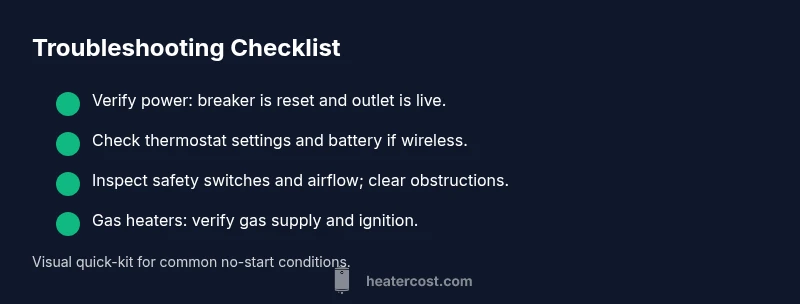
- Confirm power supply and reset breakers. 2) Reset the furnace switch and any built-in disconnects. 3) Check the thermostat: settings, batteries, and wiring. 4) Inspect air filters and intake vents for obstructions that could trigger safety shutoffs. 5) Look for obvious safety switches (limit switch, float switch) that may have tripped; reset if safe to do so. 6) For gas units, verify gas supply is on and the pilot light or electronic ignition is functioning. 7) If the unit still won’t start, document any error codes and call a pro with a list of the steps you’ve taken.
If this doesn’t work, try: moving to a different outlet or circuit, replacing the thermostat with a known-good unit, and performing a controlled power cycle by disconnecting and reconnecting power after a few minutes. Remember to never bypass safety features or open the combustion chamber unless you’re trained. If you’re unsure at any point, stop and contact a professional for a safer, more reliable diagnosis.
Maintenance tips to prevent future no-starts
Preventive maintenance is your first line of defense against a repeat no-start situation. Schedule annual checks for your furnace or space heater, clean or replace filters regularly, and keep the area around the unit clear of debris and clutter. Use a simple monthly quick check: confirm power, inspect the thermostat, listen for unusual noises, and check for visible signs of wear around wiring and switch gear. For gas heaters, periodic professional tune-ups ensure ignition, gas pressure, and venting are correct. A little proactive care goes a long way toward reducing energy waste and extending the life of your heating system.
- Clean or replace air filters every 1-3 months to reduce strain and ignition friction.
- Keep the area around the furnace clear of papers, clothing, and dust.
- Schedule annual professional maintenance to catch safety or efficiency issues early.
- Replace batteries in wireless thermostats at least once a year to avoid false readings.
- Log startup attempts and any anomalies to spot recurring patterns.
When to call a pro and what to expect
If you’ve completed the basic checks and the heater still won’t start, or if you encounter gas odors, intense smoke, or scorch smells, it’s time to call a licensed HVAC technician. A pro can diagnose fault codes, test ignition systems, verify gas pressure, inspect venting, and safely reset safety switches. Expect a site assessment, a detailed quote, and a plan for repair or part replacement. Professional service is essential for gas furnaces and complex electrical issues to ensure safety, code compliance, and long-term reliability. At Heater Cost, we recommend booking a professional evaluation when safety concerns arise or when troubleshooting steps do not resolve the issue.
Note on safety: If you smell gas, hear escaping gas, or notice a strong burning odor, evacuate and call emergency services or your gas utility immediately. Do not operate the furnace or lighting near it until a professional confirms it is safe to do so.
Steps
Estimated time: 60-90 minutes
- 1
Verify power and breakers
Start by ensuring the main power to the unit is on. Check the furnace switch, power cord, and any nearby outlets. If a breaker tripped, reset it and test the outlet with a known working device to confirm power is available.
Tip: Take a photo of the breaker panel before resetting to document the wiring in case you need it later. - 2
Test the thermostat
Check the thermostat display and settings. If it’s a battery-powered unit, replace the batteries. For smart thermostats, verify Wi-Fi connectivity and ensure the thermostat is communicating with the furnace. If the thermostat looks faulty, try a known-good replacement.
Tip: Temporarily bypass the thermostat by turning the furnace on directly at the unit if safe to do so. - 3
Inspect safety switches and airflow
Look for any safety switches that may have tripped, including the door switch, blower wheel, and condensate safety switch. Make sure air filters are clean and that vents aren’t blocked, which can cause the system to shut down as a safety precaution.
Tip: Never bypass safety switches; they protect you and the equipment. - 4
Check ignition and gas supply (for gas heaters)
If you have a gas heater, inspect the gas valve and ignition system. A pilot light that won’t stay lit or a failed electronic ignition can prevent startup. If you smell gas or hear hissing, stop immediately and call a pro.
Tip: Only perform gas-related checks if you are trained and comfortable; otherwise, contact a licensed technician. - 5
Reset limits and test again
Some furnaces have a limit switch that trips during a hard start. Locate the reset button or switch, wait a few minutes, then reset and attempt to start the unit again. If the device still won’t start, proceed to professional help.
Tip: Keep a log of attempts and codes to share with the tech. - 6
Schedule professional maintenance
If none of the steps resolve the issue, schedule a technician appointment. A pro can diagnose complicated electrical faults, gas system issues, and compute efficiency problems that DIY fixes can miss.
Tip: Document symptoms, times of failure, and any noises or smells to aid diagnosis.
Diagnosis: Heater won't turn on
Possible Causes
- highPower supply issue (tripped breaker, unplugged, outlet dead)
- mediumThermostat setpoint too low or faulty thermostat
- highSafety switch or limit switch tripped
- lowGas valve or pilot light issue (gas heater)
Fixes
- easyCheck the breaker box and outlet; reset any tripped breakers
- easyVerify thermostat settings and replace thermostat if faulty
- mediumInspect safety switches and condensate drain; clear obstructions
- hardFor gas heaters, inspect pilot light and gas supply; call a pro if unsure
Got Questions?
Why won't my heater turn on even though the thermostat is set correctly?
A mismatch between thermostat and furnace settings or a faulty thermostat can prevent ignition. Check that the thermostat is calling for heat and that wiring isn’t loose. If in doubt, swap with a known-good thermostat to isolate the issue.
If the thermostat isn’t sending a heat call, the furnace stays off. Check batteries, wiring, and try a different thermostat to confirm.
Can a tripped breaker cause a heater to stop starting?
Yes. A tripped breaker cuts power to the furnace, preventing ignition. Reset the breaker and test the unit. If the breaker trips again, there may be a short or overload that requires a professional inspection.
A tripped breaker interrupts power to the heater. Reset it and monitor for repeated trips before using the unit again.
What should I check first when the heater won’t start?
Start with power, then thermostat, then safety switches. Ensure air filters aren’t clogged and that vents are open. If the unit still won’t start, document any error codes and seek professional help if needed.
Begin with power and thermostat, then safety switches. If it still won’t start, that’s a signal to call a professional.
Is it safe to reset the furnace's limit switch myself?
Only if you know the location and procedure for your model. Incorrect handling can cause damage or safety hazards. When in doubt, contact a licensed technician.
Limit switches are safety devices; reset only if you’re confident and follow the manual. If not, call a pro.
When should I call a professional for a non-starting heater?
Call a professional if safe checks don’t restore operation, if you smell gas, or if unusual noises or smells accompany the no-start. A pro can diagnose ignition, gas, or electrical faults safely.
If basic troubleshooting fails or you smell gas, contact a professional right away.
Watch Video
The Essentials
- Check power and breaker status first.
- Test thermostat and replace batteries if needed.
- Do not bypass safety switches or ignition systems.
- Call a pro for gas-related or hazardous issues.