Why Furnace Won t Turn On: Troubleshooting Guide
A practical, step-by-step guide to diagnosing why your furnace won t turn on. Learn safe checks, common causes, diagnostic flow, and when to call a professional, with maintenance tips from Heater Cost.


When a furnace won’t turn on, the most common culprits are a tripped breaker, a faulty thermostat, or a safety switch preventing ignition. Start by verifying power to the unit, then set the thermostat to heat and try a furnace reset if available. If it still won’t start, a professional HVAC technician should inspect the ignition and control systems.
Why furnace won t turn on: essential for homeowners
If you’re asking why furnace won t turn on, you’re not alone. The heating system is a complex combination of electrical, mechanical, and electronic controls, and a single overlooked cue can prevent ignition. According to Heater Cost, many calls stem from simple, solvable issues like a tripped breaker, a thermostat not communicating with the furnace, or a safety switch that has been triggered. Recognizing these signals early can save time, money, and the discomfort of living with a cold home. Start at the surface—power and thermostat settings—before diving into more technical checks. A clear, calm approach helps homeowners evaluate whether a quick fix is possible or if professional service is needed.
In households across the country, aging components and dust accumulation can degrade performance. A furnace that won’t start can be a symptom of a larger problem, such as a degraded ignition system or restricted airflow, which may require professional attention. The Heater Cost team emphasizes that safe troubleshooting begins with basic checks and progresses to more involved steps only if you’re comfortable and safe doing so. Always prioritize safety when dealing with gas-fired equipment or electrical components.
Common causes you should know
There are several frequent reasons a furnace won’t turn on. The top culprits include a power issue (breaker tripped or a blown fuse), thermostat communication problems (dead batteries or incorrect settings), and safety interlocks like the limit switch or pressure switch being triggered. Less common but possible are fuel supply problems, a dirty air filter causing overheating, or a failed ignition controller. Identifying the most likely cause helps narrow your next steps quickly. Heater Cost analysis shows that resolving electrical and thermostat issues often resolves the problem without needing a service call, especially when the system is otherwise well maintained.
Additionally, older furnaces may rely on pilot lights or standing pilots that can go out, while newer systems rely on electronic ignition. The key is to verify whether ignition is occurring at all and whether the system is receiving the correct commands from the thermostat. If ignition symptoms are present—such as clicking sounds but no flame—this points toward an ignition or fuel issue that requires careful handling. Always treat gas appliances with respect for safety and local codes.
Safety first: what to check before you touch anything
Safety is non-negotiable when troubleshooting a furnace. Before touching any wires or controls, switch off the power at the service panel and, if you’re dealing with a gas furnace, ensure the gas shutoff valve is in the off position only if you suspect a leak or if you’re instructed by a professional. Wear eye protection and avoid loose clothing that could snag on moving parts.
With the system de-energized, check the obvious: the furnace switch (usually near the unit) is in the ON position, and the thermostat is wired correctly. Do not attempt to bypass safety features or force ignition. If a CO detector is present and sounding, evacuate and call emergency services. These precautions protect you from electrical shock and exposure to combustion byproducts while you diagnose the root cause.
Diagnostic flow: symptom to solution
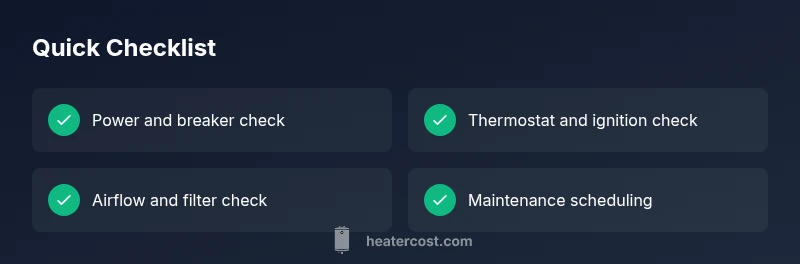
A logical diagnostic flow helps you move from symptom to solution without skipping steps. Start with the simplest explanations (power and thermostat) and progressively check components that require more access to the furnace interior. Create a running checklist: confirm power, verify thermostat signal, test safety switches, inspect ignition and flame sensors, and review airflow components like the air filter and blower. If a step reveals a potential fault, address it before moving on. This methodical approach minimizes guesswork and reduces the risk of accidental damage.
Throughout the process, document what you observe. Note whether the furnace attempted to start, how long ignition lasted, and any unusual noises or smells. This data is valuable if you end up needing a professional assessment and helps technicians diagnose faster.
Step-by-step: fix the most common cause
This section provides a practical, step-by-step workflow focused on the most common causes—power and thermostat issues. Each step includes clear actions and safety reminders to keep you on track.
-
Check power and breakers: Locate the furnace’s dedicated circuit breaker or switch in the electrical panel. If the breaker is flipped off, switch it fully to OFF and then back to ON. If the switch is a simple toggle, ensure it is firmly in the ON position. After resetting power, listen for the furnace attempting to start.
-
Test the thermostat: Replace any dead batteries and ensure the thermostat is set to HEAT with a temperature setpoint higher than the current room temperature. If your thermostat is wireless, verify the signal between the thermostat and the furnace control board. A simple calibration can restore proper communication in many cases.
-
Inspect the furnace switch and reset: Some units have a reset switch or button located on the furnace cabinet or near the blower compartment. Press or hold the reset according to your user manual—usually for a few seconds. If your model has a four-minute auto-reset cycle, wait and observe for a restart attempt.
-
Check for ignition problems: For gas furnaces, listen for a click and the sound of gas igniting. If you hear a click but no flame, the issue could be a dirty ignition electrode, a closed gas valve, or a clogged pilot. Do not attempt to fix gas components beyond basic checks; contact a pro if ignition doesn’t occur.
-
Inspect air flow: A dirty air filter or blocked return vent can cause overheating and a safety shutoff, preventing startup. Replace the filter if it looks dirty, and ensure vents are unobstructed. Adequate airflow is essential for a reliable restart and safe operation.
-
Reset and test again: After completing the above checks, reset the furnace if your model supports it, and run a test cycle. If the furnace starts, monitor its operation for a few minutes to confirm stable ignition and steady heat. If you still can’t start, escalate to professional service.
-
Document and prepare for service: If you cannot restart, write down observations such as the sequence of events, any error codes, and recent maintenance activities. This information helps technicians diagnose more quickly and avoid unnecessary parts replacement.
-
When to stop and call a pro: If you detect gas odors, if the furnace fails to ignite after multiple resets, or if you observe error codes that indicate a control board or ignition fault, stop troubleshooting and schedule professional help. Gas and electrical systems pose safety risks that require licensed expertise.
Safety and when to call a pro
Even after following a thorough at-home checklist, some furnace issues demand professional expertise. If you smell gas, hear continuous hissing, or notice soot, flame roll-out, or erratic ignition, evacuate and call your gas utility or emergency services. Do not attempt to disassemble gas connections or ignition components. For suspected electrical faults, such as a warm cabinet, buzzing sounds, or a burning odor, cut power at the panel and contact a licensed HVAC technician.
Professional technicians can diagnose issues that require specialized tools, such as ignition modules, control boards, gas valves, or pressure switches. Regular service from a qualified pro also reduces future failures and helps maintain system efficiency.
Preventive maintenance to reduce future outages
A proactive maintenance routine can dramatically lower the chances of a furnace failing to start when temperatures drop. Create a seasonal service plan that includes a full ignition check, blower motor inspection, fuel supply verification (gas or oil), and a comprehensive filter replacement schedule. Clean and inspect flame sensors and ignition electrodes, and ensure condensate drain lines remain clear where applicable. Use a high-quality air filter and maintain proper insulation around the furnace to minimize heat loss. Regular maintenance catches minor issues before they escalate into a failure at the worst possible moment.
Steps
Estimated time: 45-90 minutes
- 1
Check power and breakers
Locate the dedicated circuit breaker for the furnace. If it’s off, switch it fully to OFF, then back to ON. Listen for a brief start-up sound after restoring power. If the breaker trips again, you likely have a short or overload issue that requires professional attention.
Tip: Keep a flashlight handy to see the panel clearly. - 2
Inspect thermostat
Remove the thermostat cover and confirm batteries aren’t dead. Set the thermostat to HEAT and a temperature higher than room temp. If you have a programmable thermostat, ensure it’s not in an energy-saving mode or a setback temperature that blocks ignition.
Tip: Test the thermostat by temporarily bypassing it with a known-good device if you’re comfortable. - 3
Inspect furnace switch and reset
Look for a furnace switch on the cabinet (often near the blower). If present, flip it OFF, wait a few seconds, then ON. Some models have a dedicated reset button—press and hold for a few seconds as advised in your manual.
Tip: Only perform resets described in the manual; improper resets can cause further issues. - 4
Check ignition and gas supply (gas furnaces only)
If ignition doesn’t occur, listen for a click. Ensure the gas valve is open and gas line isn’t obstructed. Do not attempt to light a pilot if you smell gas; evacuate immediately.
Tip: If you’re unsure about gas flow or ignition, contact a pro rather than testing further. - 5
Verify airflow and filter
A clogged filter or blocked return vents can cause overheating and safety shutoffs. Replace the filter if dirty and clear any obstructions in return paths. Ensure the blower isn’t blocked and can circulate air properly.
Tip: Mark a reminder to replace filters every 1-3 months depending on use and environment. - 6
Reset and test again
After rechecking power and ignition, perform a test cycle. Observe whether ignition occurs and heat is produced. If the unit cycles on and off rapidly or fails to stay lit, stop testing and consider professional service.
Tip: Take notes on codes or symptoms to share with the technician. - 7
Document observations
Record any error codes, unusual smells, or noises, along with recent maintenance or weather conditions. This helps a technician isolate the issue and avoid unnecessary parts replacement.
Tip: Keep a simple damage-log in your phone for quick reference. - 8
Know when to call a pro
If you’re uncomfortable with gas, electrical, or ignition components, or if the furnace still won t start after these steps, contact a licensed HVAC technician. Persistent issues may indicate a failed control board or a worn ignition module.
Tip: Early professional evaluation can prevent costly damage and ensure safe operation.
Diagnosis: Furnace won t turn on
Possible Causes
- highNo power to furnace (breaker tripped or disconnected)
- highThermostat sending incorrect signal or dead batteries
- mediumLimit switch or safety switch engaged
- lowBlown fuse or faulty control board
Fixes
- easyReset the circuit breaker and ensure power reaches the furnace
- easyReplace thermostat batteries or recalibrate the thermostat; test communication with the furnace
- easyReset safety/limit switches if accessible and reseat any loose wires
- mediumHave a pro inspect the control board or ignition system if ignition remains absent
Got Questions?
What is the first thing I should check if my furnace won t turn on?
Begin with the power supply, then inspect the thermostat settings and the furnace reset option. These quick checks resolve many start-up issues without professional help.
First check power, then the thermostat, and try a reset if available.
Why does my thermostat show heat but the furnace still won t start?
The thermostat may be miscalibrated, have dead batteries, or fail to communicate with the furnace control board. Replacing batteries and recalibrating often fixes this.
Thermostat problems can block start-up; replace batteries and recalibrate.
Can a dirty filter stop my furnace from starting?
Yes. A clogged filter restricts airflow, triggers overheating, and can shut the system off for safety. Replace the filter and clear obstructed vents.
A dirty filter can cause overheating and prevent start-up.
Is it dangerous to try to fix a furnace myself?
Gas and electrical components pose serious risks. If you smell gas or encounter unusual smells, evacuate and call professionals. Don’t bypass safety features.
Furnace work can be dangerous; call a pro if you’re unsure.
When should I definitely call a professional?
If power checks fail, ignition doesn’t occur after resets, or you detect gas issues, a licensed HVAC technician should assess the system.
Call a licensed HVAC tech if basic checks don’t restore function.
Watch Video
The Essentials
- Power on first: verify breakers and switches are stable.
- Thermostat issues are a common, easily fixable cause.
- Follow a safe, logical flow before calling a pro.
- Regular maintenance reduces future outages and saves money.