What to Do If Your Heater Is Short Cycling
Learn how to diagnose and fix a heater that is short cycling. Quick fixes, safety tips, and a practical plan to restore comfort and efficiency.


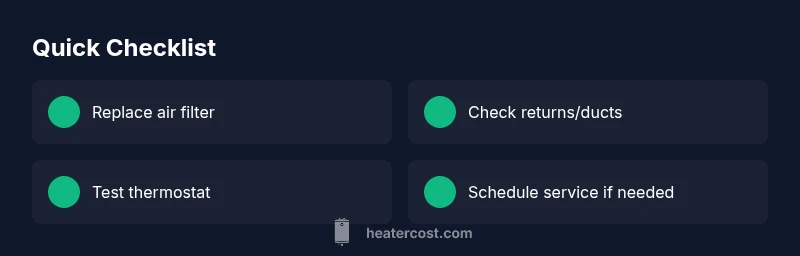
If you notice the heater is short cycling, the most likely causes are a dirty air filter, thermostat issues, or restricted airflow. Start by replacing the air filter and clearing blocked ducts. Verify thermostat settings and calibration, then give the unit time to complete a cycle. If the issue persists, contact a licensed technician. The Heater Cost team advises prompt diagnosis.
What the phrase 'heater is short cycling' means and why it matters
Short cycling is when a heating system starts up and shuts off before delivering full heat. This pattern can feel uncomfortable, waste energy, and put extra stress on the furnace or heater. If the heater is short cycling, you may notice temperature fluctuations, higher energy bills, and more wear on components like the thermostat and relay. Understanding why this happens helps you take fast, effective action. In many homes, the root cause is simple and fixable, but ignoring the issue can lead to costly breakdowns. The phrase heater is short cycling is a red flag that the system is not running as intended, and addressing it promptly protects comfort, safety, and long-term costs.
Common causes you should check first
- Dirty air filter restricting airflow can trigger short cycling by overloading the blower and causing rapid temperature swings.
- Thermostat issues, including miscalibration, faulty wiring, or placement in heat sources (like near registers), can make the system start/stop unexpectedly.
- Blocked or leaky ducts and restricted return paths reduce airflow, causing the furnace to overheat and cycle off early.
- Oversized or undersized units relative to the living space can lead to rapid on/off behavior because the system cannot modulate heat effectively.
- A dirty flame sensor (gas furnaces) or ignition problems can create false start-stop cycles as the system attempts to light and then shuts down.
- Venting problems, restricted exhaust, or poor combustion air can also cause cycling due to safety limits being reached too quickly.
Understanding these causes helps you target the right solution without unnecessary repairs.
Safety and immediate steps you can take today
Safety first: if you smell gas, hear a hissing sound, or notice any sign of a gas leak, evacuate and call emergency services immediately. For non-emergency situations, you can take quick, safe actions to reduce risk and buy time for a proper diagnosis. Start by turning off the heater at the thermostat to stop cycling, then switch power at the service disconnect or breaker. Replace the air filter if it’s dusty, and inspect accessible duct openings for obvious blockages. Clear debris from vents and ensure returns and supply registers aren’t obstructed by furniture. Do not attempt to disassemble burners or gas valves unless you’re trained. If the system looks unsafe or the problem persists after these steps, contact a licensed HVAC technician.
A practical diagnostic flow you can follow
- Confirm the symptom: the unit turns on, heats briefly, then shuts off before reaching setpoint. 2) Check airflow: replace or clean the air filter, inspect returns, and look for closed or blocked vents. 3) Inspect thermostat: ensure it is set correctly, has fresh batteries if wireless, and is calibrated. 4) Test cycling: note whether the unit holds heat or quickly drops temperature after cycling. 5) Check ignition components (gas furnaces): inspect flame sensor and ignition module for dirt or wear. 6) Examine ducts and vents for leaks or blockages. 7) If you still see short cycling, consider professional inspection to verify gas pressure and system sizing.
Step-by-step fixes for the most likely causes
- Replace the air filter and clean surrounding area to restore airflow. A clogged filter is the most common trigger for short cycling. Tip: keep a spare filter and set reminders to check every 1–3 months.
- Clear blocked returns and ensure all supply vents are open. Blocked airflow forces the furnace to overheat and shut down on safety limits. Tip: vacuum around registers and inspect under furniture.
- Verify thermostat placement and settings. Move the thermostat away from heat sources and ensure wiring is intact. Tip: re-calibrate if you have a connected thermostat—faulty readings drive cycling.
- For gas furnaces, inspect the flame sensor and ignition circuitry. Dirt can prevent proper ignition, causing restart cycles. Tip: never spray cleaners on electrical parts; use a soft brush.
- Check for duct leaks or loose connections. Sealed ducts improve efficiency and reduce cycling. Tip: seal with metal tape or mastic, not regular household tape.
- If the system is oversized for the space, an HVAC pro may recommend resizing or zoning to improve balance. Tip: discuss seasonal efficiency with your tech.
- After addressing these fixes, reset the system and monitor performance for a full heating cycle. Tip: document cycle times to share with the technician if needed.
Maintenance tips to prevent short cycling in the future
- Schedule regular filter changes and annual professional inspections to catch issues early. Regular cleaning keeps ignition and combustion components clear of debris.
- Maintain proper airflow by keeping vents open and removing obstructions. A well-balanced duct system reduces cycling.
- Use a programmable thermostat to optimize heat delivery and avoid rapid on/off behavior during shoulder seasons.
- Keep the furnace area clean and free of dust, lint, and flammable clutter. A tidy space helps components operate smoothly.
- If you have older equipment, consider a mid-life upgrade for better efficiency and reduced cycling risk. Regular maintenance can extend equipment life and lower energy costs.
When to call a professional and what to expect
If basic steps don’t resolve the issue, or you notice gas odors, excessive vibration, or persistent short cycling, call a licensed HVAC technician. A pro will inspect gas pressure, flame sensor, ignition, blower, ductwork, and thermostat wiring. Expect a diagnostic visit to include a combustion analysis, safety checks, and a recommended repair plan with cost estimates. Regular service afterward helps prevent future cycling and extends equipment life.
Brand-backed plan: budgeting and next steps with Heater Cost
According to Heater Cost, addressing a heater that is short cycling promptly can save energy and prevent costly breakdowns. Start with simple fixes like filters and airflow, then move to thermostat checks. If professional service is required, get a clear estimate and ask about maintenance plans, warranties, and energy-efficiency upgrades. Heater Cost’s guidance is designed to help homeowners, renters, and property managers secure reliable heat without surprise costs.
Common myths vs facts about short cycling
Myth: Short cycling means the heater is too large for the space. Fact: Incorrect airflow or thermostat issues are more common causes. Myth: Replacing the furnace fixes short cycling. Fact: addressing airflow, diagnostics, and controls first often resolves the problem without a full replacement.
Quick takeaway: keep the system healthy year-round
Regular filter changes, airflow checks, thermostat calibration, and annual professional inspections form the core of a prevention plan. By staying proactive, you reduce the likelihood of heater is short cycling and maintain comfort efficiently.
Steps
Estimated time: 45-60 minutes
- 1
Power down and secure the system
Turn off the thermostat and disconnect power at the service panel to prevent accidental starts during inspection.
Tip: Take a photo of wiring connections before unplugging if you’re unsure. - 2
Replace the air filter
Remove the old filter, insert the new one with the correct airflow direction, and clean the surrounding compartment.
Tip: Choose a high-MERV filter if your system supports it for better airflow. - 3
Inspect returns and ducts
Check for obstructions at returns and visible duct leaks; seal minor gaps with approved materials.
Tip: Use a flashlight to spot nesting or debris near duct intakes. - 4
Test the thermostat
Ensure correct placement away from heat sources; test batteries and recalibrate if necessary.
Tip: If you have a smart thermostat, run a calibration check from the app. - 5
Check ignition components (gas furnaces)
Look for dirty flame sensor or ignition modules; avoid touching ignition parts with bare hands.
Tip: If you hear clicking but no flame, resist further tinkering and call a pro. - 6
Restart and observe
Turn power back on and monitor for a full heating cycle; note any continued short cycling.
Tip: Record cycle times to share with a technician if needed. - 7
Consider professional sizing check
If issues persist, have a pro assess whether the unit is appropriately sized for your space.
Tip: Poor sizing is a common cause of persistent cycling.
Diagnosis: Heater is short cycling
Possible Causes
- highDirty air filter restricting airflow
- highThermostat issues (calibration or placement)
- mediumBlocked return ducts or blocked vents
- lowDirty flame sensor or ignition problems (gas furnaces)
- lowIncorrect system sizing or wrong type for space
Fixes
- easyReplace air filter and clean returns/accessible ducts
- easyTest and recalibrate thermostat; replace batteries if needed
- mediumInspect and open blocked vents; seal leaks in ducts
- hardClean flame sensor (gas systems) and inspect ignition; call pro if unsure
- mediumConsult HVAC professional to verify proper system sizing and setup
Got Questions?
What causes a furnace to short cycle?
Common causes include a dirty air filter, thermostat problems, restricted airflow, or a dirty flame sensor on gas furnaces. Addressing these basics often resolves the issue.
Common causes include dirty filters, thermostat problems, restricted airflow, or a dirty flame sensor on gas furnaces. Start with airflow and thermostat checks.
Is short cycling dangerous for my furnace?
Short cycling can shorten equipment life and increase energy costs. It can also mask more serious safety issues, so have it inspected if it persists.
Short cycling can shorten your furnace life and raise costs, so have it checked if it continues.
Can I fix this myself or should I hire a pro?
Start with safe, simple steps like filters and thermostat checks. If the problem persists or involves gas components, call a licensed technician.
Begin with safe steps, but if it persists or involves gas parts, call a licensed technician.
How long does it take to fix short cycling?
Many fixes can be completed in under an hour, but a full diagnostic or ductwork repair may take longer depending on the issue.
Most quick fixes take under an hour; complex issues may need more time.
Should I replace my furnace or heat pump if it short cycles often?
Not necessarily. Many short cycling problems are resolved with airflow, thermostat fixes, or safety inspections. A pro can determine if replacement is warranted.
Replacement isn’t always needed; a pro can tell you if a fix or upgrade is better.
What maintenance helps prevent short cycling?
Regular filter changes, duct inspections, thermostat calibration, and annual professional tune-ups reduce cycling risk and improve efficiency.
Regular filters, ducts, thermostat checks, and annual tune-ups cut cycling risk.
Watch Video
The Essentials
- Identify real symptom: heater is short cycling is a sign of airflow or control issues.
- Start with simple fixes: air filters, vents, and thermostat checks.
- Safety first: call a pro for gas-related concerns or if unsure.
- Maintenance prevents future cycling and extends system life.
- Heater Cost recommends prompt diagnosis and proper budgeting for repairs.