heater is not heating: a practical troubleshooting guide
Learn how to diagnose and fix a heater that won’t heat. Step-by-step checks, safety tips, and when to call a pro—grounded in Heater Cost’s 2026 analysis.


If the heater is not heating, start with the basics: check thermostat settings, confirm the unit is powered, and inspect the air filter. The most common causes are a tripped breaker, a dirty filter, or a thermostat set too low. Listen for unusual burner or blower noises, and inspect vents for blockages. If these steps don’t help, proceed to a structured diagnostic flow.
Common causes of a heater not heating
When your home feels chilly even though the thermostat shows heat, the problem is usually simple to fix. A frequent description homeowners give is that the device is a "heater is not heating" scenario. According to Heater Cost, the most common culprits are basic power issues (a tripped breaker or blown fuse), thermostat misconfiguration, and dirty air filters that restrict airflow. Other frequent causes include blocked vents, a shut-off switch, or a failed safety limit switch. This section explains why these issues occur and how they broadly unfold in real homes. Starting with these high-probability causes makes it possible to recover heat quickly and cost-effectively. For homeowners and property managers, addressing the simplest explanations first often reduces downtime and extends the life of the system. The Heater Cost team emphasizes safety and proper diagnosis before any component replacement.
Quick checks you can safely perform
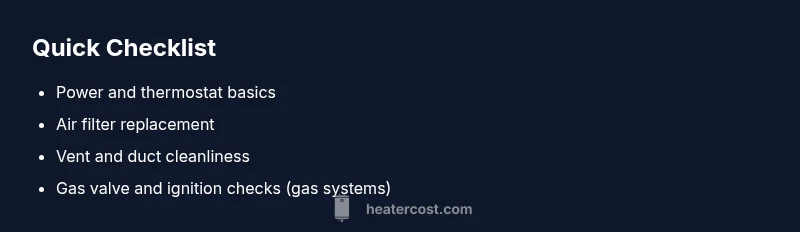
Before you reach for tools or call a technician, run through a fast, safe checklist. Ensure the unit is plugged in or receiving power, verify the thermostat is set to a heat setting, and inspect the air filter for dirt or blockages. Check the circuit breaker or fuse box for a tripped breaker or blown fuse—reset or replace as needed. Clear any obvious obstructions from vents and registers to restore proper airflow. For gas systems, confirm the gas valve is open and listen for ignition cues; if you detect a strong gas smell, evacuate and call emergency services. If the blower runs but there is no heat, note whether the flame is present or if an idle blower sounds abnormal. Based on Heater Cost analysis (2026), most issues at this stage are resolved without professional service, but always limit intervention on gas-fired equipment to trained technicians.
Diagnostic flow: symptom to diagnosis
This section maps common symptoms to likely causes and practical fixes. If you notice no heat but the unit has power and the thermostat is correct, the issue often lies with airflow or the controls. If the blower runs without producing heat, you may have a burner ignition issue or a faulty gas valve. If you hear unusual noises or the furnace cycles abnormally, misadjusted limits or a failing blower motor could be the culprit. In every case, document what you observe and proceed to targeted fixes. Heater Cost analysis notes that systematic, conservative testing minimizes risk and avoids unnecessary part replacements. We emphasize safety and, when in doubt, contact a licensed professional for gas, electrical, or complex mechanical problems.
Step-by-step fix for the most common causes
-
Power down and safety check: Turn off the unit at the thermostat and switch off power at the breaker. Confirm there is no exposed wiring and wait a few minutes before restoring power. Tip: Wear protective gloves when handling any exposed components.
-
Verify thermostat settings: Ensure the thermostat is in heat mode, set above room temperature, and that any scheduling or eco modes are disabled while testing. Tip: If you have a programmable thermostat, temporarily bypass the schedule to test immediate heat.
-
Clean or replace the air filter: A dirty filter reduces airflow, making the system work harder and may cause short cycling. Replace with a filter of the correct size and MERV rating. Tip: Check filters every 1–3 months during peak heating season.
-
Check electrical connections and breakers: Inspect the furnace or air handler for loose wires and reset any tripped breakers. Tip: Use a multimeter only if you are confident; otherwise, call a pro to test circuits safely.
-
Assess the gas supply and ignition (for gas devices): Make sure the gas valve is fully open and verify the ignition sequence. If you smell gas or the pilot won’t light, evacuate and call emergency services. Tip: Do not attempt to light a pilot in a suspected gas leak.
-
Inspect the burner and limit switches: If the burner won’t ignite or the limit switch has failed, heat delivery is interrupted. Tip: A professional should handle ignition and safety-switch faults.
-
Test blower and airflow: If heat is produced but airflow is weak, the blower motor or capacitor may be failing. After any repair, run a test cycle to confirm consistent heat. Tip: Listen for abnormal fan speed or intermittent operation.
If the steps above do not restore heat, the issue likely lies with a gas ignition system, electrical fault, or a failing core component. In these cases, schedule a service visit with a licensed HVAC technician. Estimated total time: 60–90 minutes for basic troubleshooting, longer for complex issues.
estimatedTime):
Steps
Estimated time: 60-90 minutes
- 1
Power down and safety check
Turn off power at the thermostat and switch off the furnace breaker. Wait a minute, then restore power and listen for normal startup sounds. If you smell gas, leave the area immediately and call emergency services.
Tip: Safety first: never bypass gas safety features. - 2
Check thermostat settings
Ensure the thermostat is set to heat, not auto, and that the setpoint is higher than room temperature. If you use a programmable thermostat, temporarily disable scheduling and test a direct heat call.
Tip: Factory reset the thermostat if it behaves erratically. - 3
Clean or replace air filter
Remove the filter and inspect for excessive dirt. Replace with a properly fitting filter of the recommended MERV rating. Reinstall and run a quick test cycle.
Tip: Keep a seasonal replacement log to prevent future blockages. - 4
Inspect electrical connections and breakers
With power off, check visible wiring for looseness and reset any tripped breakers. If you see burnt components or melted insulation, stop and contact a pro.
Tip: Do not touch exposed wires; use insulated tools. - 5
Gas supply and ignition check (gas systems)
Confirm the gas valve is fully open and that the ignition system is cycling. If the pilot light won’t stay lit or you smell gas, shut down and call a professional.
Tip: Never attempt DIY gas line work. - 6
Test blower and limits
If heat is produced but airflow is weak, the blower motor or capacitor may be failing. Check for fan hesitation and ensure the blower comes on at the right times.
Tip: A humming noise without airflow often signals a capacitor fault. - 7
Re-test and monitor
Turn the system back on and let it run through a complete cycle. Listen for proper ignition, stable flame, and consistent air temperature. If heat remains inconsistent, schedule professional service.
Tip: Document any irregular sounds or cycles for the technician.
Diagnosis: House feels cold or thermostat shows heat but rooms stay chilly
Possible Causes
- highPower issue (tripped breaker or blown fuse)
- highThermostat misconfiguration or dead batteries
- mediumDirty air filter restricting airflow
- lowBurner/ignition failure (gas systems)
- lowWorn blower motor or failed limits
Fixes
- easyCheck outlet and reset breaker; replace fuse if needed
- easyReplace thermostat batteries or recalibrate/settings
- easyClean or replace air filter and ensure vents are open
- mediumVerify gas valve and ignition sequence (gas systems)
- mediumInspect blower motor and limit switch (professional if needed)
Got Questions?
What are the most common reasons a heater won't heat?
Most issues stem from power, thermostat settings, or dirty filters. Gas or ignition problems are common in older units and require caution. If basic checks don’t resolve the problem, a professional assessment is advised.
Common issues include power, thermostat, or dirty filters. If basic checks fail, get a professional assessment.
How do I reset a furnace limit switch safely?
Turn off power to the furnace, locate the limit switch, and press the reset button if accessible. If you cannot access it safely, or the switch won’t reset, contact a professional.
Safely shut off power, then reset the limit switch if you can reach it. If not, call a pro.
Is it safe to run a heater with a dirty filter?
No. A dirty filter reduces airflow, causes the system to work harder, and can lead to overheating or cycling problems. Replace or clean the filter before testing again.
Running with a dirty filter is not safe. Replace it and test heat again.
When should I call a professional?
If you smell gas, notice persistent electrical faults, or ignition issues, stop and call a licensed HVAC technician. Complex gas or electrical problems require professional service.
Call a pro if there’s a gas smell, electrical fault, or ignition problem.
Can a thermostat cause heating failure?
Yes. A faulty or miswired thermostat can prevent heat from triggering. Check batteries, wiring, and compatibility with your furnace. Replacing or recalibrating the thermostat often resolves the issue.
Thermostats can cause heating failures; check settings and wiring, then replace if needed.
Watch Video
The Essentials
- Verify power and thermostat before touching components
- Replace dirty filters to restore airflow
- Inspect breakers and safety switches regularly
- Test blower and ignition if heat is inconsistent
- Call a licensed pro for gas/ignition or electrical issues