Why Is My Heater Not Blowing Hot Air? Urgent Troubleshooting Guide
When your heater won’t blow hot air, quick, safe checks can fix the most common causes. Learn top culprits, practical DIY steps, and when to call a pro with Heater Cost’s expert troubleshooting guide.


Typical reasons your heater isn’t blowing hot air include a thermostat set to cool or low, a clogged air filter, a tripped high‑limit switch, or gas/furnace problems such as a pilot light out. Begin with quick checks: switch to heat, replace the filter, and reset the furnace. If warm air still won’t return, escalate to deeper diagnostics.
Common culprits behind a heater not blowing hot air
Most homes rely on a few core components to produce heat. When warm air stops, the issue is rarely mysterious; it’s usually one of a handful of causes you can check quickly. In order of likelihood, the most common problems involve thermostats, airflow, and fuel supply. Understanding these can save time and money, especially when price and efficiency are on the line.
- Thermostat settings: Confirm the thermostat is set to heat and the temperature is higher than the room. If the thermostat is in 'auto' mode, ensure the fan isn’t set to 'on' continuously preventing proper heat cycling.
- Air filter and ductwork: A clogged filter or blocked ducts reduces airflow, making the system feel like it’s not producing heat. Replace the filter every 1-3 months and inspect ducts for obvious blockages.
- Furnace limit switch or safety switch: If a limit switch trips, it will stop heating even though the blower may run. A reset or replacement may be needed.
- Gas supply and ignition (gas furnaces): A pilot light out or ignition failure prevents heat generation. If you smell gas or the pilot won’t light, do not troubleshoot—leave it to a licensed pro.
- Blower and motor issues: If the blower motor, capacitor, or belt is worn, you’ll feel cold air despite heat.
- Thermostat location and calibration: Sun exposure or drafts near the thermostat can cause skewed readings and premature shutoffs.
Addressing these items often resolves the issue without professional service, but if in doubt, err on the side of safety and call a pro.
Quick checks you can do safely (non-destructive)
Safety comes first. Start with the simplest checks that don’t require disassembly.
- Power and thermostat sanity check: Look at the furnace’s circuit breaker. If tripped, reset. Set the thermostat to heat and raise the temperature a couple of degrees to trigger a cycle.
- Filter replacement: If it’s been 1–3 months since the last change, replace the filter with the right size and rating. A clogged filter restricts airflow and reduces heat delivery.
- Vent and duct inspection: Make sure vents are open and unobstructed. Worn ductwork or crushed ducts can masquerade as a heating problem by starving rooms of warm air.
- Reset and restart: Turn off the unit at the thermostat, then power at the breaker for 30 seconds before turning it back on. This resets many minor faults and can restore normal operation.
- Outdoor unit checks (heat pumps or dual-fuel systems): If you have an outdoor unit, clear debris and confirm it’s not iced over or blocked. Faults here can prevent indoor heating from operating correctly.
If these steps don’t restore heat, proceed to more detailed inspections or professional service.
Reading indicators and codes on your furnace
Furnaces often have diagnostic lights or error codes displayed on the control board or a digital display. Familiarize yourself with the model’s manual to interpret codes such as lockouts, flame sensor errors, or ignition faults. While you can look up codes online, avoid guessing repairs—addressing a fault code incorrectly can cause further damage. Safety interlocks may require a reset after a fault clears.
Additionally, listen for unusual sounds: banging, squealing, or rattling can signal blower or motor problems or loose components. If you hear hissing or a burner flame that won’t stay lit, shut down power and consult a professional. Codes and audible cues together guide where to start your diagnosis.
When to escalate to professional service
Some issues are beyond DIY repair and require licensed expertise. If you smell gas, hear a strong gas odor, notice black soot around the furnace, or the unit repeatedly shuts off due to safety limits, contact a licensed HVAC technician immediately. Gas furnaces pose fire and carbon monoxide risks, and attempting ignition repairs without training can be dangerous. If your furnace is older and energy bills are rising despite normal cycle behavior, a pro can assess efficiency, venting, and combustion safety.
For preventive peace of mind, use a professional annual tune-up to catch small problems before they become cold nights. A pro can verify flame quality, airflow, duct integrity, and safe venting, ensuring heat delivery remains reliable.
Preventive maintenance to avoid future cold snaps
Proactive care keeps your heating system reliable and efficient. Implement a simple maintenance routine:
- Schedule annual furnace inspection and cleaning.
- Replace or clean filters every 1–3 months during heating season.
- Keep vents clear and inspect ductwork for leaks or blockages.
- Check thermostat calibration and placement to prevent false readings.
- Document any brief outages or odd noises to share with technicians later.
With consistent upkeep, your heater is less likely to fail during peak demand—and your energy costs stay predictable.
Steps
Estimated time: 45-90 minutes
- 1
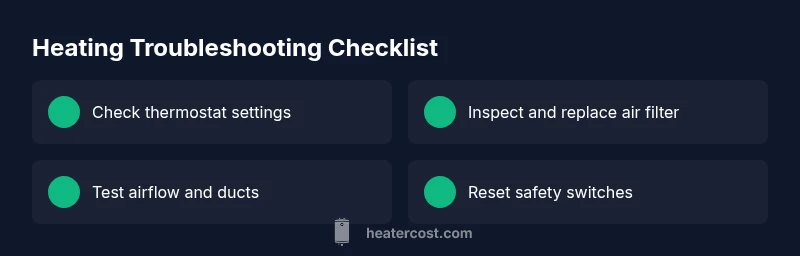
Check thermostat settings
Confirm the thermostat is set to heat and higher than room temperature. If it’s a programmable model, verify that there are no overrides or schedule conflicts. Allow the system to cycle on and observe whether the fan and burner engage.
Tip: If your thermostat is near a heat source or in direct sun, relocate it to a more neutral spot for accurate readings. - 2
Inspect and replace the air filter
Power down the furnace and remove the filter. If it’s visibly dirty or discolored, replace it with a filter of the correct size and MERV rating recommended by the manufacturer. A clean filter improves airflow and reduces heat loss.
Tip: Mark a calendar reminder to replace filters every 1–3 months during heating season. - 3
Test for airflow and duct issues
With the system off, check for obvious blockages near vents and return air grilles. Inspect accessible ductwork for kinks, crushing, or disconnected joints. Ensure registers are fully open.
Tip: A quick hot air check from multiple rooms helps identify localized blockages vs. systemic airflow problems. - 4
Reset safety switches and power cycle
Turn off the furnace at the thermostat and switch off the circuit breaker for 30 seconds before turning it back on. If a safety switch tripped, you should see the system attempt to restart after the reset.
Tip: Avoid repeatedly cycling the furnace in quick succession; allow a minute between attempts to prevent overheating. - 5
Assess ignition and gas supply (if applicable)
Gas furnaces require proper ignition and gas flow. Do not attempt to repair gas lines or lighting components unless trained. If you notice a gas odor, evacuate and call emergency services.
Tip: If you’re unsure about the ignition state, contact a licensed HVAC technician rather than attempting risky fixes. - 6
Call in a professional if necessary
If you’ve completed the above steps and the heater still isn’t providing heat, a licensed technician can perform a comprehensive diagnostic, test combustion safety, and verify venting and blower operation.
Tip: Document any fault codes or unusual sounds to share with the technician to speed up diagnosis.
Diagnosis: Furnace not delivering hot air
Possible Causes
- highThermostat mis-settings or poor calibration
- highClogged air filter or restricted airflow
- mediumTripped safety switch or limit shutoff
- mediumGas supply issues or ignition failure
- lowBlower motor or belt failure
Fixes
- easyVerify thermostat is set to heat and increases temp; toggle fan to auto
- easyReplace the air filter and check for blocked ducts
- easyReset furnace or circuit breaker if a safety switch tripped
- hardInspect gas supply and ignition only if trained; contact a pro for ignition issues
- mediumIf issues persist, schedule professional HVAC service for diagnostic and potential part replacement
Got Questions?
Why isn't my thermostat accurately reflecting the room temperature?
Thermostat location, calibration, and design can cause reading inaccuracies. Move the sensor away from heat sources or drafts, calibrate if supported, and consider upgrading to a smart thermostat with better sensor rules. If readings remain inconsistent, seek professional calibration.
If your thermostat reads the room wrong, check its location and calibration. Consider upgrading or consulting a pro if readings stay inconsistent.
Can I fix a pilot light or ignition myself on a gas furnace?
Light ignition issues can be dangerous. If you suspect a gas issue, do not attempt repairs. Consult a licensed HVAC technician who can safely diagnose and fix ignition or gas-supply problems.
I don’t recommend DIY ignition work. Call a licensed HVAC technician for ignition or gas-related problems.
What should I do if vents are warm but not hot?
Warm vents often indicate restricted airflow or a partially blocked burner. Start with replacing the air filter, inspecting ducts, and ensuring the blower is functioning. If the issue persists, a professional check is advised.
If vents are warm but not hot, check airflow and filtration first, then get a pro if needed.
How often should I schedule furnace maintenance?
Most homes benefit from an annual professional furnace tune-up. Regular checks improve safety, efficiency, and reliability, reducing the risk of unexpected cold nights.
Annual furnace tune-ups are recommended for safety and efficiency.
I smell burning or see smoke from the furnace. What now?
A burning odor or smoke is a red flag for a serious issue. Turn off the unit, ventilate the area, and contact a professional immediately. Do not operate the furnace again until inspected.
If you smell burning, turn off the furnace and call a professional right away.
Is it safe to run the furnace if I suspect a gas issue?
No. A suspected gas issue requires immediate evacuation and calling emergency services or your gas provider. Do not light matches, switch on lights, or use electrical devices in the area.
If you suspect a gas issue, evacuate and call emergency services—do not use electricals or lights.
The Essentials
- Check thermostat first, then filter and airflow.
- Symptoms often point to airflow bottlenecks or thermostat errors.
- Safety comes first—call a pro for gas, flame, or electrical concerns.
- Regular maintenance prevents cold nights and high energy bills.