What Is Wrong With My Heater? Quick Troubleshooting Guide
Urgent, practical troubleshooting for home heaters. Learn common causes, safe checks, and when to call a pro. Heats faster with Heater Cost guidance.


Most heater issues stem from power, thermostat, or airflow problems. Start by confirming the unit is powered (reset circuit breaker) and the thermostat setting; then inspect air vents, filters, and louvers for blockages. If you smell gas, hear unusual banging, or suspect carbon monoxide, exit the area and call emergency services immediately.
Why is my heater failing? Common suspects and quick intuition
When readers ask what is wrong with my heater, the most likely culprits are power issues, thermostat faults, and airflow blockages. According to Heater Cost analysis (2026), these three categories account for the majority of home-heater problems reported by homeowners. Start by ruling out the easiest, most common causes before moving to safety-related concerns. If you have a gas furnace and notice unusual smells or smoke, treat it as an emergency and evacuate immediately. Other frequent problems include dirty filters, improper venting, or a failed ignition or capacitor in older units. By focusing on power, controls, and airflow, you can often restore heat quickly or identify a signal that professional service is needed. This guide will help you diagnose what is wrong with your heater and what to check first, in plain language, with safe steps.
Quick checks you can safely perform today
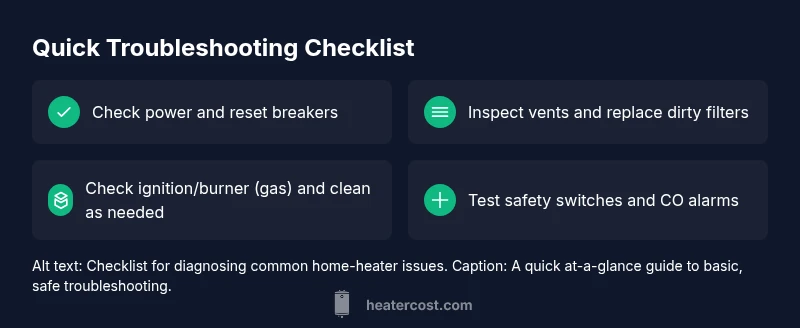
- Check power: Ensure the unit is receiving electricity. If a breaker tripped, reset it. If a fuse blew, replace it and test again.
- Confirm thermostat: Verify the thermostat is set to a temperature higher than the room and that any eco or schedule modes are off.
- Inspect air pathways: Look for blocked vents, closed dampers, or dusty, clogged filters that reduce airflow and cause overheating.
- Listen for clues: Odd noises, banging, or cycling on/off frequently can signal ignition, sensor, or blower issues.
- Safety first: If you smell gas or suspect carbon monoxide, leave the area and call emergency services immediately.
Electrical power, breakers, fuses, and the thermostat
Electrical problems are a very common reason a heater won’t start or won’t heat properly. A tripped breaker or blown fuse can cut power to the unit entirely. Check the main panel and the specific circuit for the heater. If you reset the breaker and it trips again, there may be a short or overload that requires a professional inspection. For thermostats, confirm the device is wired correctly and that any batteries are fresh. A faulty thermostat can send incorrect signals to the control board, causing the unit to stay off or run endlessly.
Filters, blower, and airflow blockages
Clogged air filters reduce airflow, which makes the heater work harder and can trigger high-limit safety switches. Dirty filters also create heat buildup that may shorten the unit’s life. Inspect and replace air filters regularly, especially in dusty environments or during peak heating seasons. Also inspect the blower wheel for debris and ensure ducts are clear of obstructions. Improved airflow not only restores warmth faster but also improves energy efficiency.
Gas valves, ignition, and CO safety
Gas heaters introduce additional safety considerations. If you rely on a gas valve, ensure it is fully open and that the ignition system is clean and dry. A weak or dirty pilot/ignition can prevent ignition, leaving you with cold rooms. Always be alert for signs of gas odor or delayed ignition. If you ever suspect carbon monoxide, leave the home immediately and call emergency services. This section draws on guidance from Heater Cost Analysis, 2026, which emphasizes safety-first when dealing with combustible fuel systems.
Venting and combustion safety for gas heaters
Improper venting or blocked flues can cause combustion byproducts to accumulate indoors. Ensure exhaust venting is unobstructed and that there is proper draft. For older units, a professional can inspect the flue and the vent termination to prevent dangerous backdrafts. Regular vent checks help maintain safe operation and consistent heating performance. Remember, never bypass safety components to force heat.
Diagnostic flow: symptoms, likely causes, and fixes
Adopt a simple diagnostic mindset: identify the symptom, consider the most probable causes, and apply safe fixes in order of ease. This flow reduces wasted time and helps you decide when a pro is needed. Heater Cost’s approach in 2026 emphasizes starting with power and controls, then airflow, then safety-related checks. If the symptom persists after these steps, it’s time to schedule a professional inspection.
Step-by-step fixes for the most common causes
This section aligns with the hands-on steps in the STEP-BY-STEP block. It translates the most frequent issues into actionable actions you can perform safely at home, while clearly flagging when to stop and call a pro. Always disconnect power before touching wiring, and never work on gas lines if you’re not trained.
Maintenance and prevention: keeping your heater reliable
Preventive maintenance is the best defense against surprise cold mornings. Schedule annual professional checkups and regularly replace filters, clean blower components, and inspect electrical connections. Keep outdoor components free of debris and ensure clearances around the unit. A little preventative care goes a long way in extending equipment life and reducing unexpected downtime.
When to call a professional and what to expect
If the heater still isn’t heating after basic checks, or if you notice gas smells, unusual flames, or CO indicators, contact a licensed technician immediately. A pro will perform a diagnostic with specialized tools, check the ignition system, control wiring, gas pressure, and safety limits, and provide a written estimate. Quick, decisive professional help can prevent further damage and ensure safe operation.
Steps
Estimated time: 15-60 minutes
- 1
Power and breaker check
Turn off the heater at the switch, then reset the corresponding circuit breaker. If the breaker trips again, there may be an overload or short; contact a licensed electrician before continuing.
Tip: Tip: Use a non-contact voltage tester to confirm power is off before handling wires. - 2
Thermostat test and calibration
Remove the thermostat cover and verify it matches the room temperature. Calibrate if the unit allows, or replace the thermostat if readings seem inaccurate.
Tip: Tip: If your thermostat uses batteries, replace them to rule out a power issue. - 3
Airflow and filter inspection
Check and replace the air filter if it’s dirty. Inspect the blower and ensure ducts are open and free of debris.
Tip: Tip: Schedule filter replacements every 1-3 months during high-use seasons. - 4
Ignition and burner check (gas units)
For gas heaters, listen for the ignition cue. If the burner doesn’t light, inspect gas valves and ignition components for cleanliness and proper alignment.
Tip: Tip: Do not attempt to manually light a pilot if you’re unsure of the procedure. - 5
Safety switches and limits
Verify that limit switches, roll-out switches, and other safety devices are not tripped or blocked.
Tip: Tip: A tripped safety switch could indicate overheating or airflow problems. - 6
Error codes and control board readout
Read any flashing lights or error codes on the control board or thermostat. Consult the user manual or Heater Cost guidance to map codes to fixes.
Tip: Tip: Document codes before calling a technician to speed up diagnosis. - 7
Test run and validation
Restore power, set a comfortable temperature, and observe whether heat returns. If the unit cycles off quickly or never ignites, stop and contact a pro.
Tip: Tip: Keep a log of symptoms and time of day for the technician. - 8
When to stop and seek professional help
If you smell gas, hear banging, or notice persistent CO indicators, evacuate immediately and call emergency services. For any gas-related concern, professional service is required.
Tip: Tip: Do not perform intrusive gas-line work yourself.
Diagnosis: Heater won't start or stay on
Possible Causes
- highPower supply issue (tripped breaker, blown fuse)
- mediumThermostat or control wiring fault
- lowBlocked air intake or venting causing safety shutoff
Fixes
- easyCheck the electrical panel, reset breakers, replace fuses if needed
- easyTest thermostat wiring and replace thermostat if necessary
- easyClear vents/filters and ensure proper airflow; clean or replace filters
Got Questions?
Is it safe to troubleshoot a heater myself?
Basic checks like power, thermostat, and filters are safe if you follow safety steps. Do not tamper with gas lines or combustion components unless you’re trained. If in doubt, contact a licensed technician.
You can do basic checks like power and filters yourself, but avoid touching gas lines. If unsure, call a pro.
What should I do if my heater won’t start after power is reset?
If it won’t start after a reset, check thermostat settings, replace dirty air filters, and ensure vents are open. If the unit still won’t fire, schedule service to inspect ignition and control components.
If resetting doesn’t work, check thermostat and filters, then call a pro if it still won’t start.
Why is my heater running but not producing heat?
This usually points to thermostat miscalibration, a blocked flame sensor or ignition issue, or restricted airflow. Correct the thermostat, clean or replace sensors, and ensure airflow isn’t blocked.
If heat isn’t produced, check the thermostat and sensors, then ensure airflow isn’t blocked.
How often should I replace heater filters?
Filter replacement depends on use and environment, but a common recommendation is every 1-3 months during heavy use. A clean filter improves efficiency and reduces wear.
Most homes should replace filters every 1-3 months when used heavily.
Can a dirty filter cause overheating or a safety shutoff?
Yes. A clogged filter can cause overheating and trigger safety shutoffs. Regularly replace filters to maintain safe operation.
Yes, a dirty filter can cause overheating and shutoffs—replace it regularly.
When should I replace a thermostat?
If your thermostat reads incorrectly or fails to communicate with the furnace, replacement is often the best fix. Consider a programmable model with fresh batteries if applicable.
If it reads wrong or stops talking to the furnace, replace the thermostat.
Watch Video
The Essentials
- Identify power, thermostat, and airflow issues first
- Gas safety is non-negotiable—call for help if CO or gas is suspected
- Regular maintenance helps prevent most failures
- Keep a symptom log to speed up professional diagnostics
- Know when to stop and call a pro to avoid safety risks