Why Is My Heater Not Working: An Urgent Troubleshooting Guide
Urgent, practical guidance to diagnose why your heater isn’t working. Learn safety checks, diagnostic flow, and step-by-step fixes to restore heat efficiently.


The most common reasons a heater won’t start are power/thermostat issues, a tripped circuit breaker, a closed gas valve, or a clogged air filter. Start with the basics: verify thermostat settings, inspect the circuit breaker, and ensure the system switch is on. If heat still won’t come, shut off power and contact a qualified professional.
Why this matters when you ask why is my heater not working
When your home goes cold, every minute counts. The quickest path to a warmer space starts with simple checks you can do safely, then moves to more detailed diagnostics. By addressing the most common culprits first—thermostat misreads, power issues, and airflow blockages—you can often restore heat without costly service. This guide emphasizes urgent, actionable steps, with a focus on safety and prevention. According to Heater Cost, homeowners who tackle the basics promptly save time and reduce repair costs.
Immediate safety checks you can perform safely
Safety comes first. Begin by turning off the unit before inspecting any internal components. Check that the thermostat is set higher than the ambient temperature and that the circuit breaker for the furnace or heater panel is not tripped. Inspect accessible air filters and replace if dirty. If you smell gas or detect a chemical odor, leave the area, call emergency services, and do not relight the appliance. These quick checks address the most frequent causes of a sudden loss of heat and reduce the risk of damage or injury.
Understanding thermostat and control settings on your unit
A misread thermostat is a common reason for a cold home. Verify the thermostat is set to heat, not cool, and that the mode aligns with the system (gas, electric, or oil). Confirm the temperature differential is appropriate and that any scheduling settings are correct. If the thermostat is old or unresponsive, consider replacing it with a modern programmable model. A failing control can mimic a “not working” heater, so this check is essential to rule out control issues.
Diagnostic flow overview: symptom to solution
This section maps symptoms to likely causes, followed by practical fixes. Common symptoms include no power, no heat, intermitted heat, and unusual cycling. Start with high-likelihood causes like power or thermostat problems, then progress to gas supply or ignition issues if applicable. Keep safety in mind; if you’re unsure, skip ahead to professional help. A structured flow helps you avoid chasing rare faults when a simple fix exists.
Step-by-step fixes for the most common issue (no heat due to power/thermostat)
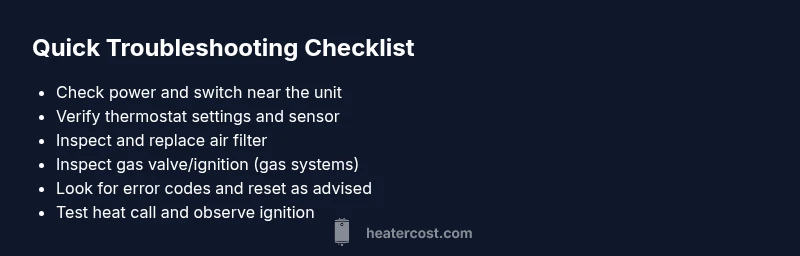
- Verify power at the outlet and switch: ensure the furnace switch is on and the wall outlet is supplying electricity. Pro tip: test a lamp in the same outlet to confirm power before touching any furnace wiring. 2) Reset the breaker: flip the furnace circuit breaker off, wait 15 seconds, and switch it back on. If it trips again, do not continue; this indicates a larger electrical issue. 3) Inspect the thermostat wiring: loose or corroded connections can cause quiet failures. Tighten terminals and replace the thermostat if it’s outdated. 4) Check for a system lockout or error codes: many furnaces display a flashing light or code. Consult your model’s manual to interpret codes and perform recommended resets. 5) Replace or clean the air filter: a clogged filter can starve the system of air, triggering a fault or reduced performance. 6) Reignite safety controls (if gas): for gas furnaces with pilots or electronic ignitions, ensure the gas supply is on and ignition components are clean. 7) Listen for ignition sounds: a click followed by consistent flame indicates good operation; if you hear no ignition, this points to ignition or gas supply issues. 8) Test a basic heat call: set to heat and observe whether the furnace fires within a few minutes. If it doesn’t, move to professional assessment.
tip1_details":"Pro tip: keep a simple log of power resets and thermostat changes to identify patterns over time.",
Steps
Estimated time: 60-120 minutes
- 1
Check power supply and system switch
Begin by ensuring the furnace is receiving power. Check the wall switch near the unit and the circuit breaker for the furnace panel. If the breaker trips, reset it; if it immediately trips again, stop and call a professional.
Tip: A stuck switch or a marginal outlet can mimic a power issue. - 2
Inspect thermostat settings
Verify the thermostat is set to heat, and that the setpoint is higher than room temperature. If the display is dim or unresponsive, replace the thermostat.
Tip: Old thermostats can fail to communicate with newer systems. - 3
Check and replace air filter
A dirty filter reduces airflow and can trigger safety shutoffs. Replace with the correct size and recheck system operation.
Tip: Record the date of replacement to track maintenance intervals. - 4
Inspect gas valve and ignition (gas systems)
Ensure the gas supply valve is open and the ignition system is clean and functioning. Do not attempt repairs if you smell gas.
Tip: If you smell gas, evacuate and call authorities. - 5
Look for error codes and reset if advised
Many furnaces display fault codes. Use the manual to interpret codes and perform the manufacturer-recommended reset.
Tip: Document codes for technician reference. - 6
Run a test heat call
Set the thermostat to heat and listen for ignition or burner activity within a few minutes. If no heat, proceed to professional assessment.
Tip: Some units need a cool-down period before re-attempt. - 7
Check venting and condensate drain
Blocked vents or full condensate traps can cause shutdowns. Clear obstructions and ensure proper drainage.
Tip: Never bypass condensate safety switches. - 8
Schedule professional inspection
If heat still doesn’t return, a licensed technician should inspect for gas leaks, electrical faults, or failing components.
Tip: Document symptoms and times you noticed heat loss to help the tech diagnose faster.
Diagnosis: No heat or furnace won't start
Possible Causes
- highPower issue (tripped breaker/outlet dead)
- highThermostat misread or wiring fault
- mediumGas valve closed or ignition failure (gas systems only)
- mediumAirflow restriction (clogged filter or dirty convection paths)
- lowSystem lockout or safety switch activated
Fixes
- easyCheck the furnace switch and main circuit breaker; reset if tripped
- easyTest and reset thermostat connections; replace if faulty
- mediumConfirm gas supply and ignition operation (for gas systems)
- easyClean or replace the air filter and inspect ducts for blockages
- easyConsult the manual for error codes and perform manufacturer-recommended resets
Got Questions?
Why won’t my heater turn on at all?
No heat at startup is frequently due to a tripped breaker, blown fuse, or thermostat misread. Verify power, confirm thermostat settings, and inspect the furnace switch. If these steps don’t help, a professional should diagnose electrical or control issues.
No heat at startup is usually from a power or thermostat issue. Check power, thermostat settings, and the furnace switch, then call a pro if it still won’t start.
What should I check first if the thermostat is set correctly?
If the thermostat is set correctly but there’s no heat, inspect the wiring for loose connections, test the sensor, and consider replacing an old unit. A modern programmable thermostat often resolves stubborn failures.
If the thermostat seems fine but there’s no heat, check wiring connections and sensor function, and consider replacing an old thermostat.
Is it safe to reset a furnace by flipping breakers?
Resetting can solve minor control glitches, but repeated resets may hide a bigger problem. If the breaker trips again after a reset, stop and contact a licensed technician.
Resetting can fix small glitches, but if breakers keep tripping, you should get a professional to inspect electrical components.
Why is there a banging, popping, or grinding noise from my heater?
Unusual noises often indicate loose parts, expansion/contraction of metal, or dirty burners. Shut off power and have a technician inspect mounting hardware, burner alignment, and ductwork to prevent damage.
Noises like banging usually mean a loose part or burner issue—shut off power and have a pro check it.
How often should I change the air filter to prevent problems?
Most homes benefit from a monthly to quarterly filter change, depending on usage, HVAC type, and pets. Regular replacement improves airflow and reduces strain on the system.
Change the air filter every 1-3 months, depending on use and household needs.
When should I call a professional for a heater issue?
If you smell gas, hear gas hissing, see carbon monoxide indicators, or the unit won’t restart after basic checks, contact a licensed technician immediately. Don’t attempt risky gas-related fixes yourself.
Call a professional if you smell gas or if basic checks don’t restore heat.
The Essentials
- Identify power/thermostat issues first
- Safely check gas and ignition on gas systems
- Replace dirty air filters to restore airflow
- Use codes and manufacturer guidance for resets
- Call a pro for safety-sensitive problems
- Document symptoms to speed up diagnosis