Why Is My Heater Not Turning On? A Complete Troubleshooting Guide
Discover why your heater won't turn on and follow a practical, step-by-step troubleshoot guide. Learn safety checks and when to call a professional.


Most often, a heater won't turn on because of a power issue, a tripped breaker, or a faulty thermostat. Start with the basics: confirm the outlet is live, reset the circuit, and verify the thermostat is set to heat with fresh batteries if needed. If it still won't start, follow the steps below for a safe, thorough diagnosis.
Understanding the Problem: why is my heater not turning on
If you're asking why is my heater not turning on, you're not alone. A not-starting heater can be caused by power issues, thermostat misreads, safety switches, or fuel supply problems. According to Heater Cost, homeowners who quickly confirm basic power and settings can avoid a costly service call and often fix simple faults in minutes. In this guide, we’ll walk through a practical, safe troubleshoot path that you can perform yourself before reaching for tools or a professional. The aim is to restore heat quickly and safely while protecting your equipment. Throughout this article we’ll reference common failure points, provide a clear diagnostic flow, and include a plan you can follow step by step. If you’re new to home maintenance, don’t worry — we’ll keep explanations plain and actionable. Remember: any work involving gas, electricity, or the risk of fire should be approached with caution and, when in doubt, call a professional. This is especially important if your model has a history of flashing codes or you smell gas in the area.
Safety First: Immediate steps before you touch the furnace
Before you touch any components, cut power to the heater at the switch or circuit breaker and, for gas models, turn off the gas supply if safe to do so. Wear eye protection and gloves if you’re inspecting components. Keep children and pets away. Check the area for gas leaks or scorch marks; if you suspect a gas issue, exit and call your utility or a pro immediately. Do not bypass safety switches or operate a furnace with open access panels. These precautions help prevent shocks, burns, or gas exposure.
Common Causes at a Glance
The reasons your heater won't turn on vary, but the usual suspects are straightforward to test. - Power supply issues and tripped breakers. - Thermostat settings or dead batteries. - Gas supply problems or a failed ignition. - A safety switch or overheat condition. Heater Cost analysis shows that most non-starts are resolved by addressing these basics, underscoring the value of a systematic approach rather than guessing. Let’s examine each in brief.
Safe Basic Tests You Can Perform
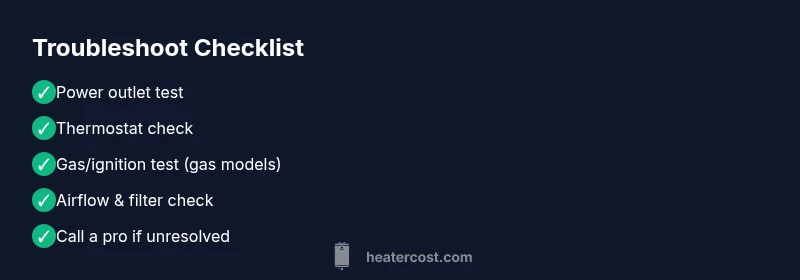
These checks are designed to be quick, safe, and effective. If at any point you identify a fuel leak, a strong burning smell, or you feel unsure, stop and contact a professional. - Confirm the thermostat is set to heat and review any recent programmable settings. If batteries are weak, replace them and recheck. - Check the power source: ensure the outlet is live by plugging in another device or using a tester; inspect the wall switch and any reset buttons on the furnace. - Inspect the circuits: look for a tripped breaker or blown fuse; reset or replace as needed. - For gas furnaces: verify the gas valve is open and the pilot light or electronic ignition is functioning. - Bypass nothing permanent; if the unit remains unresponsive, proceed to deeper diagnostics.
In-Depth Diagnostic Flow
This section expands on a logical, step-by-step diagnosis. Start with the simplest, lowest-risk checks and move toward more involved tests only if earlier steps fail. - Symptom: Heater won’t turn on. Start by confirming power and thermostat. If those are fine, test the furnace switch and circuit breakers. - If the breaker trips again, there is likely an electrical fault or short; do not bypass this. - If power is steady, inspect the thermostat control wiring and battery health. - If you have a gas heater, check the gas valve, pilot light, and ignition module for signs of failure. - If the unit passes all these checks but still won’t ignite, consider the limit switch, blower motor, and control board as potential culprits. - When in doubt, log codes from the furnace’s display and cross-check with your manual or Heater Cost’s guides.
Maintenance to Prevent Future Failures
Prevention is cheaper than repair. Regular upkeep keeps your system reliable and efficient. - Change air filters every 1-3 months depending on usage and filter type to protect airflow. - Schedule annual professional inspections to catch worn components, gas leaks, or electrical faults early. - Keep vents clear and examine ductwork for obstructions that impede heat distribution. - Test the thermostat routinely and replace batteries at least once a year. - Maintain a simple log of any codes or odd noises to help future diagnostics.
When to Call a Professional
Some issues require a licensed technician. If you notice gas smells, carbon monoxide indicators, persistent tripping of breakers, or repeated ignition failures after basic tests, contact a pro promptly. Do not attempt gas line work or disassemble high-voltage components beyond basic safety checks without training. A professional can diagnose complex control boards, heat exchangers, and venting problems safely.
Steps
Estimated time: 30-60 minutes
- 1
Verify Power and Switches
Start by confirming the heater is receiving power. Check the outlet, power cord, and any switch at the furnace or wall. A tripped breaker or a blown fuse is a common culprit; reset or replace as needed. If the outlet is dead, do not continue; resolve the power issue first.
Tip: Use a known-good device to confirm the outlet works. - 2
Test the Thermostat
Ensure the thermostat is set to heat and not to cool. If battery-powered, replace the batteries and reprogram any schedules. A misconfigured thermostat can prevent your unit from starting even when other systems are fine.
Tip: Keep a simple, constant thermostat setting while testing. - 3
Check the Gas Supply (Gas Models)
For gas heaters, verify the gas valve is open and the pilot light or ignition module is functioning. If you smell gas or cannot ignite, evacuate and call the gas utility or a professional.
Tip: Never attempt to relight a pilot if you’re not sure about safety. - 4
Inspect Safety Features
Look for a tripped safety switch, a closed access panel, or an overheat condition. Safety interlocks protect against fires and injuries, but they can prevent normal startup until reset or repaired.
Tip: Only reset safety switches when you’re certain there’s no hazard. - 5
Check Airflow and Filters
A clogged filter or blocked vents can cause the system to shut down. Replace or clean filters and ensure ducts are unobstructed to restore proper airflow.
Tip: Set up a routine to replace filters on a schedule. - 6
Test Start-Up Again and Plan Next Steps
After completing the above, try starting the heater once more. If it still won’t start, note any error codes and consider scheduling a professional visit to test burners, heat exchangers, and control boards.
Tip: Document error codes to speed up diagnosis.
Diagnosis: Heater won't turn on
Possible Causes
- highPower issue or outlet not live
- highTripped circuit breaker or blown fuse
- highThermostat misconfiguration or dead batteries
- mediumGas supply issue or ignition failure (gas models)
- mediumSafety switch triggered or overheat condition
- lowFuel supply issues or restricted airflow (blocked vent/dirty filter)
Fixes
- easyCheck outlet with another device and reset any wall switch; if still off, test the circuit breaker and reset if needed.
- easyReplace thermostat batteries or replace the thermostat if it’s faulty; re-test heat call.
- easyReset the furnace circuit breaker or replace a blown fuse if safe to do so.
- mediumInspect gas supply and ignition (pilot light or electronic ignition) if you have a gas heater; do not bypass safety steps.
- easyInspect and clear any obvious airflow obstructions; replace air filter if clogged.
- mediumIf problems persist after these steps, schedule a professional service to check the heat exchanger, burners, and control board.
Got Questions?
Why won't my heater turn on even though the outlet is powered?
If the outlet is powered but the heater still won’t start, check the thermostat, furnace switch, and breaker. A misread thermostat or a tripped circuit is a common reason. If these basics don’t fix it, move through the diagnostic steps in this guide.
If the outlet works but the heater won’t start, check the thermostat and circuit breaker first, then follow the steps here.
Could a dead thermostat battery stop my heater from turning on?
Yes, many modern thermostats rely on batteries. Replace the batteries and re-test the heat call. If it still won’t start, inspect wiring and consider upgrading to a newer, reliable thermostat.
A dead thermostat battery can stop heat from turning on, so replace batteries and re-test.
Is it safe to reset the furnace or thermostat myself?
Yes, for basic safety resets you can power down, wait 30 seconds, and power back up. Do not reset safety interlocks or service panels beyond basic steps. If the issue persists, contact a pro.
A basic reset is usually safe, but avoid tampering with safety features.
What should I check if the pilot light is out on a gas heater?
For gas heaters, a out pilot light can indicate gas supply or ignition problems. Ensure the gas valve is open and follow the manual’s pilot relight procedure if you’re trained to do so. If there’s any gas smell, leave the area and call the utility.
If the pilot light is out, follow the manual to relight if safe; otherwise call a pro.
When should I call a professional for a non-starting heater?
If basic checks don’t restore heat, if you smell gas, hear unusual noises, see error codes you can’t interpret, or suspect a faulty heat exchanger or electrical board, it’s time to call a licensed technician.
Call a professional if basic checks fail, you smell gas, or you see code errors you can’t fix.
Can a dirty air filter cause no heat even when the thermostat is set correctly?
A clogged air filter can trigger a no-heat condition by restricting airflow. Replace or clean the filter and restart the system to see if heat returns.
A dirty filter can stop heat; change it and test again.
The Essentials
- Start with power and thermostat checks.
- Reset breakers and verify the gas supply only if safe.
- Follow a step-by-step diagnostic path instead of random fixes.
- Call a pro for gas issues or suspected electrical faults.
- Keep up with preventive maintenance to avoid no-heat problems.