When Your Heater Isn’t Working: Quick Troubleshooting Guide
Urgent, practical steps to diagnose and fix a heater that won't run. Safe checks, diagnostic flow, and maintenance tips from Heater Cost.


When the heater is not working, start with quick, safe checks and simple fixes. Verify the thermostat, power supply, and air filters, then reset breakers or fuses as needed. If you smell gas, hear banging, or CO is detected, leave the area and call a pro immediately. Many issues resolve with basic resets or maintenance.
Common causes of a non-working heater
When the heater is not working, there are a handful of causes homeowners can check quickly. The most common are thermostat misconfigurations or dead batteries, a tripped circuit breaker, a clogged air filter restricting airflow, and a pilot light or ignition issue on gas units. In electric furnaces, failed limit switches or blown fuses are frequent culprits. In some homes, a blocked vent or improper combustion air can cause the system to shut down to protect itself. According to Heater Cost, understanding these common causes helps you triage safely without unnecessary part swaps. Recognizing the problem early saves energy and reduces risky missteps.
Quick safety checks you can perform safely
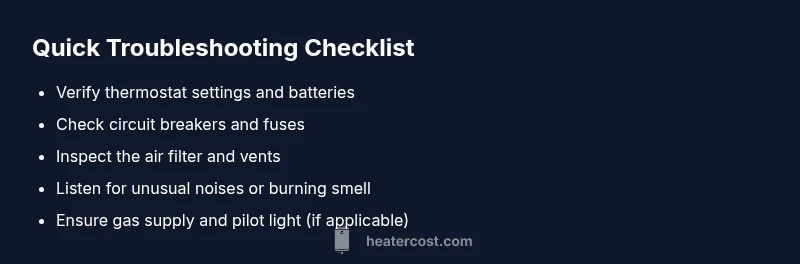
- Check thermostat settings and replace batteries if needed; ensure it is calling for heat.
- Inspect the service panel for a tripped breaker or blown fuse, then reset or replace as appropriate.
- Look at air filters and vents: a dirty filter can cause the system to overheat or shut down.
- For gas furnaces, do not attempt to relight a pilot unless you are trained; if in doubt, contact a professional.
- If you smell gas or hear unusual banging or popping, leave the area immediately and call emergency services.
- Install and test CO detectors near sleeping areas and living spaces. These checks reduce risk and buy time for a proper diagnosis.
Diagnostic flow: symptom → diagnosis → solutions
A non-working heater typically starts with a simple symptom (no heat). The most likely causes are a power issue, thermostat problems, or airflow restrictions. Less common but critical causes include ignition failures and gas supply interruptions. Start with power and thermostat checks, then examine filtration and airflow. If basic resets don’t help, escalate to professional assessment, especially with gas or electrical concerns. Heater Cost recommends documenting what you test and the results to speed up future services.
Step-by-step fixes for the most common issue
Below is a structured approach to resolve the most frequent problems. If at any point you encounter safety concerns (gas smell, carbon monoxide, exposed wiring), stop and call a professional. Use these steps in sequence to avoid wasted time and money.
Safety reminders and when to call a professional
Safety is non-negotiable when your heater isn’t working. Never work on gas lines or electrical components while the system is energized. If you smell gas, hear hissing, or CO detectors alert, evacuate and call emergency services. Regular maintenance by a licensed technician can prevent emergencies. For ambiguous symptoms, or if you’re uncomfortable with any step, contact a pro immediately. Heater Cost emphasizes that proactive safety and honest triage are essential.
Maintenance tips to prevent future failures
- Schedule annual professional checkups and routine filter changes to maintain efficiency.
- Keep vents clear of furniture and debris; ensure there is adequate outdoor clearance for intake and exhaust.
- Replace batteries in the thermostat and consider upgrading to a programmable model for energy savings.
- Test safety devices (CO detectors, flame sensors) regularly and replace their batteries on a set schedule.
- Log issues as they occur to spot recurring patterns that indicate a larger system problem.
When to replace vs repair: cost considerations
Deciding between repair and replacement hinges on the system’s age, efficiency, and the frequency of failures. If repairs become recurrent or if energy costs rise sharply, replacement may offer a better long-term value. Costs vary by system type, installation complexity, and regional labor rates. For homeowners, understanding the rough cost spectrum helps you budget and plan. Heater Cost’s guidance emphasizes evaluating long-term reliability and energy efficiency before committing to a major repair or replacement.
What to do next: plan your next steps
If basic checks restore heat, schedule a professional inspection within the same season to prevent a rerun of the issue. If you must replace the unit, compare energy-efficiency ratings and total lifetime cost, not just upfront price. Keeping a written maintenance calendar and a simple issues log will help you catch problems early and reduce unexpected outages.
Steps
Estimated time: 45-60 minutes
- 1
Power cycle the system
Turn off the breaker for the heater, wait 60 seconds, and turn it back on. This can reset control boards and clear minor faults. Listen for the system to engage and begin a heat cycle.
Tip: If the breaker trips again, there’s a fault in the electrical circuit; stop and call a professional. - 2
Test the thermostat
Set the thermostat to a heat setting higher than the current room temperature. If the unit doesn’t respond, replace the thermostat batteries or consider upgrading to a programmable model. Re-sync the thermostat with the furnace if required.
Tip: Keep the thermostat away from drafts and heat sources to avoid false readings. - 3
Inspect and replace the air filter
Remove the filter and check for dirt buildup. A clogged filter reduces airflow and can cause the system to overheat or shut down. Replace with a filter of the correct size and MERV rating.
Tip: Mark a monthly reminder to check filters; a dirty filter is a common cause of outages. - 4
Check gas supply and ignition (gas units)
If you have a gas furnace, confirm the gas valve is open and the pilot light, igniter, or electronic ignition is functioning. If you see a lack of flame or a flicker, do not attempt risky relighting; contact a pro.
Tip: Never attempt to run a furnace if you smell gas or hear a hissing noise. - 5
Assess ignition and control components
For electric furnaces, inspect the ignition system and safety sensors. Look for obvious wear on the igniter or sensors; replace with manufacturer-approved parts.
Tip: Unplug the unit before inspecting electrical components; avoid touching exposed wiring. - 6
Test operation and safety devices
Power the system back on and observe for proper operation. Test CO detectors and ensure there are no warning alarms after restart. If issues persist, schedule professional service.
Tip: CO detectors should be tested monthly and replaced per the manufacturer’s schedule.
Diagnosis: Furnace or space heater won't produce heat
Possible Causes
- highPower issue (tripped breaker, blown fuse, unplugged outlet)
- mediumThermostat misconfiguration or dead batteries
- lowAirflow restriction due to dirty filter or blocked vents
- lowGas supply interruption or ignition failure (gas units)
Fixes
- easyReset circuit breaker or replace blown fuse; restore power to the unit
- easyReplace thermostat batteries and confirm correct temperature setting; re-pair with system if needed
- easyReplace or clean air filter; ensure supply and return vents are unobstructed
- mediumInspect gas valve and ignition system for gas furnaces; relight pilot only if trained to do so safely; otherwise call a pro
- mediumCheck ignition module or ignition sensor for electric furnaces; replace if worn or damaged
- hardIf you suspect carbon monoxide or odor of gas, evacuate and call emergency services; do not retry troubleshooting
Got Questions?
What should I check first if my heater isn't working?
Begin with safety: confirm power, thermostat settings, and a clean air filter. If the unit still won’t heat, move to the diagnostic flow and escalate to a professional if gas or electrical concerns arise.
Start with power and thermostat checks, then examine the air filter. If it still fails, follow the diagnostic steps or call a pro for gas or electrical issues.
How do I know when to call a professional?
Call a professional if you smell gas, hear abnormal noises, or if basic checks do not restore heat, especially with gas furnaces or electrical components involved.
Call a professional if you smell gas or hear unusual noises, or if basic checks don’t restore heat.
Can I DIY safely if I have limited tools?
Yes for simple checks like thermostat batteries and air filters. Avoid gas lines and live electrical components unless you’re trained; safety comes first.
Basic checks are okay if you stay in safe territory; avoid touching gas lines or exposed wiring unless trained.
How long does a typical repair take?
Most common fixes can be completed within a few hours if replacement parts aren’t required. More complex issues may require scheduling and parts delivery.
Most fixes take a few hours, while more complex problems may need scheduling.
Should I replace the thermostat or the whole unit?
Thermostat issues are often easier and cheaper to fix. If problems persist or the system is old, a full replacement may be more cost-efficient in the long run.
Start with the thermostat; if issues recur, evaluate if a full replacement makes sense.
What maintenance prevents future failures?
Regular filter changes, annual professional checkups, and proper airflow maintenance reduce the likelihood of outages and improve efficiency.
Keep up with maintenance to avoid surprise failures.
What safety concerns should I be aware of?
Never ignore a gas smell or CO detector alarm. If detected, evacuate and call emergency services. Install and test CO detectors in living areas.
Safety first—gas and CO risks require immediate action.
Watch Video
The Essentials
- Start with safety and basic checks before anything else.
- Thermostat, power, and airflow are the most common causes.
- Gas and electrical issues require professional intervention.
- Maintenance dramatically reduces future outages.