Why Are My Heaters Not Working? A Homeowner Troubleshooting Guide
Urgent, step-by-step guide to diagnose and fix common heater problems. Learn safe checks, a diagnostic flow, and when to call a licensed professional.


Most heater failures come from power, thermostat, or ignition issues. Start by confirming the unit is powered on and the thermostat is set correctly, then check the circuit breaker and any fuses. If you have a gas heater, verify the pilot light or ignition is working. For electric heat, reset the breaker and inspect the furnace switch.
Why are my heaters not working?
If you're wondering why are my heaters not working, you're not alone. In many homes the fix is quick and safe, often traced to power, thermostat settings, or fuel delivery. According to Heater Cost Analysis, most heating problems begin with a simple power issue or control setting rather than a major component failure. This quick reality check helps homeowners, renters, and property managers avoid unnecessary service calls in 2026. In this guide we outline the typical culprits in plain language and set up a practical plan to diagnose safely. You’ll learn how to verify basic conditions, identify when safety concerns demand a pro, and keep heat on through the heating season. The goal is to empower you to troubleshoot confidently, reduce downtime, and control costs with predictable maintenance.
Why this matters: a small misstep can turn into a costly repair later, so understanding the basics keeps you in control.
Quick checks you can perform safely
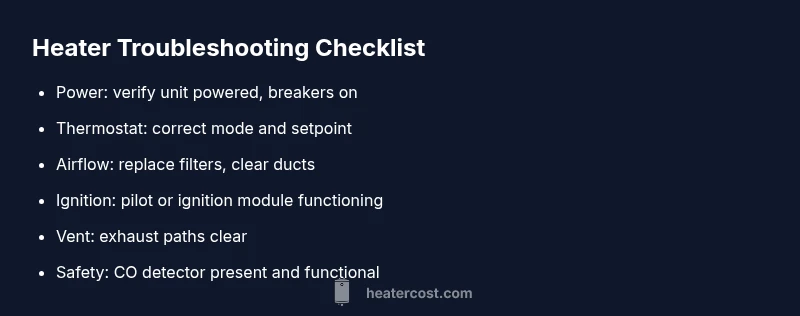
Before you touch any furnace or heater, prioritize safety. Use this ordered checklist to rule out the easiest causes first:
- Power and switch: Make sure the unit is switched on and the circuit feeding the furnace hasn’t tripped. A tripped breaker is by far the most common reason for no heat.
- Thermostat sanity: Confirm the thermostat is set higher than the indoor temperature, in heat mode, and that batteries (if any) aren’t dead. A miscalibrated thermostat can masquerade as a dead furnace.
- Airflow and filters: A clogged filter or blocked return vents can prevent warm air from circulating. Replace the filter and clear obstructions.
- Gas supply and ignition: For gas furnaces, ensure the main gas valve is open and the pilot light or electronic ignition is functioning. If you smell gas, evacuate and call the gas utility.
- Safety devices: CO detectors and furnace limit switches can trip, shutting off heat. Check alarms and reset if safe to do so.
- Outdoor and ductwork: Inspect the outdoor unit (for heat pumps) or ductwork for obvious blockages or ice, and clear debris around intakes.
If you’re not sure about something, or you smell burning, stop and contact a pro. Basic checks are safe when you follow the manufacturer’s safety instructions and keep a clear path around the equipment. In 2026, many service calls are avoidable with these quick checks, which can also reduce diagnostic time for a technician when you do need help.
What these symptoms usually mean
Different symptoms point to different root causes. Here are the typical situations homeowners encounter and what they usually indicate:
- No heat at all or furnace won’t start: Often power, thermostat, or ignition issues. Double-check the power switch, circuit breaker, and thermostat settings before investigating ignition.
- Heat runs but air is cold: Likely airflow problems, such as a dirty filter, closed damper, or blocked ducts. Inspect filters and ensure vents aren’t blocked.
- Short cycling or rapid on/off heat: Could mean an oversized unit, thermostat misfunction, or overheating safety switch. Check thermoregulation and airflow first.
- Odd smells or noises: Burning odors, clicking, or banging noises require attention. Immediate safety checks are needed; gas smells demand evacuation and professional service.
- Thermostat seems off but furnace runs: Calibration or sensor issues; consider relocating the stat away from heat sources and replacing batteries if needed.
When you encounter any safety concern, especially gas smells or CO alarms, evacuate and call emergency or a professional immediately. In 2026, many of these issues can be diagnosed quickly with a structured approach.
Diagnostic flow snapshot
A practical, symptom-driven flow helps you identify causes and apply fixes without guessing:
- If the symptom is no heat, verify power and thermostat first. If power is present, move to the ignition/fuel path.
- If heat is cold or inconsistent, prioritize airflow (filters/ducts) before inspecting burners or igniters.
- If the unit cycles on/off, check for thermostat calibration and safety limits; confirm proper sizing and vent integrity.
- If there is a gas smell, exit the area and contact your gas utility or a licensed technician immediately.
- If nothing helps, it’s time for a professional evaluation to check gas pressure, venting, and major components.
This diagnostic flow reduces guesswork and speeds up resolution, while keeping safety front and center. Remember, some steps require a licensed professional, especially gas-related work.
Step-by-step: Quick, safe fixes you can try tonight
- Power and thermostat check
- Ensure the furnace switch is ON and the circuit breaker is not tripped. If the breaker reset works, test heat again.
- Confirm the thermostat is in heating mode, set above room temperature, and, if applicable, replace batteries.
- Tip: Keep the thermostat away from heat sources and drafts to avoid misreads.
- Filter and airflow check
- Locate and replace a dirty filter; give ducts and returns a visual inspection for obstructions.
- Tip: Schedule monthly filter checks during peak heating season to maintain airflow.
- Ignition and gas checks (for gas furnaces)
- If your pilot light is out, follow the manufacturer’s relighting procedure only if you’re sure it’s safe. Do not attempt if you smell gas or cannot locate the valve.
- Tip: If ignition refuses to spark, it’s often a sign of a failing ignition module or flame sensor—professional service may be needed.
- Burner and vent inspection
- Look for soot, a yellow flame instead of blue, or ice on the exhaust. Clean or replace parts as needed and ensure venting paths aren’t blocked.
- Tip: Do not bypass venting checks; blocked exhaust can cause dangerous carbon monoxide buildup.
- Airflow and zone considerations
- Check for closed dampers, blocked returns, or closed registers in areas served by the heater. Open or relocate as necessary.
- Tip: Consider a zoning plan if some rooms never reach comfort level.
- When to call a pro
- If you can’t identify a safe fix, if you smell gas, or if CO detectors alert you, contact a licensed HVAC technician immediately.
- Tip: Document symptoms and any alarms or noises to help the technician diagnose faster.
Safety reminders and prevention tips
Safety is non-negotiable when dealing with home heating systems. The following tips help you prevent issues and stay safe:
- Always power down before inspecting electrical components or touching wiring. Use the main switch, not just the thermostat.
- Never ignore the smell of gas or a CO alarm. Evacuate the area and call the gas company or emergency services.
- Keep detectors healthy: test CO and smoke alarms monthly and replace batteries yearly.
- Schedule preventive maintenance twice a year. A technician can catch wear and tear before it fails during peak heating.
- Use a professional for complex gas, venting, or electrical problems. This protects your home and ensures code-compliant repairs.
Following these practices reduces downtime, extends equipment life, and lowers energy costs over time. Regular maintenance also helps you meet warranty requirements and keeps your system running efficiently through 2026.
Steps
Estimated time: 30-45 minutes
- 1
Power and thermostat confirmation
Start by ensuring the furnace switch is on, and the circuit breaker feeding the furnace is not tripped. If power is restored, recheck heat call on the thermostat and wait a minute to see if the furnace responds.
Tip: If the breaker trips again, stop and call a pro—there may be an electrical issue. - 2
Airflow and filter check
Inspect the furnace filter and replace if dirty. Check that returns and supply registers are open and unobstructed to allow airflow.
Tip: A clean filter improves temperature stability and efficiency. - 3
Ignition and pilot (gas furnaces)
For gas systems, ensure the gas valve is open and the pilot is lit or the electronic ignition is functioning. If you smell gas, evacuate immediately.
Tip: Never relight a pilot if you smell gas; contact the utility or a pro. - 4
Check for blockages
Look for soot, yellow flame, or ice on vents that indicate obstruction or improper combustion. Clear debris and ensure venting paths are clear.
Tip: Blocked vents are a safety hazard and reduce efficiency. - 5
Thermostat calibration
If heat remains inconsistent, calibrate or replace the thermostat. Sometimes relocation away from direct heat sources solves the issue.
Tip: Keep the thermostat away from drafts and heat sources. - 6
Professional evaluation
If the unit still won’t heat or you’re unsure about any step, schedule a professional inspection. Gas, venting, and electrical issues require licensed technicians.
Tip: Document symptoms for faster diagnosis when you call.
Diagnosis: No heat or heater not starting
Possible Causes
- highPower issue (tripped breaker or blown fuse)
- mediumThermostat failure or misread settings
- mediumGas supply issues or ignition problem (gas furnaces)
- lowIgnition control or flame sensor fault
- lowAirflow restriction from dirty filter/ducts
Fixes
- easyCheck the main power switch, verify outlet power, and reset a tripped breaker or replace a blown fuse.
- mediumTest or replace the thermostat wiring or device; ensure correct mode and calibration.
- mediumInspect gas valve position and pilot/ignition; relight if safe per the manual or contact a pro.
- mediumClean or replace ignition components or flame sensor as needed.
- easyReplace dirty air filters and clear duct obstructions; ensure proper airflow.
- hardIf gas pressure or complex gas system issues are suspected, call a licensed professional.
Got Questions?
What is the first thing I should check when my heater won't start?
Begin with power sources: the furnace switch, the circuit breaker, and the thermostat. If power is present, proceed to thermostat settings and then investigate ignition or gas supply if applicable.
Start by checking power and the thermostat, then move to ignition or gas supply if needed.
Can a dirty air filter really stop heat from coming on?
Yes. A clogged filter can restrict airflow and trigger high-limit safety switches, causing the heater to shut down or not start. Replacing the filter often resolves the issue.
A dirty filter can stop heat by triggering safety shutoffs; replace it to restore airflow.
Why won’t my thermostat read the temperature correctly?
Thermostats can be affected by drafts, sun exposure, or dead batteries. Replacing batteries or relocating the thermostat can improve readings. If readings remain inconsistent, consider upgrading to a programmable or smart thermostat.
If the thermostat reads inaccurately, check batteries and placement, and update if needed.
What should I do if the pilot light won’t stay lit?
For gas furnaces, a stubborn pilot can indicate a dirty thermocouple, gas pressure issues, or a faulty valve. Try relighting per the manual and contact a pro if it won’t stay lit.
If the pilot won’t stay lit, relight only per the manual and contact a pro if it persists.
Is it safe to relight a gas pilot by myself?
Relighting a gas pilot can be safe if you follow the manufacturer’s instructions and take precautions. If you smell gas or feel unsure, leave the area and call the gas utility or a licensed technician.
Relight only if you’re sure and follow the manual; otherwise contact a pro.
When should I call a professional for heater problems?
Call a professional if you can’t identify a safe fix, if you smell gas, or if CO alarms sound. Complex gas, venting, or electrical issues require licensed technicians.
Call a pro if you can’t safely diagnose or fix the issue, especially with gas or CO concerns.
Watch Video
The Essentials
- Check power and thermostat first
- Inspect filters/airflow for heat delivery
- Relight pilots or test ignition safely
- Watch for gas smells/CO alarms—evacuate if needed
- Call a pro when safety or major components are involved