When Your Heater Blows Cold Air: Troubleshooting Guide
Urgent, practical guide to diagnose and fix a furnace or space heater that blows cold air. Learn quick checks, a structured diagnostic flow, step-by-step fixes, safety tips, and when to call a professional.


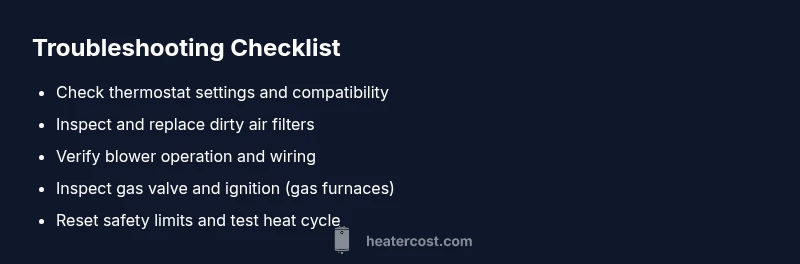
Most likely, the heater blows cold air due to a thermostat, limit switch, or fuel/air mix problem, not a blown fuse. Start with quick checks: verify thermostat settings, replace or clean dirty air filters, and confirm the furnace blower is running. If the issue persists, shut down power and call a licensed technician.
Why your heater blows cold air
When a heating system suddenly emits cold air, it usually means the system isn’t delivering warm air from the heat source. Common culprits include a misread thermostat, a tripped safety switch, a dirty air filter, or a blower that isn’t circulating air. In some homes, a faulty gas valve or ignition sequence can prevent flame from forming, resulting in cold air despite a warm thermostat reading. The Heater Cost team emphasizes that many cold-air problems are caused by simple, addressable issues rather than a full system failure. Regular maintenance reduces the likelihood of these failures and helps you identify problems before they become emergencies.
According to Heater Cost, starting with the basics buys you time and reduces risk. Prioritize safety and avoid DIY fixes that involve gas lines or high voltages if you’re unsure. A structured approach helps homeowners, renters, and property managers pinpoint the root cause and decide whether professional service is warranted.
Safety first and basic checks
Safety should always come first when troubleshooting heating equipment. Before touching any components, switch off the unit at the thermostat and at the main power supply to avoid shocks or accidental startup. Inspect accessible items like the air filter, outdoor condensers (for heat pumps), and the visible parts of the blower assembly. A clogged filter restricts airflow and makes the system work harder, causing it to blow cool air. If you have a gas furnace, check the pilot light or electronic ignition: if the flame won’t stay lit, warm air production stops. Cleaning or replacing a dirty filter and ensuring the air intake is clear are fast ways to restore proper airflow.
Heater Cost’s analysis shows that many cold-air issues stem from simple maintenance gaps rather than large component failures. Keep replacement filters on hand and schedule routine blower and filter checks to prevent future disruptions.
Diagnosing common causes: thermostat, blower, heat exchanger, gas valve
A misreading thermostat is a frequent cause of cold air. Verify that the thermostat is set to heat, the temperature is above room temperature, and there are no conflicting schedules or modes (like a fan-only setting). If the thermostat is wireless, confirm it’s communicating with the furnace. A dirty or blocked air filter reduces airflow and can trigger the blower to run without delivering heat.
The blower motor or capacitor may fail or degrade over time, reducing airflow. Listen for a hum or grinding noise that signals motor trouble. For gas furnaces, a closed gas valve, blocked ignition, or a failed flame sensor can prevent heat from being produced. If your system has an expansion or limit switch that trips due to overheating, the unit may blow cool air as a safety precaution. In this scenario, a professional should inspect the heat exchanger for cracks and verify gas safety controls are functioning.
When to call a professional and cost considerations
If basic checks don’t restore warm air, professional diagnosis becomes essential. Heating systems involve potentially dangerous fuel sources, electrical components, and moving parts; a licensed technician can safely test gas pressure, ignition, and flame quality, or diagnose a failing heat exchanger. Scheduling a pro is especially important for gas furnaces, heat pumps, or complex multi-zone systems where mistakes can be hazardous or expensive.
From a cost perspective, expect a diagnostic visit to cover inspection, testing, and potential minor repairs. Major fixes or component replacements will incur higher costs, but regular maintenance can prevent more expensive failures later. Heater Cost’s research emphasizes balancing upfront maintenance with anticipated energy savings and reliability over the coming seasons.
Diagnostic Flow Overview
This section maps symptoms to likely causes and recommended fixes in a logical order, so you can troubleshoot with confidence. The flow prioritizes the simplest checks first, then moves to more complex diagnostics, and finally to professional help if needed. Remember to work methodically and document what you test so you don’t repeat steps unnecessarily.
Safety notes and common mistakes
- Always shut off power before inspecting electrical components.
- Do not bypass safety switches or attempt gas work without credentials.
- Avoid using a space heater to compensate for furnace issues; use it only if safe and appropriate.
- Keep flammables away from the heating appliance and ensure proper clearance around vents.
- Misreading a thermostat or ignoring a clogged filter is a common but avoidable mistake.
Quick fixes and prevention tips
- Replace dirty air filters and ensure air ducts are unobstructed.
- Verify thermostat calibration and update dated thermostats.
- Schedule seasonal tune-ups to catch issues early and maintain efficiency.
- Use a programmable thermostat to manage heating patterns and reduce unnecessary cycling.
Steps
Estimated time: 1-2 hours
- 1
Power down and safety check
Turn off the furnace at the thermostat and switch the unit’s power off at the breaker. Wear safety gloves when inspecting exposed components. Confirm the area around the unit is clear of debris and is well-ventilated before proceeding.
Tip: Always start with safety before touching electrical components. - 2
Verify thermostat settings
Set the thermostat to heat mode and confirm a temperature higher than room temp. If you have a programmable thermostat, temporarily bypass schedules that might override heat output. Replace batteries if it’s a wireless model.
Tip: A misconfigured thermostat is a common, easy fix. - 3
Inspect and replace air filters
Remove the air filter and inspect for dirt, dust, and debris. If dirty, replace with the correct filter type. Clean the blower intake and check for visible obstructions in ducts.
Tip: A clogged filter reduces heat delivery and can trigger the system to blow cool air. - 4
Check blower operation
Reconnect power and observe whether the blower runs when heat is called. Listen for unusual noises and check the belt if accessible. A non-running blower means heat won’t reach ducts.
Tip: A faulty blower is a common culprit and often inexpensive to fix. - 5
Gas ignition and safety sequence (if applicable)
If you have a gas furnace, ensure the gas valve is open and the ignition sequence starts correctly. If you smell gas or the flame won’t stay lit, evacuate and call emergency services.
Tip: Only a qualified tech should handle gas-related repairs. - 6
Reset safety switches and test heat
After addressing the above, reset the high-limit and other safety switches per the manufacturer’s instructions. Run a full heat cycle and observe whether warm air flows within the ducts.
Tip: If the system overheats, the safety switch will protect the home.
Diagnosis: Heater blows cold air despite being on
Possible Causes
- highThermostat set incorrectly or malfunctioning
- highAir filter clogged or dirty
- mediumBlower motor not running
- lowFuel supply or gas valve issue (for gas furnaces)
- lowLimit switch or safety cutout triggered
Fixes
- easyVerify thermostat settings and recalibrate or replace faulty unit
- easyReplace or clean air filter; check ductwork for obstructions
- mediumInspect blower motor and belts; test capacitor
- mediumCheck gas supply valve and ignition sequence (only if safe)
- easyReset high-limit switch and check for overheating
Got Questions?
Why is my furnace blowing cold air even though it’s on?
Common reasons include thermostat settings, a clogged air filter, a failing blower, or a safety switch tripping. Inspect these areas first and test the system after each fix.
Common reasons include thermostat settings, a clogged filter, or a blower issue. Check those first, then test the system after each fix.
Can a dirty air filter cause cold air from the heater?
Yes. A dirty filter restricts airflow, causing the system to run but not deliver heat. Replace the filter and re-test the system.
Yes. A dirty filter can block airflow and prevent heat from circulating, so replace it and test again.
What if the thermostat is wired correctly but still not heating?
Check for signal issues between the thermostat and furnace, and verify that the thermostat is calibrated. If it’s a wireless model, ensure the receiver is syncing properly.
Check the thermostat–furnace signal and calibration, and ensure the wireless receiver is syncing.
When should I call a professional for cold air from my heater?
If basic checks don’t restore heat, if you smell gas, or if you’re uncomfortable with electrical or gas components, call a licensed technician for a safety-first assessment.
Call a licensed technician if basic checks fail or you smell gas, or you’re unsure about the gas or electrical parts.
Is it dangerous to run a furnace blowing cold air?
Running a furnace that isn’t delivering heat can be safe in the short term, but it wastes energy and may indicate a hazard. Stop using the unit and seek professional help if you’re unsure.
It can waste energy and mask a potential hazard—stop using it and get a pro if unsure.
Watch Video
The Essentials
- Take safety seriously and power down before inspecting.
- Start with thermostat and filter checks to address most cold-air issues.
- If basic checks fail, call a licensed technician promptly.
- Regular maintenance reduces recurrence and extends system life.
- Document troubleshooting steps to aid professional diagnosis.