Why Is My Heater Blowing Cold Air? Quick Troubleshooting Guide
Urgent, step-by-step guide to diagnose why your heater is blowing cold air, with safe checks, diagnostic flow, and pro tips from Heater Cost.


Most often, cold air from your heater means the system isn’t in Heat mode or the thermostat is misconfigured, a pilot light or gas valve issue, or a blower problem. Quick fix: set the thermostat to Heat and a higher temperature, confirm the gas supply and pilot light, and check the blower door. If unresolved, contact a pro.
Common causes of cold air from a furnace
When readers ask, "why is my heater blowing cold air?", the top culprits are thermostat settings, pilot light or gas supply problems, and blower or airflow issues. According to Heater Cost, the most common reason homeowners encounter this symptom is a thermostat configured to Cool or Off, followed by pilot-light problems or a dirty air filter that restricts airflow. A misbehaving blower motor or a blocked vent can also push cold air through the ducts even if the furnace is technically heating. Understanding these causes helps you triage quickly and avoid unnecessary service calls. In many homes, correcting a simple thermostat setting or replacing a disposable filter reduces calls by a surprising margin and restores warm air in hours rather than days.
Key takeaway: start with the low-effort checks that affect air temperature and flow before suspecting major component failures. Heat your space more efficiently by addressing basic issues first and documenting symptoms for your technician.
Safety and initial precautions
Before you start any hands-on checks, remember that heating equipment can involve high voltage, hot surfaces, and gas lines. If you smell gas or hear hissing from the furnace area, evacuate and call the gas company or emergency services immediately. For gas furnaces, ensure the area around the unit is clear, and never force components or bypass safety switches. If you’re uncomfortable with any step, don’t proceed—safety comes first, and a licensed HVAC technician can diagnose and repair safely. The early focus should be on simple, non-invasive checks that reduce risk while offering diagnostic value.
Safe, quick checks you can perform
Start with the easiest fixes that require no tools. Verify the thermostat is set to Heating, not Cool or Off, and that the setpoint is higher than the room temperature. Check the air filter and replace it if dirty or clogged, as restricted airflow can cause cold air to come from the vents. Inspect the blower access panel to ensure it’s secured—an open panel can inhibit blower operation and airflow. For gas furnaces, check the pilot light status and ensure the gas valve is fully open. If the pilot is out, follow the manufacturer’s relighting procedure only if you’re confident and it’s safe; otherwise, call a pro. If you have an electric furnace, ensure the breaker isn’t tripped and that the thermostat calls for heat.
Diagnostic flow overview: symptom to solution
A structured approach helps you avoid random tinkering. Start with the symptom: is the heater blowing cold air consistently, or does it warm up briefly and then go cold? If the thermostat is correct but air remains cool, the next steps involve airflow (filter, blower), energy supply (gas or electricity), and safety interlocks (limit switch, furnace door sensors). Each path leads to targeted fixes you can perform or determine if professional intervention is needed. The goal is to identify whether the issue is controllable by you or requires a service visit.
Step-by-step fixes for the most common causes
To ensure your safety and clarity, the following steps address the most frequent culprits. Begin with the simplest and safest actions and progress to more involved checks. Throughout, wear long sleeves and gloves as needed, avoid touching hot surfaces, and never bypass safety devices. If any step feels unsafe, stop and contact a licensed HVAC professional.
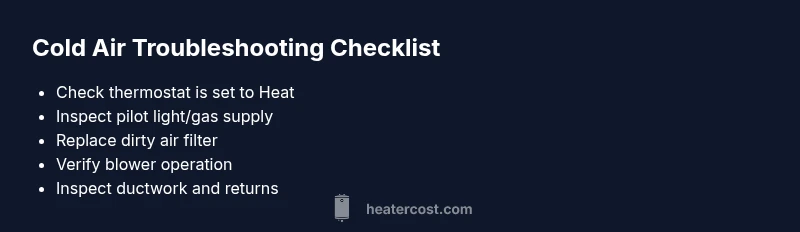
- Verify thermostat settings: Confirm Heat is selected and the setpoint is appropriately higher than room temperature. If your thermostat has a fan setting, set it to Auto rather than On so the system cycles heat rather than forcing airflow.
- Inspect the gas supply and pilot: For gas furnaces, check that the gas valve is fully open and the pilot light is lit. If the pilot won’t stay lit or you see a yellow flame instead of blue, this indicates a gas or venting issue that requires professional service.
- Check the air filter and blower: Replace dirty filters and listen for blower operation. If you hear a buzzing sound, or the blower won’t engage, the motor or drive belt may need service.
- Examine ventilation and return air: Ensure returns aren’t blocked and outdoor vents aren’t clogged. Restricted air intake reduces heating efficiency and can feel like cold air blowing.
- Assess electrical and safety interlocks: If a safety switch or high-limit switch has tripped, the furnace may default to a safety state that reduces heat delivery. Resetting these safely may resolve the symptom; if not sure, skip this step and call a pro.
- If all else fails: Schedule a professional inspection. A qualified HVAC tech can diagnose burner, heat exchanger, or control-board issues that require specialized tools and training.
Maintenance tips to prevent cold air in the future
Preventive care reduces the odds of cold-air symptoms returning. Schedule seasonal inspections, replace filters regularly, and keep the furnace area clear of dust and debris. Use a smart thermostat that logs temperature patterns and alerts you to anomalies. Clean ductwork, seal leaks around ductwork, and ensure proper attic and crawlspace insulation to minimize heat loss. A proactive maintenance routine protects comfort and can extend the life of your heating system.
What to expect and when to seek help
If you’ve ruled out simple thermostat and airflow issues and still experience cold air, you’re likely dealing with a condition that needs professional intervention. Common service scenarios include blower motor replacement, gas valve or ignition system repair, heat exchanger inspection, or duct sealing. Costs vary by region and system type, but understanding the likely causes helps you ask targeted questions and avoid unnecessary repairs. The takeaway is that early diagnostics save time and money and reduce downtime during cold seasons.
Quick context on energy costs and efficiency when air is cold
Cold-air symptoms can also be tied to efficiency issues. A furnace that runs longer or cycles frequently to compensate for airflow restrictions consumes more energy and can strain components. By addressing thermostat accuracy, filter cleanliness, and airflow, you’ll often restore proper heating and reduce energy waste. Heater Cost’s research emphasizes that keeping your system well-tuned is a practical step toward stable comfort and lower operating costs.
Steps
Estimated time: 60-90 minutes
- 1
Power down and check safety
Turn off the thermostat and furnace power. If you smell gas or hear unusual noises, leave the area immediately and call emergency services. Confirm that the area around the furnace is clear and that you’re wearing appropriate protective gear.
Tip: Never bypass safety devices or open gas lines without professional guidance. - 2
Verify thermostat settings
Make sure the thermostat is set to Heat and the target temperature is higher than the current room temp. If you have a separate fan setting, set it to Auto so heat cycling isn’t overwhelmed by continuous fan operation.
Tip: If you use a programmable thermostat, check that the schedule isn’t forcing Cool mode at certain times. - 3
Check air filter and blower
Replace the air filter if it’s dirty. Listen for blower operation; if there’s no movement or a rattling sound, the blower motor or belt may need service.
Tip: A clogged filter reduces airflow and makes heating less effective. - 4
Inspect gas or electric supply
For gas furnaces, confirm the gas valve is open and the pilot light is steady blue. For electric units, check the circuit breaker and any fuses; reset if safe to do so.
Tip: Only attempt to relight a pilot light if you’re trained and following manufacturer guidance. - 5
Assess venting and returns
Ensure air returns aren’t blocked and that vent openings are clear. Obstructions reduce air intake and can cause the unit to underheat or overheat in some zones.
Tip: Look for closed damper or blocked ducts during seasonal changes. - 6
Call a professional if needed
If warm air still doesn’t arrive after these checks, a licensed HVAC technician should inspect safety switches, ignition systems, and heat exchangers.
Tip: Provide the technician with a written log of symptoms and steps you performed.
Diagnosis: Heater blowing cold air
Possible Causes
- highThermostat set to Cool or Off
- highPilot light out or gas supply restricted
- mediumBlower motor failure or belt issue
- mediumClogged air filter or poor airflow
Fixes
- easySet thermostat to Heat and confirm setpoint is above room temp
- easyInspect gas valve and pilot light; relight if safe and permitted
- mediumTest blower operation and replace/repair motor or belt as needed
- easyReplace dirty air filter and clear any duct blockages
- easyIf unresolved, schedule a licensed HVAC professional for a full diagnostic
Got Questions?
Why is my heater blowing cold air even when the thermostat is set to heat?
Commonly the thermostat is not in Heat mode, or the setpoint is too low, causing the system to run without delivering warm air. Check the mode, temperature, and any energy-saving schedules. If the issue persists, inspect filters and blower to ensure proper airflow.
Check that your thermostat is set to Heat with a higher temperature than the room; if it still blows cold air, inspect airflow components or call a pro.
Why won't the pilot light stay lit on a gas furnace?
A pilot light that won’t stay lit can indicate a thermocouple issue, blocked gas line, or dirty orifice. Relighting should follow the manufacturer instructions, and if the flame is yellow or keeps going out, professional service is recommended.
If the pilot won’t stay lit, shut off gas, wait, and contact a licensed technician for a safe inspection.
Can a dirty air filter cause cold air?
Yes. A clogged filter reduces airflow, which can make the system deliver cool air or take longer to heat. Replace the filter and see if warmth returns. If not, other airflow or ignition issues may be involved.
A dirty filter blocks air, so replace it and recheck. If warm air still doesn’t arrive, you may need a technician.
Is it dangerous if the heater blows cold air?
While many cold-air situations are not immediately dangerous, gas-related problems or malfunctioning safety devices can pose risks. If you smell gas or suspect an ignition issue, evacuate and call emergency services.
If you smell gas, leave quickly and contact the gas company or emergency services.
When should I call a professional for a cold-air heater?
If basic checks don’t restore warm air, if ignition issues persist, if there’s any gas odor, or if your furnace trips breakers, contact a licensed HVAC technician for a full diagnostic and safe repair.
Call a pro when simple fixes fail or you notice gas odors or electrical concerns.
The Essentials
- Verify thermostat settings first; it’s a common culprit.
- Pilot light or gas supply issues require caution and may need a pro.
- Airflow problems (filters, blower, ducts) are frequent causes of cold air.
- When in doubt, schedule professional evaluation to prevent safety risks.