Heater on But Blowing Cold Air: Troubleshooting Guide
Urgent troubleshooting guide for when your heater is on but blowing cold air. Learn common causes, quick checks, and when to call a pro. Includes step-by-step fixes, safety tips, and maintenance to prevent future cold air.


Most likely, your furnace is running but not heating due to airflow or thermostat issues. Quick fixes you can try now include replacing a dirty air filter, confirming the thermostat is set to heat and above room temperature, and cycling the furnace off and back on. If the problem persists, check for a tripped breaker, blown fuses, and ensure the gas valve is open on gas furnaces.
Why Your Furnace Blows Cold Air
When a furnace runs but only blows cold air, it can be alarming and uncomfortable, especially during a cold snap. According to Heater Cost, the most common reasons are airflow restrictions and thermostat miscommunication. A clogged air filter reduces airflow, causing the system to cycle without delivering warm air. A thermostat sending a heat demand signal is essential; if it’s miscalibrated or set incorrectly, the furnace may run without firing to heat the space. In gas furnaces, a failed igniter or a tripped gas valve can also produce cold air. Blocked vents or a closed damper in the ductwork can cut off warm air from reaching rooms. If these issues persist, heat exchangers or safety switches may also play a role, though those are less frequent. Addressing the simplest causes first is the fastest way back to consistent warmth. Quick checks and a bit of troubleshooting can restore heat in many homes this season, particularly in 2026 when energy costs and efficiency matter for homeowners.
Common Culprits in Order of Likelihood
Duct and airflow problems are the leading causes of a furnace blowing cold air. Heater Cost analysis shows that a dirty air filter, blocked return ducts, or closed registers can severely limit warm air delivery. Thermostat issues are another frequent source: miscalibration, incorrect programming, or a dead thermostat battery can prevent heat calls from reaching the furnace. For gas furnaces, ignition failures, a tripped gas valve, or a pilot light issue can result in no heat despite the blower running. Electrical problems like a blown fuse or tripped breaker, while less common, can also disable the heating circuit. Finally, duct leaks or damper misadjustments can steal warm air before it reaches living spaces. Each of these causes can be checked quickly, often without tools, enabling a fast return to warmth.
Quick Checks You Can Do Safely
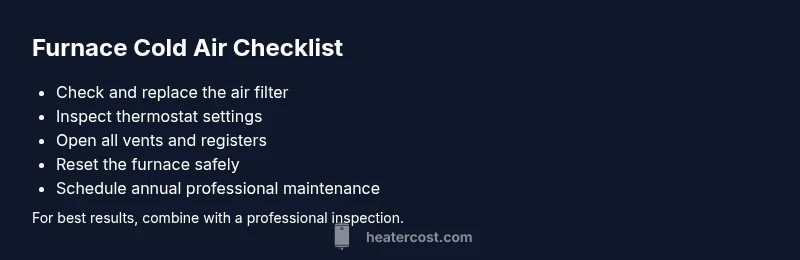
Start with the simplest steps to avoid unnecessary risk. Inspect and replace the air filter if dirty. Ensure all registers are open and free of obstructions, and check for visible duct damage. Confirm the thermostat is in the heat setting and that the temperature setting is above room temperature. Listen for the furnace burner ignition and watch for a flame in gas furnaces; if you don’t hear ignition or smell gas, stop and seek professional help. If your system has a reset option, perform a safe reset after powering down the unit for a moment. These checks can often pinpoint the issue and restore heat quickly.
How to Reset and Restart Safely
A safe reset can clear transient faults. Begin by turning off the furnace at the thermostat and power switch, then switch off the circuit breaker for the furnace. Wait 30 seconds to let residual electrical charge dissipate, then restore power. Set the thermostat to heat and observe whether the furnace ignites properly. If the burner lights but heat output remains weak, there may be a deeper airflow or ignition problem requiring further inspection. Always follow the manufacturer’s manual when performing resets.
Preventive Maintenance to Avoid Future Cold Air Issues
Regular maintenance reduces the odds of cold air episodes. Replace disposable air filters every 1–3 months during heating season, and schedule annual professional tune-ups to check the burner, ignition, heat exchanger, and venting. Keep ducts clean and inspect for leaks or blockages. Consider installing smart thermostats that reliably communicate heat calls, and test them monthly. By maintaining airflow pathways and system components, you’ll minimize cold air occurrences and keep energy costs in check.
When to Call a Professional
If basic checks don’t restore heat, it’s time to contact a licensed HVAC technician. Gas furnaces require careful handling around ignition and gas supply; electrical components demand proper safety procedures. The Heater Cost team recommends seeking professional help when you detect gas smells, buzzing noises, persistent ignition failure, or if you notice heat exchanger issues or excessive corrosion. A professional can diagnose and repair safely, protecting your home and family.
Steps
Estimated time: 20-40 minutes
- 1
Power down and inspect basics
Turn off the furnace at the thermostat and the dedicated power switch. Inspect visible wiring and ensure the exterior venting is clear of debris. This first step prevents shocks and protects you while you inspect other components.
Tip: Always start with safety—kill power before touching any furnace parts. - 2
Check and replace the air filter
Locate the filter compartment, remove the old filter, and replace with a filter of the correct size. A clean filter improves airflow and helps the furnace deliver warm air. Do not run the system with a saturated or damaged filter.
Tip: Note the filter type and size for easy replacement next season. - 3
Verify thermostat settings
Set the thermostat to heat mode and a temperature higher than room temperature. If your thermostat has batteries, replace them. If it’s programmable, confirm the schedule aligns with your heating needs.
Tip: If you own a smart thermostat, try a manual temperature bump to trigger heat call. - 4
Inspect vents and ducts
Walk through each room to confirm registers are open and unobstructed. Check for closed dampers in the ductwork and ensure no furniture blocks air vents. Duct leaks can also steal warm air before it reaches living spaces.
Tip: Duct cleaning can improve airflow if leaks or blockages are present. - 5
Reset and restart the furnace
With power restored, perform a full system reset if available. Allow the furnace to attempt ignition and observe whether warm air returns. If ignition fails, power down again and call a professional.
Tip: A full cycle (off–on) helps clear transient faults that block heat calling. - 6
Call a professional if issues persist
If you still have cold air after the above steps, contact a licensed HVAC technician. Gas safety is critical; never ignore gas smells or ignition failures.
Tip: Document what you tested and any odd sounds or smells to share with the tech.
Diagnosis: Furnace runs but blows cold air
Possible Causes
- highThermostat not calling for heat or miscalibrated thermostat
- highDirty or clogged air filter restricting airflow
- mediumGas supply issue, blown pilot light or igniter failure (gas furnaces)
- mediumVentilation issues: closed ducts or blocked registers
- lowElectrical issue like blown fuse or tripped breaker
Fixes
- easyVerify thermostat is set to heat and above room temperature; cycle power to furnace
- easyReplace dirty air filter and clear any debris from return vents
- mediumInspect gas supply, check pilot light or igniter (if comfortable); reset safety switches
- easyOpen registers and clear ducts; ensure no closed dampers
- hardIf the issue persists, contact a licensed technician for electrical/gas safety checks
Got Questions?
Why is my furnace blowing cold air even when the thermostat is set to heat?
This usually means thermostat miscommunication or restricted airflow. Check thermostat settings and filter, then reset the system.
Usually thermostat or airflow issues; check settings and filter, then reset.
Can a dirty air filter cause cold air from the furnace?
Yes. A clogged filter reduces airflow and can prevent warm air from circulating properly.
Yes—clogged filters block airflow and prevent heat.
What should I check on a gas furnace with a pilot light out?
Check gas supply and relight procedures per the manual. If you cannot relight or detect gas, stop and call a pro.
If the pilot is out, follow the relight steps in the manual; if you smell gas, call for help.
Is it safe to reset a furnace myself?
Resetting can help if done per the manual. Power down, wait, then power up and observe ignition.
Reset can help if you follow the manual and safety steps.
How often should I schedule maintenance to prevent cold air?
Annual professional tune-ups plus regular filter changes reduce cold-air risks.
Annual tune-ups plus filter changes help prevent problems.
When is it necessary to replace the furnace?
If repairs exceed a significant portion of replacement cost or the unit is old, replacement may be worth considering.
If repair bills mount or the unit is old, replacement may be best.
Watch Video
The Essentials
- Start with simple fixes like filter replacement.
- Thermostat and airflow are the top culprits.
- If unsure, seek professional help.
- Regular maintenance saves energy and avoids cold air.