What If Your Furnace Is Blowing Cold Air? Quick Fixes and Safety
Learn why a furnace may blow cold air and how to troubleshoot safely. This Heater Cost guide covers common causes, practical checks, and when to call a professional for relief.


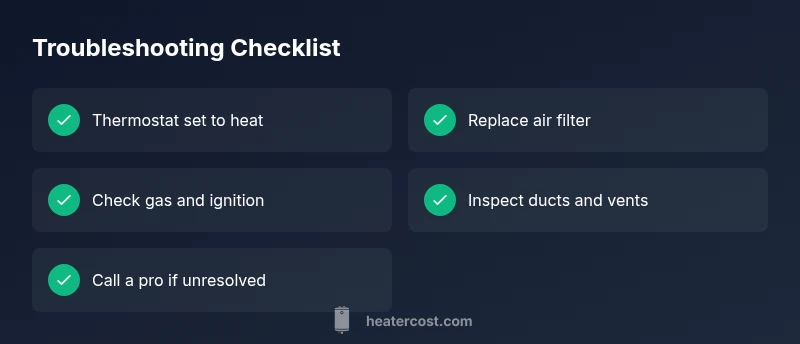
If your furnace is blowing cold air, the most likely causes are a thermostat not calling for heat, a clogged air filter, or ignition/fuel-supply problems. Start by verifying thermostat settings, replacing the air filter, and checking the gas valve and igniter. If heat still won't come, shut off power and call a pro.
Understanding what causes cold air from a furnace
If you’re asking what if furnace is blowing cold air, you’re dealing with a common problem that typically has a handful of explainable causes. In most homes, cold air comes from the furnace not actually heating the air being circulated. The root causes usually fall into three buckets: thermostat miscommunication, airflow restrictions, and fuel/ignition problems. Before you dive into deeper diagnostics, confirm a few basics: the thermostat is calling for heat, the furnace door switch is engaged, and there are no obvious power or gas-supply issues. In many cases, a simple misstep — like setting the thermostat to cooling mode by mistake, or a dirty filter — is enough to produce cold air from vents. The Heater Cost analysis highlights that addressing the simplest causes first yields the fastest resolution and reduces unnecessary service calls. With safety in mind, proceed to the checks that you can do without special tools, and save professional help for when it’s truly necessary.
Quick checks you can safely perform
This section covers safe, no-special-tools checks you can do to isolate the problem. Start with the thermostat: ensure it is set to heat, and that the setpoint is higher than the current room temperature. If you have a programmable or smart thermostat, verify it has not drifted to a cooling schedule or an off state. Next, inspect the air filter. A clogged filter reduces airflow and can make the furnace seem like it's blowing cold air even when the burners are working. Replace it if dirty and run the system again. Check the air vents and duct dampers to ensure they are open and not blocked by furniture or debris. If you have a gas furnace, listen for a gas valve hum and a brief igniter click when heat is called. If you smell gas or hear loud banging noises, shut off power and gas supply and contact a professional immediately. Finally, confirm the furnace’s switch and circuit breaker are in the ON position.
Common causes and how to identify them
Thermostat miscommunication: The thermostat might be defaulting to cooling or not communicating heat correctly due to wiring or sensor failure. Check the thermostat wiring at the furnace control board for loose connections if you’re comfortable, otherwise call a pro.
Airflow restrictions: A dirty air filter, closed dampers, or blocked supply vents can starve the furnace of air, causing it to blow air that feels cool or to cycle on and off without producing heat.
Ignition and fuel issues: For gas furnaces, a failed igniter or a misaligned pilot can prevent heat from being produced, so you feel cold air at the vents. If you rely on gas, verify gas valve is open and there are no gas smells.
Mechanical failures: A faulty blower motor, relay, or limit switch can keep the blower from circulating heated air even when heat is available. Duct problems, leaks, or significant cold-air infiltration in the home can also explain symptoms.
Safety-first steps before you troubleshoot
Safety comes first when dealing with heating equipment. If you smell gas, hear a hissing sound, or notice a heavy CO2 odor, evacuate and call emergency services. Do not attempt DIY fixes that could create a dangerous situation. Ensure working CO detectors are placed in key areas and test them monthly. If you are in a cold climate, protect your family by keeping a warm area ready while you troubleshoot with caution. Never bypass safety switches or ignition controls. If you do-it-yourself checks pass, continue to the next steps, but stop if you encounter unfamiliar components or alarming signs.
Diagnostic flow: symptom-to-solution map
Here’s a practical map you can use while you troubleshoot: symptom: furnace blows cold air. diagnosis: thermostat not calling heat, or restricted airflow, or ignition/fuel issue. solution: adjust thermostat to heat, replace filter, test gas valve and igniter, and ensure vents are open. If the symptom persists after basic checks, escalate to electrical checks, blower inspection, and ductwork assessment. In all cases, if you detect gas smells or CO, or you can’t safely perform checks, stop and call a licensed technician.
Step-by-step: most common fixes for cold-air failure
-
Verify thermostat is set to heat and actively calling for heat. Ensure the display shows heat mode and no recent power outages disrupted the settings. Pro tip: a quick toggle off/on of the thermostat can re-sync smart thermostats.
-
Replace or clean the air filter. A clogged filter reduces airflow and can make the system feel like it’s not heating. Pro tip: check monthly during winter and replace every 1-3 months depending on usage.
-
Inspect gas supply and ignition for gas furnaces. Ensure the gas valve is fully open and listen for the igniter’s sequence. Pro tip: if you hear nothing when heat is called, do not attempt repairs—gas systems require a professional.
-
Check electrical power and breakers. A tripped breaker or blown fuse can prevent the furnace from starting heat. Pro tip: reset the breaker slowly and note any repeated trips.
-
Inspect ductwork and vents for blockages. Close off any unneeded rooms and ensure vents are open to balance airflow. Pro tip: a simple room-by-room check helps locate hidden blockages.
-
Inspect blower motor and limit switch. If the blower runs but you don’t feel heated air, the blower or limit switch may be faulty. Pro tip: this requires a technician if you are not trained.
-
When all basic steps fail, call a licensed HVAC technician. Complex issues like heat exchanger problems or refrigerant/fuel faults require professional diagnostics. Pro tip: keep a record of what you’ve tested to share with the technician.
Estimated total time: 30-60 minutes for basic checks; longer if components require replacement.
Prevention tips to avoid future cold-air issues
- Schedule annual professional maintenance to catch faults early and keep the system calibrated.
- Replace air filters every 1-3 months during heating season, depending on usage and allergen load.
- Keep all supply vents open and clear of obstructions like furniture and drapes.
- Install and regularly test carbon monoxide detectors on each floor near living spaces.
- Consider upgrading to a programmable or smart thermostat that accurately calls for heat when needed.
- Seal and insulate ducts to prevent cold air infiltration and heat loss.
Final note
If your furnace consistently blows cold air despite following these steps, you’re likely facing a deeper issue that requires professional assessment. The Heater Cost team recommends starting with the quick checks, using our diagnostic flow to guide you, and scheduling a professional tune-up if the problem persists.
Steps
Estimated time: 30-60 minutes
- 1
Confirm heat call on thermostat
Check that the thermostat is in heat mode and that the setpoint is higher than the room temperature. For smart thermostats, confirm it isn’t on a cooling schedule. If it’s not calling heat, the furnace won’t warm the air.
Tip: A quick toggle off/on can refresh many smart thermostats. - 2
Inspect and replace air filter
Turn off power to the furnace, remove the old filter, and inspect for heavy dirt. Replace with a filter of the correct size and rating. A clean filter restores airflow and proper heat distribution.
Tip: Check monthly during heavy use months. - 3
Check gas supply and ignition
For gas furnaces, ensure the gas valve is fully open and listen for the igniter sequence when heat is selected. If you smell gas or can’t hear ignition, stop and call a pro immediately.
Tip: Never ignore gas smells; safety first. - 4
Verify power and breakers
Locate the furnace’s electrical panel and confirm the breaker is set to ON. If it trips repeatedly, there may be an underlying electrical fault.
Tip: Reset gently and observe for repeat trips. - 5
Inspect ducts and vents
Walk rooms to check for blocked or closed vents. Look for obvious leaks or crushed ducts that could pull cold air into the system.
Tip: A room-by-room check can reveal hidden blockages. - 6
Test the blower and limit switch
If the blower runs but warm air isn’t felt, the blower motor or control limit switch may be faulty. This step often requires professional service.
Tip: Do not attempt motor repairs without training. - 7
Call a licensed technician if unresolved
If basic checks don’t restore heat, you may have a heat exchanger issue, refrigerant/fuel fault, or control-board problem that needs specialized diagnostics.
Tip: Keep notes of tests performed to help the tech.
Diagnosis: Furnace blows cold air
Possible Causes
- highThermostat not calling for heat (mis-set or faulty)
- highAirflow restriction (dirty filter, closed dampers, blocked vents)
- highGas/fuel supply or ignition problem
- mediumElectrical issue or tripped breaker
- mediumBlower or control board failure
- lowDuct leaks or major cold-air infiltration
Fixes
- easyVerify thermostat is set to heat and calling for heat; re-sync smart thermostats if needed.
- easyReplace or clean the air filter; ensure vents are open.
- mediumInspect gas valve, listen for igniter operation, and ensure fuel supply is present; contact a pro if gas smells or ignition fails.
- easyCheck power supply and circuit breakers; reset if tripped.
- mediumInspect ducts and dampers for obstructions or leaks; seal as needed.
- hardTest blower motor and limit switch; schedule professional service if needed.
- easyIf unresolved, arrange professional HVAC diagnostic and tune-up.
Got Questions?
Why is my furnace blowing cold air even though the thermostat shows heat?
This usually means the thermostat isn’t calling for heat or there is an airflow issue. Check that heat is selected, verify the setpoint is higher than the room temp, and inspect for airflow restrictions. If the problem persists, proceed with deeper checks or professional help.
If heat isn’t being called, you’ll feel cold air. Verify heat mode and then check airflow. If unresolved, a technician can diagnose control and ignition concerns.
Can a dirty air filter cause cold air at the vents?
Yes. A clogged filter restricts airflow, making the furnace work harder and sometimes blowing cooler air. Replace the filter and re-test the system.
A dirty filter reduces airflow and can cause cold air. Replace it and test the system again.
What maintenance helps prevent cold-air problems?
Regular filter changes, annual furnace tune-ups, and ensuring all vents are open can prevent many cold-air issues. Consider upgrading to a smart thermostat for better heat control.
Regular maintenance and clean filters usually prevent these issues. A smart thermostat helps manage heat more accurately.
When should I call a professional?
If you smell gas, hear banging noises, or basic checks don’t restore heat, stop troubleshooting and call a licensed HVAC technician. Serious issues like a cracked heat exchanger require expert assessment.
If in doubt or you detect gas or dangerous signs, call a pro immediately.
Is it safe to relight a gas furnace igniter myself?
Relighting should follow the manufacturer’s instructions. If you’re uncomfortable or smell gas, do not attempt it—shut off gas and seek professional help.
Relight only if you’re confident and follow the manual. If unsure or gas is involved, contact a pro.
Watch Video
The Essentials
- Check thermostat first and replace dirty filters
- Inspect gas supply and ignition before escalating
- Open vents and seal ducts to improve airflow
- Call a pro if basic checks don’t restore heat
- Schedule annual maintenance to prevention future issues