Why is My Heater Making Noise? An Urgent Troubleshooting Guide
Urgent, step-by-step guide to diagnose and quiet a noisy heater. Learn causes, quick fixes, safety tips, and when to call a licensed pro.


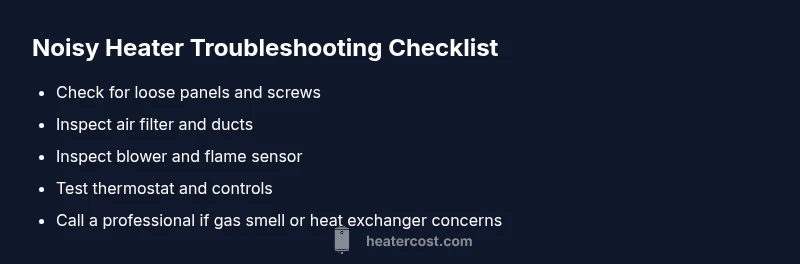
According to Heater Cost, the most common reason your heater is making noise is a loose, worn, or obstructed component—such as the blower belt, fan blade, or burner assembly. Quick fixes: 1) power off and open accessible panels to check for loose screws, 2) clear dust from the blower and sensor areas, 3) tighten or replace parts as needed. If the noise persists, contact a licensed technician.
Why is my heater making noise? Common causes and quick checks
If you’re hearing unusual sounds from your heating system, you’re not alone. The phrase "why is my heater making noise" often signals a problem that can be fixed with basic diagnostics and safer maintenance. According to Heater Cost, many noises originate from simple issues that arise from wear, dust buildup, or loose fittings, rather than dangerous failures. Start by listening to the sound type: is it a rattle, bang, squeal, or hum? Each sound points to different parts of the system. This block maps the most frequent culprits and practical 2-3 step checks you can perform without specialized tools. Remember: if you smell gas, hear a dangerous hiss, or detect signs of burning or overheating, shut the system off and contact emergency services immediately.
Airflow and ductwork issues that cause rattles and hisses
Airflow problems are a frequent source of noise. Restricted ducts, closed or blocked registers, and dirty air filters can create pressure changes that produce banging or whistling sounds. Quick checks include replacing the air filter (or upgrading to a higher-efficiency filter if your system requires it) and inspecting accessible ductwork for loose connections or obvious gaps. Sealing leaks with appropriate foil tape or mastic can reduce vibration noise. If you notice reduced heating performance alongside the noise, that’s a sign to deepen the inspection or call a pro. Heater Cost notes that routine maintenance keeps airflow steady and minimizes common rattles and hums.
Mechanical wear and loose parts: panels, belts, and bearings
A common source of metallic rattling is loose panels or mounting brackets vibrating against the cabinet. In older units with blower belts, a worn belt or misaligned pulley can squeal or produce a flapping sound. Inspect exterior panels, access doors, and visible mounting points for looseness after powering down the unit. For belt-driven systems, check for any looseness or cracking in the belt and replace if necessary. Bearings and rotating components can also develop play over time, causing noticeable vibration. If you’re uncertain about belt tension or pinion alignment, a professional service is advisable.
Burner and combustion noises: what to listen for (gas heaters safety first)
Gas furnaces may produce popping, pinging, or sizzling sounds during ignition or shutdown. This can indicate ignition timing or burner issues, venting problems, or incomplete combustion. A yellow or orange flame color, unusual odors, or a persistent buzzing near the gas valve warrants immediate attention. Do not attempt to adjust gas pressures yourself. Instead, document the sound, the time it occurs, and any odors, and arrange a professional inspection. Safety first: carbon monoxide risks require prompt action and proper testing.
Electrical and control noises: relays, transformers, and thermostats
Hum or buzz from relays or a transformer often points to electrical control issues or a failing control board. Thermostats can also cause intermittent noises if wiring is loose or the circuit is mismatched to the furnace. Check for loose thermostat wires at the furnace junction box and ensure the thermostat is set to heat and cycling on a proper interval. If you hear intermittent buzzing that grows louder when the thermostat calls for heat, schedule a professional check to prevent further electrical damage.
Quieting the most common noises: practical, safe steps you can take now
Begin with simple, non-invasive actions. Replace dirty air filters and vacuum around the furnace cabinet to remove dust that can rattle against metal surfaces. Tighten accessible screws on the cabinet and ensure that the unit’s mounting is secure. Clean the flame sensor area and inspect the burner port for any visible debris or scale. Do not attempt to disassemble sealed combustion chambers or gas valves. A quick tune-up from a licensed technician can address most persistent noises and restore quiet operation.
When to escalate: safety signs that require professional help immediately
If you notice any of the following, do not DIY: gas odor, hissing gas, cold or extinguished flames, persistent banging after ignition, or signs of overheating. These scenarios can indicate dangerous failures such as gas leaks, flame roll-out, or restricted venting. In such cases, shut the system off at the breaker and contact emergency services if there is an immediate gas concern. If there are no immediate hazards but noises persist after basic cleaning and inspection, a professional diagnostic visit is warranted.
Preventive maintenance to keep noises down year-round
A proactive maintenance plan reduces the likelihood of noises: schedule an annual professional tune-up, replace air filters on schedule, lubricate moving parts per the manufacturer’s guidance, and inspect ductwork for leaks. Keep a simple noise diary noting when sounds occur and under what conditions (startup, mid-cycle, or shutdown). This practice helps technicians diagnose root causes quickly and reduces the chance of a minor issue evolving into a major repair.
Summary and next steps: getting back to quiet comfort
Sound is a signal, not just a nuisance. By distinguishing the type of noise and following a logical sequence—from simple checks to professional evaluation—you can restore comfort and avoid unsafe conditions. If you’re unsure at any step, lean on a certified technician. Heater Cost’s guidance emphasizes safety, accuracy, and timely action to protect your home and wallet.
Steps
Estimated time: 30-60 minutes
- 1
Power off and secure the area
Shut off the furnace at the thermostat and switch the breaker to ensure no electrical power is flowing. Wait for the unit to cool before touching components. This prevents shock and accidental ignition.
Tip: If you smell gas, evacuate and call emergency services immediately. - 2
Inspect accessible panels for looseness
Remove the furnace access panel and check for loose screws or panels that vibrate. Tighten any loose fasteners and reseat panels securely to stop rattling.
Tip: Do not remove panels that are sealed or labeled for safety. - 3
Check air filter and duct connections
Replace dirty filters and inspect duct connections for gaps. Leaks or restricted airflow can cause whistling and banging noises. Ensure registers are open and unobstructed.
Tip: Use the correct filter type for your system and avoid over-tightening filter frames. - 4
Inspect blower and burner areas for debris
Carefully remove dust from the blower housing and around the burner area. Debris can throw off balance and create noise. If you see visible obstruction, clear it gently.
Tip: Never spray liquids into the blower housing. - 5
Assess burner flame and ignition (gas furnaces)
Observe the flame color when the burner ignites. A blue flame indicates proper combustion; yellow or orange may indicate incomplete combustion or soot. If you notice odors, shut off the system and call a pro.
Tip: Do not attempt to adjust gas valves yourself. - 6
Check thermostat and wiring integrity
Ensure thermostat wires are securely connected and that the thermostat is calling for heat correctly. Loose wiring can cause intermittent buzzing or cycling problems.
Tip: If you hear buzzing that changes with the thermostat set point, note it for the technician. - 7
Test venting and condensate paths
Inspect visible vent pipes for blockages or condensate buildup. Blocked venting can produce unusual noises and dangerous conditions. Clear obstructions and ensure proper slope.
Tip: Never ignore condensate in high-efficiency vent systems. - 8
Call a professional when in doubt or for hard issues
If sounds persist after basic checks, schedule a professional tune-up. A licensed tech can diagnose ignition, gas pressure, and heat exchanger concerns safely.
Tip: Provide the technician with your noise diary and when it occurs.
Diagnosis: Heater makes unusual noises during operation
Possible Causes
- highLoose or vibrating panels/mounting
- highWorn blower belt or bearings (older models)
- mediumDust or debris in blower wheel or cabinet
- highGas ignition/burner issues (gas furnaces)
- mediumExhaust venting restrictions or condensate buildup
- lowElectrical relays or control board buzzing
Fixes
- easyTighten screws and reseat panels to stop vibration
- mediumReplace worn belt or service bearings per model (professional)
- easyClean blower housing and cabinet of dust/debris
- hardHave a pro inspect ignition, gas pressure, and flame safety
- easyCheck and clear venting obstructions or condensate paths
- mediumIsolate electrical components and have a technician check control wiring
Got Questions?
What does a banging noise from a furnace mean?
A banging noise can indicate delayed ignition, gas pressure irregularities, or loose or damaged internal components. Turn off power if you suspect a gas issue and call a professional promptly to inspect ignition and combustion safety.
A banging furnace usually points to ignition or internal component issues. Turn off power if gas is suspected and contact a pro for a safe inspection.
Why does my heater squeal when starting up?
A squeal is often caused by a loose belt, worn bearings, or a misaligned blower wheel. Inspect accessible belts and pulleys, then seek professional help if the sound continues after basic inspection.
A startup squeal usually comes from a belt or bearing. Check accessible parts, and call a pro if it keeps happening.
Can a dirty air filter cause heater noise?
Yes. A clogged filter can cause the blower to work harder, leading to buzzing or whistling. Replace the filter and check for improved airflow before scheduling a professional tune-up.
A dirty filter can cause noise by restricting airflow; replace it and see if the sound improves.
Is a gas leak or carbon monoxide risk if there is noise?
Yes. Any gas odor, hissing, or unusual flame should be treated as a safety emergency. Leave the area and call emergency services before contacting a technician to inspect for leaks or CO risk.
Gas noises can signal dangerous risks. If you smell gas or hear hissing, leave quickly and call emergency services.
Should I ignore faint hums from my heater?
A faint hum isn’t always dangerous, but it can indicate electrical or control issues. If the hum grows louder or accompanies other noises, have a professional check it.
A faint hum might be harmless, but if it worsens or comes with other noises, get a pro to inspect.
When is it safe to troubleshoot myself vs. call a pro?
Basic cleaning and filter changes are safe DIY steps. Complex issues—gas components, heat exchangers, electrical faults—require a licensed technician for safety and code compliance.
Start with safe DIY tasks like cleaning, but call a pro for gas, heat exchanger, or electrical problems.
Watch Video
The Essentials
- Identify the sound type to guide fixes.
- Start with simple checks, then escalate.
- Gas noises require professional help immediately.
- Schedule regular maintenance to reduce future noise.